July 23, 2026

For many Nepalis, climate change is not a distant environmental issue. It is reflected in flooded roads during monsoon, shrinking glaciers in the mountains, unpredictable harvests, and growing uncertainty about the future. In September 2024, the relentless rainfall caused floods and landslides across the country, taking the lives of more than 200 people. Across the country, the impacts of climate change are becoming harder to ignore.
Nepal contributes less than 0.1% of the world’s greenhouse gas emissions ranking among the very lowest contributors globally. Yet, ironically, it is consistently ranked among the countries most vulnerable to the impacts of climate change.
How does a country that contributes so little to global emissions face such significant climate risks?
The answer lies in understanding that climate change is a global phenomenon. Greenhouse gases released anywhere in the world accumulate in the atmosphere, influencing the Earth's climate regardless of where they were emitted. While a country's emissions determine how much it contributes to climate change, they do not determine how severely it will experience its effects. Instead, factors such as geography, ecosystems, infrastructure, and economic dependence on natural resources play an equally important role in shaping climate vulnerability.

Climate change isn't a local problem caused by local emissions; it's a shared system responding to the combined output of every country on Earth. For Nepal, these factors come together in particularly vulnerable ways. Its high-altitude geography, fragile mountain ecosystems, and heavy dependence on climate-sensitive resources and industries leave it exposed to even relatively small shifts in temperature and rainfall.
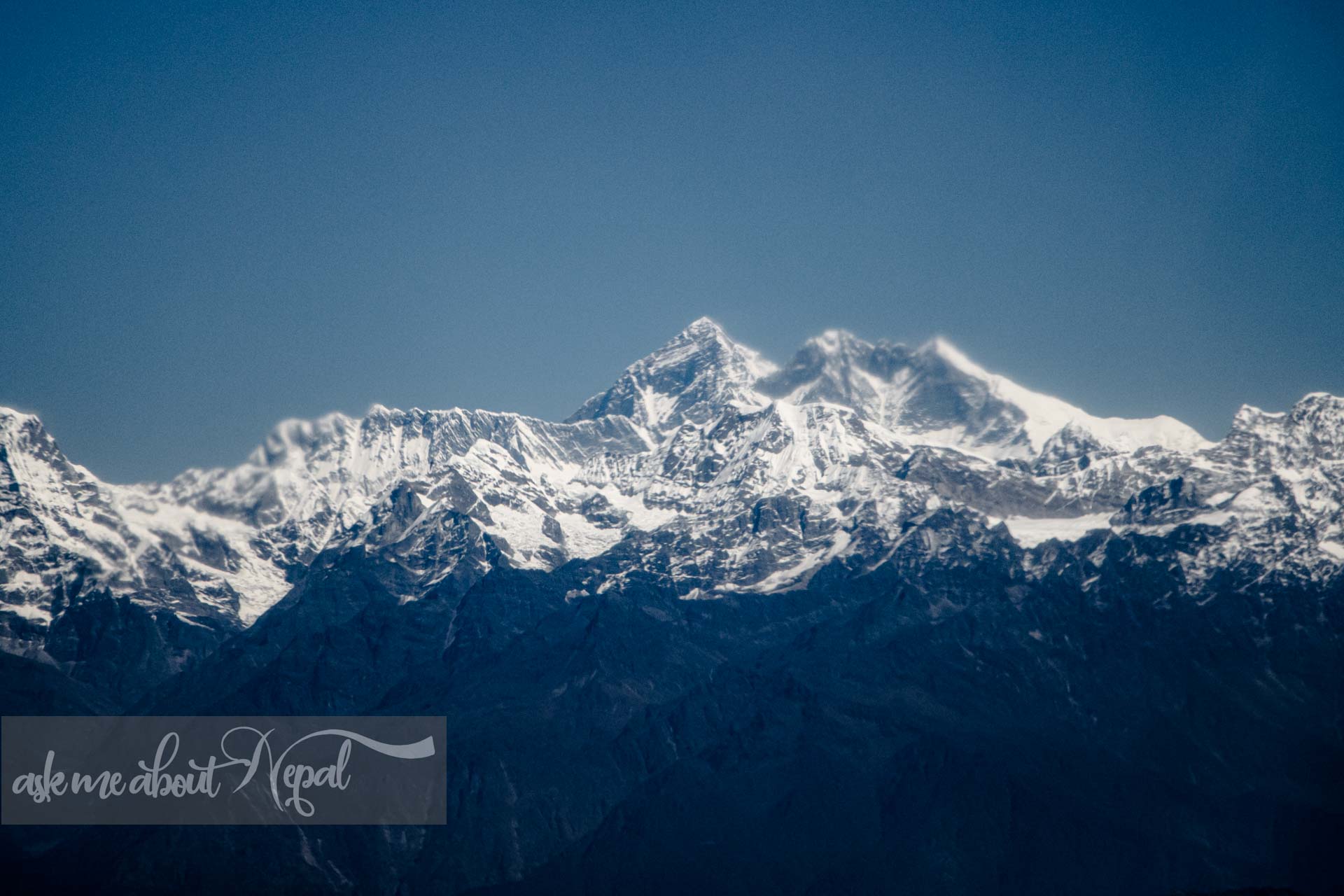
The first reason lies in Nepal’s unique location. Nepal is home to the Hindu Kush Himalaya, a region often called the "Third Pole" because it holds the largest reserve of glacial ice outside the Arctic and Antarctic. This region is warming noticeably faster than the global average, at a rate of roughly 0.2°C per decade over the past five decades, according to the International Centre for Integrated Mountain Development (ICIMOD). This amplified warming happens because of a phenomenon known as elevation-dependent warming. Mountains heat up faster than lowland areas due to the thinner air at high altitudes; temperatures rise more quickly there as the climate warms. As a result, even the same amount of global warming causes a bigger increase in temperature at higher elevations. Since Nepal is home to some of the world's highest mountains, it is especially affected by this faster warming.
The second reason is geological. Nepal's mountains are geologically young, and still growing, having steep slopes and fragile rocks, making them naturally unstable. Because of this, the landscape is more vulnerable to climate change. A small shift in rainfall pattern that might mean a wetter season elsewhere in the world can trigger landslides or floods in Nepal. Even small changes in climate lead to major consequences because the landscape itself has so little margin for error.
The third reason is water. Nepal's agriculture, its drinking water, and a large share of its electricity generation all depend on rivers produced by glaciers and monsoon rain. Over 80% of Nepali farmers still depend on rain-fed subsistence farming, meaning their harvest is directly tied to whether the monsoon arrives on time, and how much it delivers. A country where farming, trekking tourism, and hydropower generation are all major pillars of the economy is, by the nature of those industries, directly dependent on weather conditions. It is simply the result of the country's economic structure intersecting with its climatic realities.
Together, these factors explain why Nepal's vulnerability to climate change is so high. But vulnerability is not just a statistic or a ranking; rather, it has real consequences for the people, landscapes, and systems that depend on a stable climate.

These aren't abstract risks. They show up in Nepal's landscape and Nepal's news cycle with increasing regularity.
The most visible indicators of this changing climate are the high-altitude glaciers. As the high mountains warm, glaciers retreat and the meltwater collects into glacial lakes, many of them unsteadily dammed by loose rock and ice debris rather than solid rock. When one of these natural dams breaks, it sends a glacial lake outburst flood, or GLOF. Millions of cubic meters of water can surge down the valley in a matter of minutes, creating a wall of water, boulders, and mud that wipes out downstream villages, suspension bridges, and hydropower plants.
The Melamchi disaster of June 2021 is an illustration of what that looks like on the ground. A cascade of intense rainfall, a glacial lake outburst, and a landslide-blocked river combined to send a wall of water and debris through the Melamchi valley in Sindhupalchowk district, killing more than 20 people, sweeping away at least 350 residential buildings, and burying the headworks of a major water supply project under metres of mud and rock. It wasn't caused by any single factor; it was several climate-linked hazards combined at once, which is itself becoming a pattern in Nepal's mountains.
Then there's the monsoon itself, becoming less predictable in its timing and intensity. Farmers have relied on predictable weather patterns for generations. These seasonal calendars are becoming less reliable. The rain coming too late may wither the crops before they are even given a chance to grow, while an intense one may wash the crops away entirely. For a country where food security is closely tied to a single rainy season, that unpredictability isn't a minor inconvenience; it's a recurring threat to household income and nutrition.
Hydropower, meanwhile, is both Nepal's biggest energy source and one of its most promising export industries. The September 2024 floods didn't just damage roads and homes; they damaged more than a dozen hydropower projects at once, some representing significant chunks of national generation capacity. A country building its energy future on rivers is, unavoidably, building it on rivers that climate change is actively reshaping.
Beyond the immediate disasters, slower changes are also underway: forests and species shifting to higher elevations as temperatures rise, changing the ecosystems that mountain communities have relied on for generations, and longer periods without rain placing new strain on drinking water supplies in the hills during the winter and pre-monsoon months.

The two facts- Nepal facing some of the harsh consequences of a warming planet but only accounting for a sliver of global emissions raise a natural question: does this seem fair, though?
This question has become increasingly important in global conversations about climate change and is often described as climate justice. It's a simple idea, even if the term sounds technical: climate justice is the recognition that the responsibility for causing climate change and the burden of living with its consequences are not evenly distributed, and that this mismatch matters. The countries that have emitted the most greenhouse gases over the past two centuries, largely wealthier, heavily industrialised nations, are often better equipped, financially and technologically, to protect themselves from floods, droughts, and heatwaves. But developing countries like Nepal, which have contributed comparatively little to the problem, frequently lack the same resources to adapt, even though their exposure to the damage is often greater.
Understanding climate justice helps us see climate change from a different perspective. It reminds us that the challenge is not simply about measuring how much carbon each country emits, but also about recognizing that vulnerability is unevenly distributed. Countries may share the same atmosphere, but they do not all share the same risks. Climate justice doesn't assign blame to any single country or point a finger at any particular policy. Climate justice argues that addressing climate change requires more than just lowering global emissions; it demands supporting vulnerable nations that bear the greatest impacts despite contributing the least to the problem. Nepal's story is one of the clearest real-world illustrations of why that conversation exists at all.

From the towering glaciers of the Himalayas to the fertile plains of the Tarai, climate change is reshaping Nepal in increasingly visible ways. Despite contributing only a tiny fraction of global greenhouse gas emissions, Nepal stands on the front lines of one of the world's greatest environmental challenges. A country's vulnerability to climate change was never going to be determined by how much carbon it burns; rather, it's determined by geography, ecology, and the shape of an economy built on rivers, monsoons, and mountains. Nepal happens to sit at the intersection of all three, which is precisely why a nation contributing almost nothing to the problem keeps finding itself among those paying the highest price for it.
That's also what makes Nepal's experience worth paying attention to beyond its own borders. It's a reminder that solving climate change isn't only a matter of cutting emissions; it's also a matter of understanding who is exposed, who has the means to adapt, and how the world chooses to share the burden of a crisis that knows no borders. As the Himalayas continue to warm and weather patterns become more unpredictable, Nepal reminds us that the consequences of climate change are deeply unequal and that responding to them requires both environmental action and climate justice.
Jesika Aryal is a writer who loves exploring new ideas and turning them into engaging stories. She enjoys writing on diverse topics that inform and inspire readers, and believes that writing is a powerful way to communicate, share perspectives, and help others better understand the world around them.
In Nepal’s southern plains, Indigenous communities such as the Tharu and Yadav use traditional earthen storage bins (dehari) to safely store grains and seeds, relying on knowledge passed down through generations.
Sun Aug 09 2026
The global energy crisis has raised prices of Liquefied Petroleum Gas (LPG) from Rs 1,910 for a 14.2kg cylinder before the West Asia War to Rs 2,010 today.
Sun Aug 09 2026
Nepal’s Ministry of Forest and Environment is considering allowing the construction of ropeways to carry cable cars within protected areas.
Sun Aug 09 2026
Many indigenous peoples worldwide have inked tattoos for aesthetic and therapeutic reasons that respect their culture and traditions.
Sun Aug 09 2026
Oct 13, 2022
Jul 18, 2023
Sep 20, 2023
Jun 2, 2022


Ask Me About Nepal (AMAN) is your go-to digital platform for authentic, well-researched insights into Nepal’s people, places, culture, and hidden gems. From adventure to history, food to folklore—explore Nepal like never before!


Help us document the beauty and stories of Nepal. Your donation powers AMAN's journey.

Get captivating travel stories, hidden gems, and cultural insights from Nepal delivered to your inbox every month!
Want to Become a Contributor? Click Here
© 2025 Ask Me About Nepal. All Rights Reserved.