July 21, 2026

A Family in Kaski. Photo by USAID via Pixnio
Nepal is one of the most culturally diverse countries in Asia, being home to more than 125 ethnic groups, with over 120 languages, and centuries of cultural tradition spread across its mountains, hills, and plains. On paper, this diversity may seem like one of Nepal's most distinctive strengths. But diversity and equality do not automatically go hand in hand. If we look into Nepal's history, then who you were born as determined almost everything about the life you were allowed to live.
The democratic transition from absolute monarchy to constitutional monarchy in 1990 cracked open the door. The People's Movement of 2006, which ended a decade of conflict and brought down the monarchy, pushed it open further. And the adoption of Nepal's 2015 Constitution prohibited discrimination, named the communities that had been historically excluded, and promised them a place in the state. But laws and lived experience are often very different chapters of the same book. To understand why, we need to look at where this exclusion began, what the law says today, and the challenges many communities still face.
If the Constitution guarantees rights to everyone, why do marginalized communities need special protections at all?
The answer is simple. Imagine two people start a race from different positions: one close to the finish line, one far behind from it. Telling them both to run the same distance does not make the race fair. It just preserves the gap. Giving them the same rules doesn't make the race fair because they didn't start from the same place to begin with.
Marginalised communities in Nepal did not arrive in 2015 on equal footing. Generations of exclusion from land, education, government, and basic resources created gaps. Special protection is not about privilege. It is about acknowledging that the starting line was never the same for everyone, and that closing that distance requires deliberate effort.
In 1854, Prime Minister Jung Bahadur Rana introduced Nepal's first national legal code, Muluki Ain. It formally organized communities into a caste hierarchy and legalized caste discrimination, where the Dalit community was placed at the very bottom of the hierarchy. The hardship and distress that people had faced in their daily lives is really difficult to fully even imagine from the outside.
Dalits were legally forbidden from temples or even accessing public facilities that were used by the people who were classified as the higher-caste groups. Let's consider a basic human need like water. A Dalit person could not share a water tap, a well, or a vessel with those above them in the hierarchy. Their touch was considered “impure’’. Something as simple and essential as drinking a glass of water became a reminder of exclusion. Access to one of life's most basic necessities depended not on need, but on caste.
Eventually, in 1963, the new legal code abolished caste distinctions. And the 2015 Constitution marked a major shift, guaranteeing them free education with scholarships, proportional representation in all state bodies, and making caste-based discrimination a criminal offence under the Caste-Based Discrimination and Untouchability Act of 2011.
And yet. Documented incidents of Dalits being denied access to water sources, temples, and shared spaces continue to be reported across parts of the country. After the 2015 earthquake, the International Dalit Solidarity Network documented that the majority of Dalits felt there had been intentional negligence in rescue and humanitarian assistance; most of them remained homeless more than a month after the disaster, while nearly 80 percent of higher-caste communities had already received tents or tarpaulins.

In the hills of Makwanpur, Chitwan, Dhading, and Gorkha, the Chepang have been living a semi-nomadic lifestyle, practicing hunting, fishing, and foraging. The forest was not just where they lived. It was their food system, their livelihood, their identity.
Under the Muluki Ain, the Chepang were classified as Masinya Matwali (Enslavable Alcohol-Drinkers), a legal category that allowed them to be enslaved. They had no traditional caste hierarchy of their own, yet they were forced into a system that treated them as inferior and left them with limited rights and social status.
Later, the Private Forest Nationalisation Act of 1957 transferred control of forests to the state, stripping the Chepang of their primary source of survival. Then, in 1973, Chitwan National Park was established on the land that indigenous communities (Tharu, Bote, Darai, Kumal, Majhi, and Chepang) had lived on for generations. They were not consulted. They were removed. The Nepali Army was deployed in 1975 to forcibly clear communities from the newly designated park. Houses were burned. Fields were trampled using elephants.
Today, most of the Chepang families do not own land. They are among the poorest communities in Nepal, with some of the country's lowest literacy rates and highest rates of child malnutrition.
The 2015 Constitution recognises the Chepang as one of Nepal's 59 indigenous nationalities and guarantees indigenous peoples the right to free, prior, and informed consent before development projects affect their lands. Nepal is also a signatory to ILO Convention No. 169, which protects indigenous communities from forced displacement, but its implementation remains a highly disputed issue.
But on July 18, 2020, employees of Chitwan National Park, backed by the Nepal Army, burned two Chepang houses and destroyed eight others using elephants, evicting families from the Kusum Khola area of Madi Municipality. The families had been settled there by the local government itself after being displaced by floods and landslides in Makwanpur district in 2017. They were given no time to collect their food, money, or important documents before their homes were destroyed. Just four days later, on July 22, 24-year-old Raj Kumar Chepang died after allegedly being tortured by army personnel inside the national park. He had gone in to collect ghongi, a species of river snails considered a local delicacy. He was detained, and he did not survive.
These incidents highlight broader issues faced by the Chepang community. Although the Constitution guarantees equal rights and protection, many Chepang families continue to face barriers in their daily lives, particularly when it comes to land, livelihoods, and access to resources.

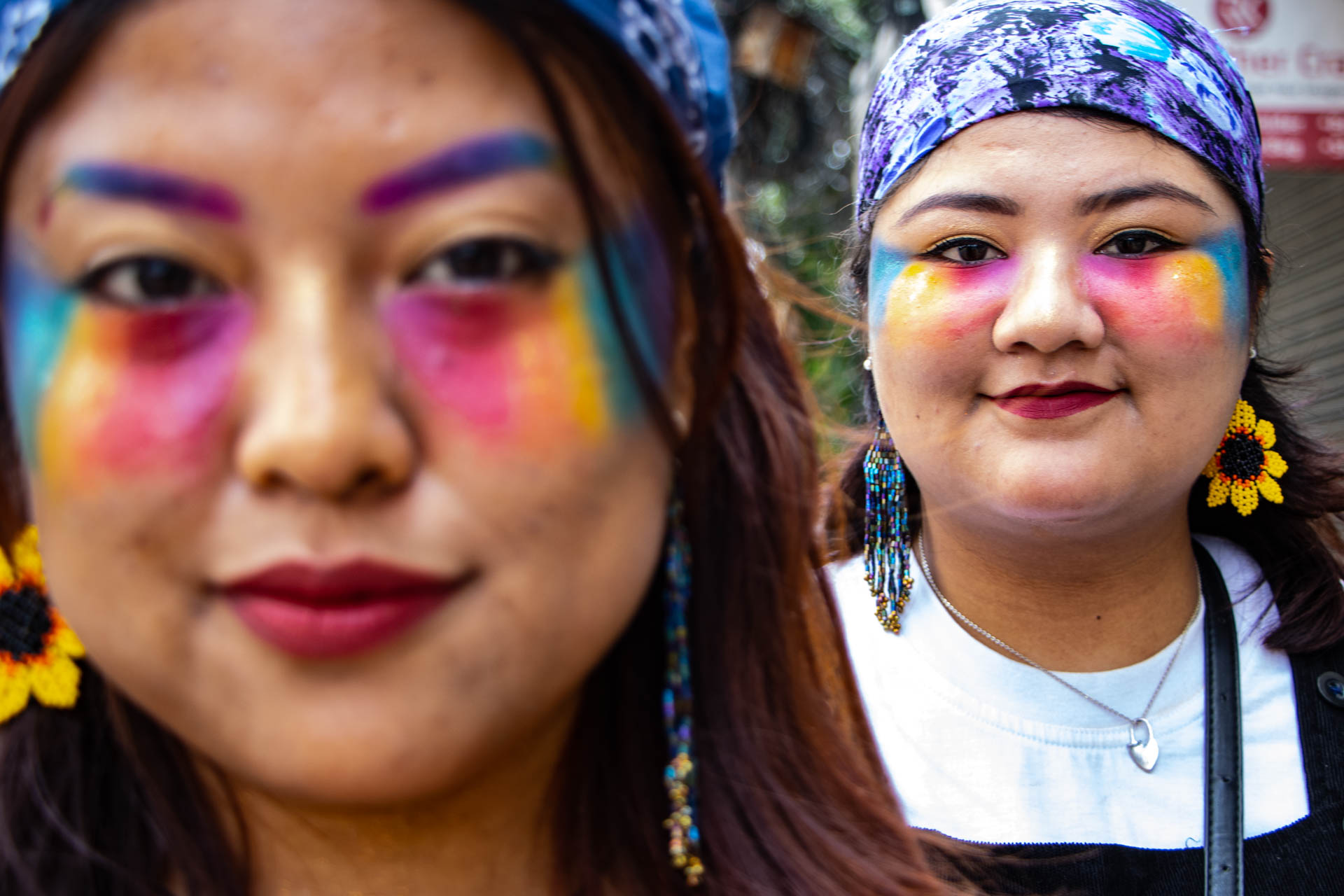
Nepal's legal position on LGBTQI+ rights would surprise many people. The Supreme Court issued a landmark ruling in 2007 directing the government to end discrimination based on sexual orientation and gender identity. The 2015 Constitution explicitly prohibits discrimination on those grounds. Nepal became one of the first countries in South Asia to recognise a third gender on official citizenship documents.
On paper, Nepal is ahead of most of its neighbours.
A queer person in Nepal today can, in principle, have a citizenship card that recognises who they are. They are protected, in law, from state discrimination.
For many LGBTQI+ Nepalis, the hardest battles are the family, the community, the society that raised them. Family rejection remains common. Many queer young people, particularly those from conservative communities, have to face the choice between hiding who they are and losing the people they love. Housing insecurity, workplace discrimination, and social stigma do not disappear because a Supreme Court ruling says they should. Legal recognition matters, and the activists who fought for it really did something real and lasting. But a constitution can change overnight. Changing the law is an important first step, but changing attitudes takes much longer. Those changes take time, education, and a society willing to embrace inclusion beyond what is written in the law.

Nepal has come further than it is sometimes given credit for. A country that once integrated exclusion into its legal document now has a constitution that explicitly names the communities it excluded and commits to their protection. That is nothing. It took decades of activism, political struggle, and in many cases genuine personal courage to get there. These are genuine and important gains. But the distance between what the Constitution promises and what people experience in their daily lives remains significant.
But the Muluki Ain ran for over a century. It did not just create rules. It created a sense of what was normal, who belonged in certain spaces, who deserved to be heard, whose presence was welcome and whose was not. A constitution can change the rules. It cannot immediately change what a century of those rules made people feel was natural.
The Dalit who is still turned away from a water tap, the Chepang family whose home was burned inside a national park, the queer young person whose legal rights exist in a document their family has never read; all of them are living in the same gap. They are just three realities discussed among many. The gap between recognition and reality. Between what Nepal has promised and what Nepal has delivered.
Closing that gap requires more than laws, though laws matter. It requires schools that children can actually enter. It requires hospitals that people can actually reach. It requires elected representatives who are not just present but genuinely heard. And it requires the slower, harder work of changing the social attitudes of what people believe is acceptable that formal law alone cannot legislate away.
Jesika Aryal is a writer who loves exploring new ideas and turning them into engaging stories. She enjoys writing on diverse topics that inform and inspire readers, and believes that writing is a powerful way to communicate, share perspectives, and help others better understand the world around them.
Sher Bahadur Deuba is one of the most eminent political figures from Nepal, now becomes the Prime Minister of Nepal for the fifth Time.
Sun Aug 09 2026
The Nonaligned Policy of a Small State, Nepal is a small state that physically and politically lies between two major powers, China and India.
Sun Aug 09 2026
Hiking with Col Jim Roberts, a legendary Himalayan mountaineer and explorer who lobbied for the advantages of quality high-value tourism.
Sun Aug 09 2026
The Government of Nepal has announced a budget of Rs. 2.124 trillion for the fiscal year 2083/84, outlining its vision for economic growth, infrastructure development, technological advancement, and improved public services.
Sun Aug 09 2026
Oct 13, 2022
Jul 18, 2023
Sep 20, 2023
Jun 2, 2022


Ask Me About Nepal (AMAN) is your go-to digital platform for authentic, well-researched insights into Nepal’s people, places, culture, and hidden gems. From adventure to history, food to folklore—explore Nepal like never before!


Help us document the beauty and stories of Nepal. Your donation powers AMAN's journey.

Get captivating travel stories, hidden gems, and cultural insights from Nepal delivered to your inbox every month!
Want to Become a Contributor? Click Here
© 2025 Ask Me About Nepal. All Rights Reserved.