I went to a Gurung village called Baccha in Parbat District, to attend Arghum of Ram Kaji Gurung, husband of Yam Gurung, my friend’s sister. He passed away during the coronavirus pandemic in February 2020. He belonged to Bhuccha Gurung.
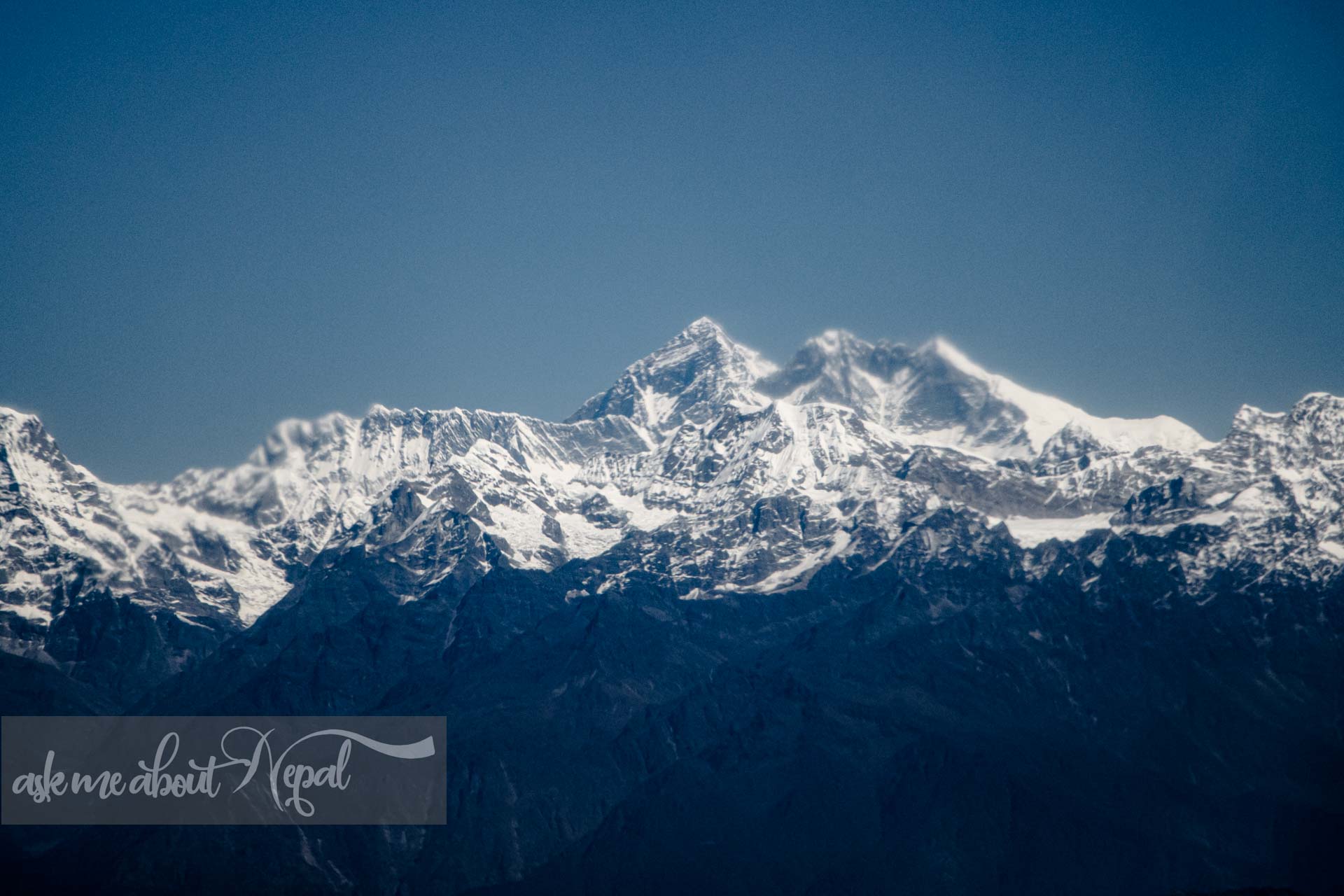
At first, I thought Bachha looked more like a hamlet than a village, but later I learned that the village had almost 90 houses. Baccha offered a far but magnificent view of Mt. Dhaulagiri and Annapurnas, and even more so from the hill of Baccheswar Temple, Bhuchha’s native god.
On the base of the hill on the western border, the Kali Gandaki Highway project is underway alongside Durlang village, connecting two biggies, India and China, via Butwal to Myagdi. The other side of the Kali Gandaki corridors were Baglung and Gulmi districts.
Arghum Rites and Rituals
Klepri Toran Gurung says, “All humans commit sins since the time of birth, whether by knowing or unknowing, and the Arghum ritual carried out by families helps their beloved ones to cleanse their lifetime sins and prepare them to travel to the land of ancestors. It takes 5 days to cleanse them of their sins.”
Arghum is a funerary practice that is usually performed on the 45th day after death and for 3 days, but in the case of Bhuccha Gurung, it occurs once in 10 years as a collective ceremony for all those who have passed away in that decade.
In March 2022, the 5-day ritual of Arghum, aka “Arghaun” or “Pae,” was carried out in the memory of 12 “Chihyu”, the lost ones.
Bhuchha Gurungs follow the Bon religion and belong to the Sorah Jatey Gurung; therefore, all their rites are carried out by Patchyu (Shamans) and Klepri (Priests), whilst other Gurungs (Char-Jatey) have Lamas conducting Arghum.
First Day of Arghum
Patchyus and Klepris sit in a circle alongside the members of the Arghum Committee and the Arghum observers, inside “Pla ti”, a makeshift tent where all the important rituals are conducted for the next 5 days. “Pla” means the effigy of the deceased person, and “ti” means a house in the Gurung language.
After welcoming and appreciating the presence of the VIPs and priests, they light a votive lamp and lay out the dos and don'ts for the mourners like, what they can eat, who they can physically touch and not, women wear their hair down and not comb it, assign tents where mourners must sleep throughout the ritual, etc.
From here on, all the “Dukha bokne haru”, the immediate sorrow carrier or the mourners, refrain from eating salt, meat, milk, and eggs, and do not physically touch visitors and other participants.
They announce the names of “Mul chora” and “Mul Chori” , the main son and daughter respectively, who would be conducting all the Arghum rituals, and who the rest of the “Dukha bokne haru” must follow.
At midnight, Patchyus conduct a puja to ward off evil spirits. They sacrifice a goat and a chicken to feed the evil spirits and lure them away from the path of “Chihyu”
Second Day of Arghum
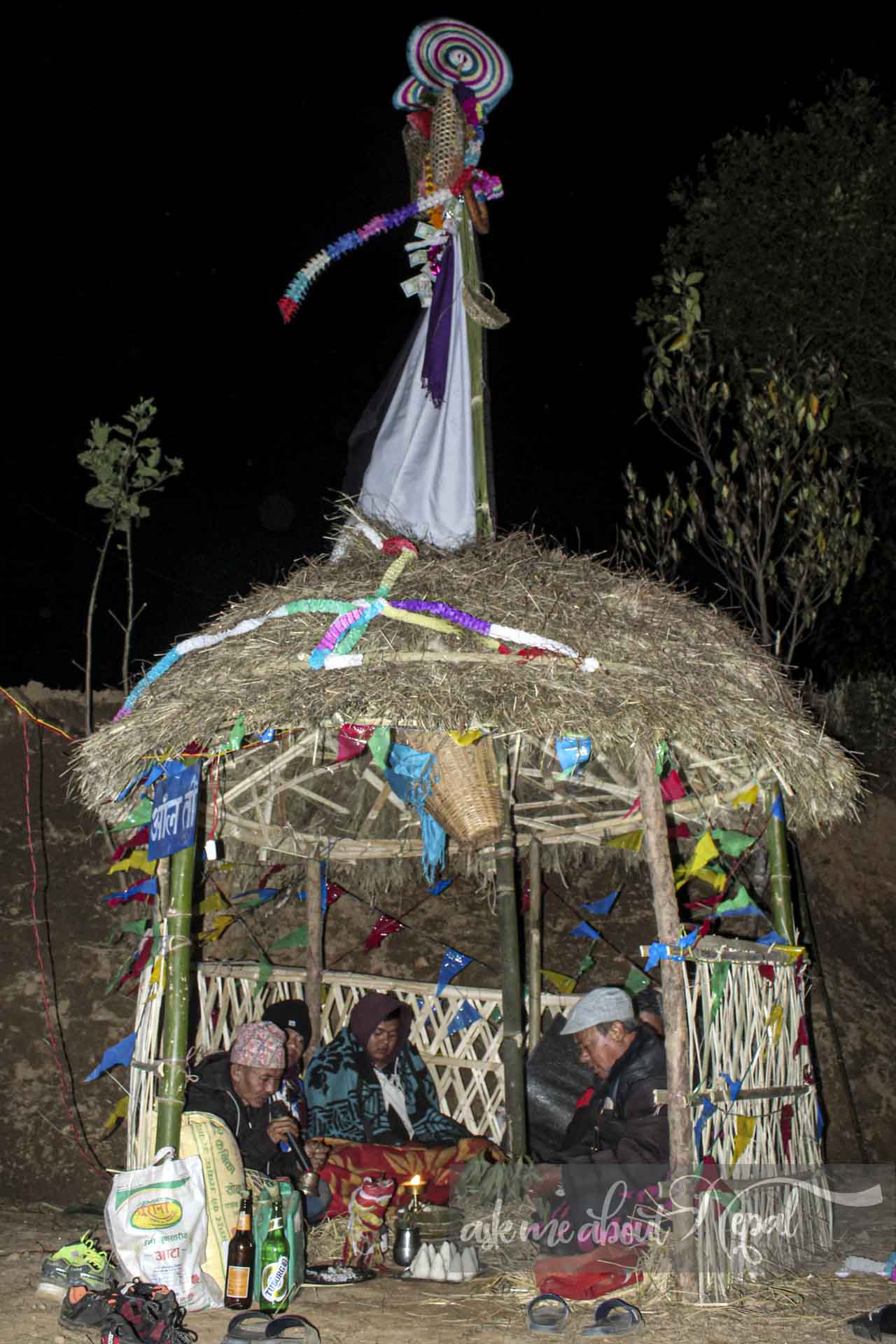
Ala, a bamboo flag is raised, where the spirits of the deceased reside until they are transferred to an individual “pla” (effigy) for the culmination of the ceremony. The flag is generally raised over the house of the deceased.
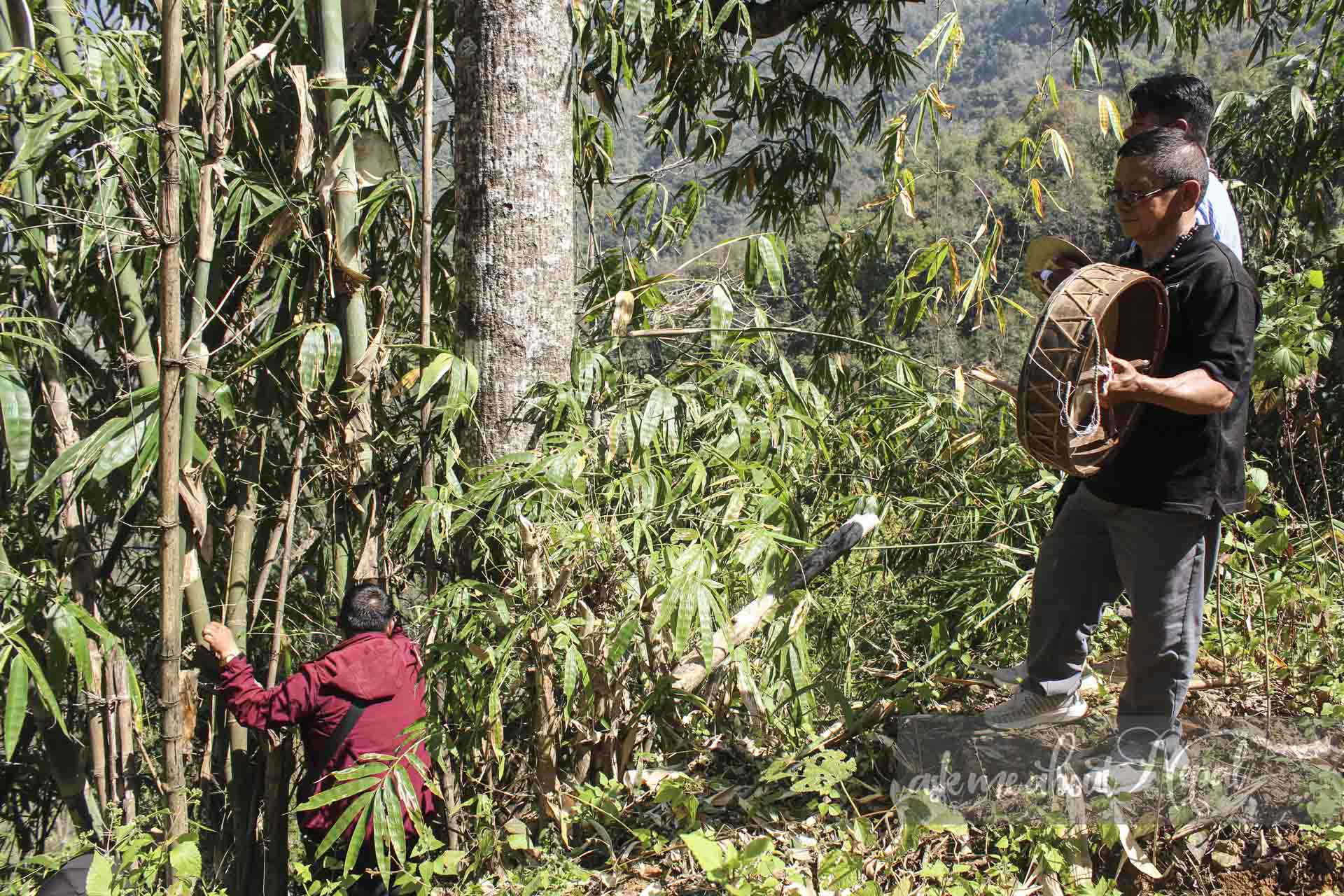
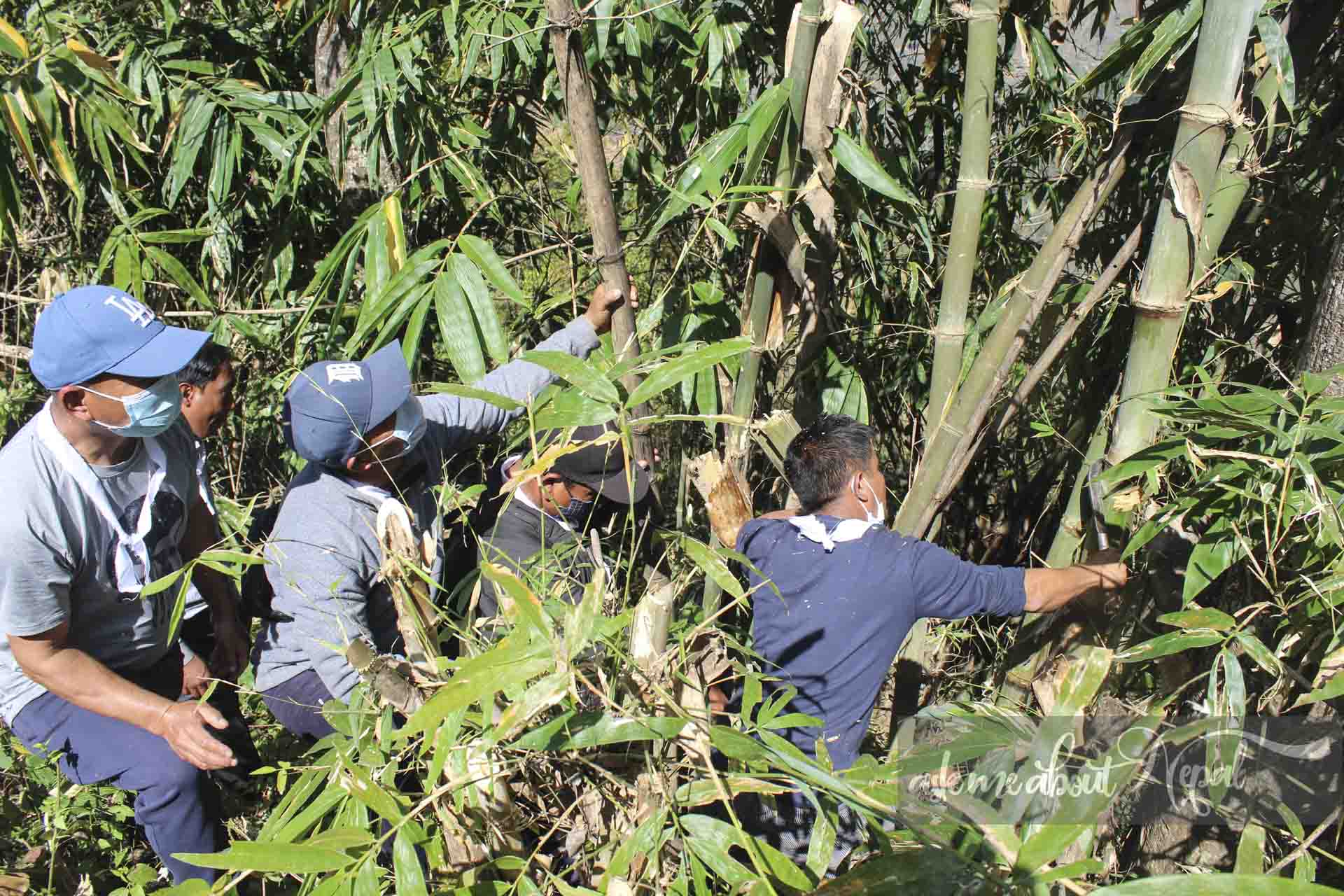
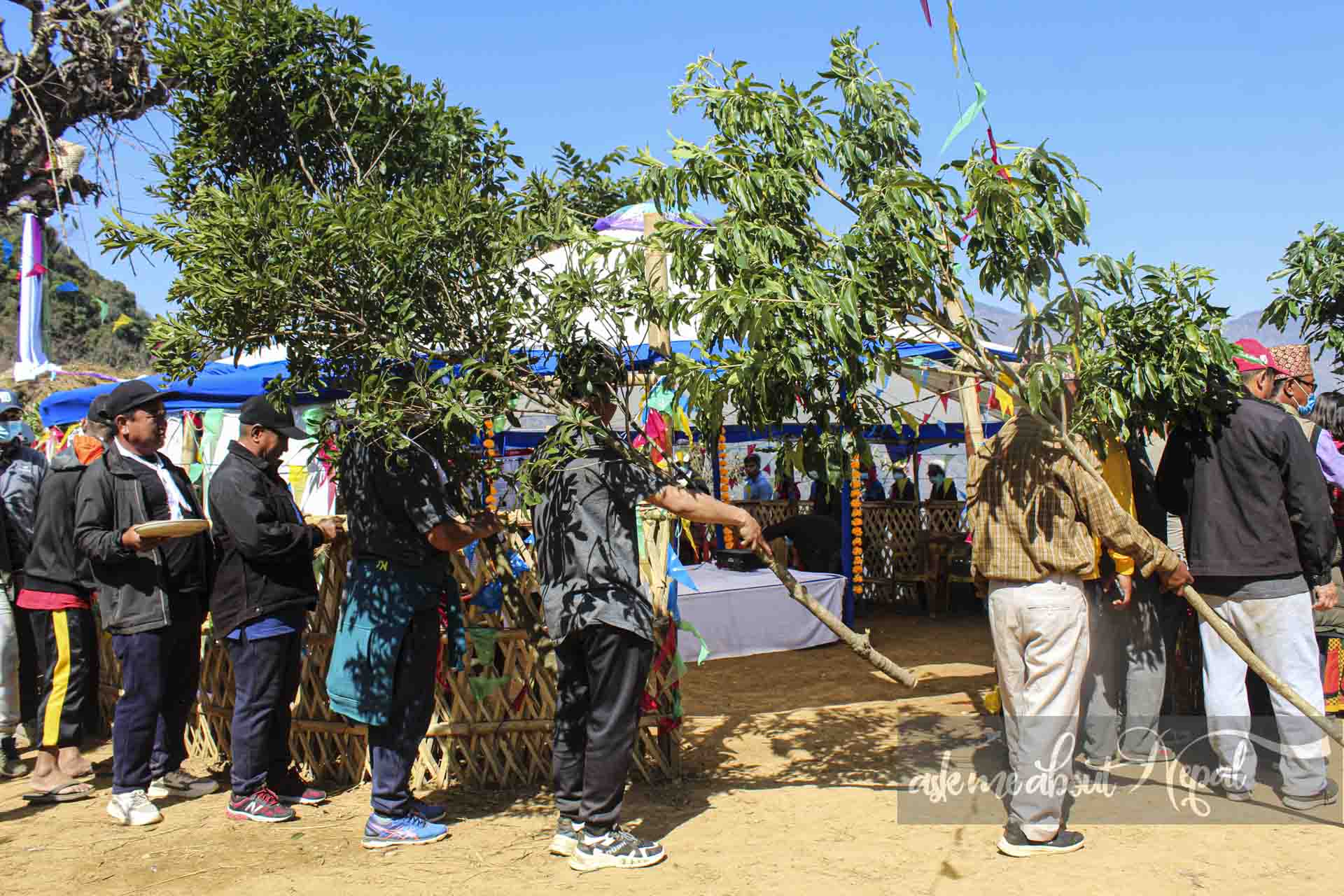
Klepri recites a verse at bamboo groves, and whichever bamboo nods is used as “Ala”. “Mul chora” and sons cut and clean the 8-cubit tall bamboo and carry it vertically to “Plati”, and whilst doing so, the bamboo must never touch the ground.
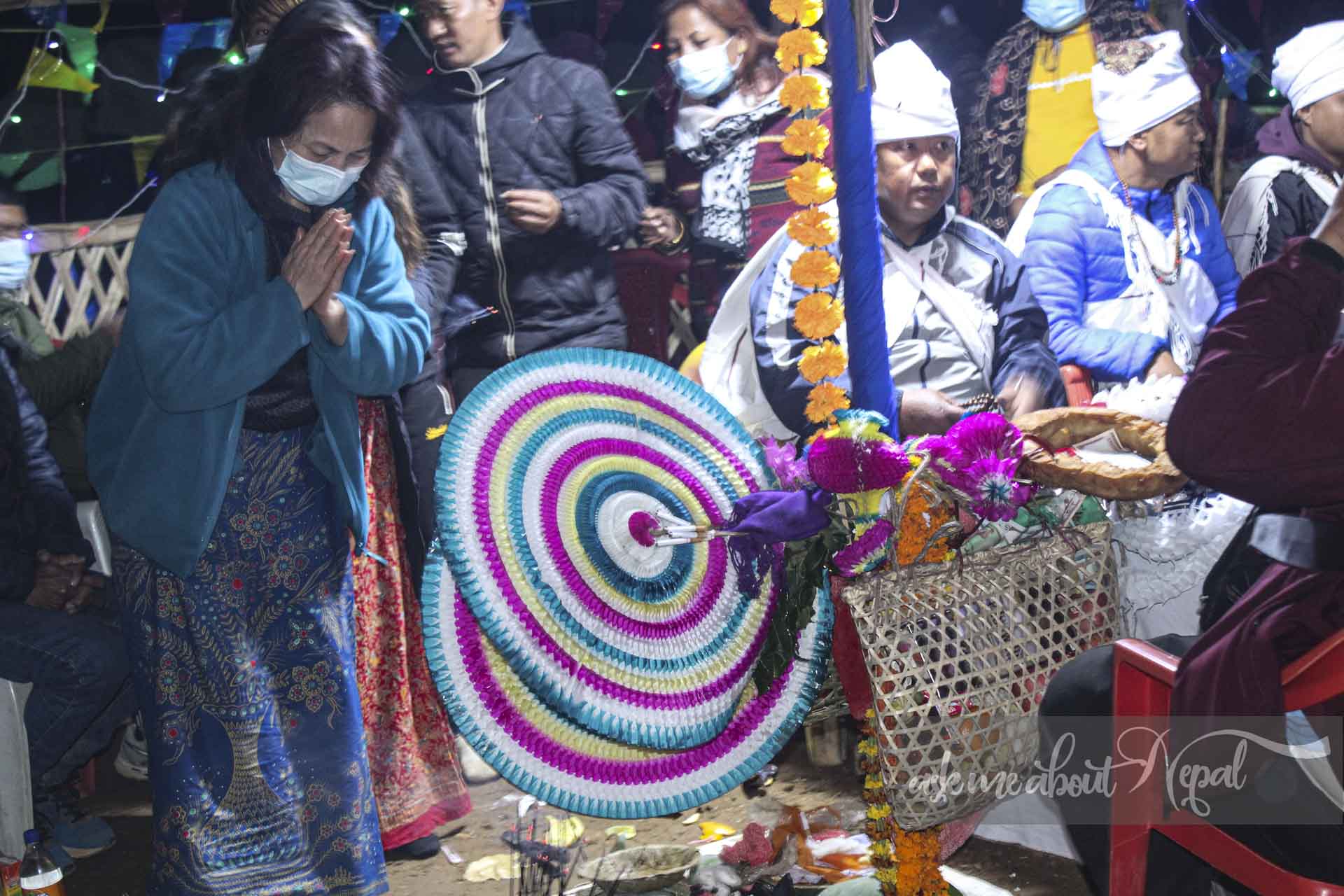
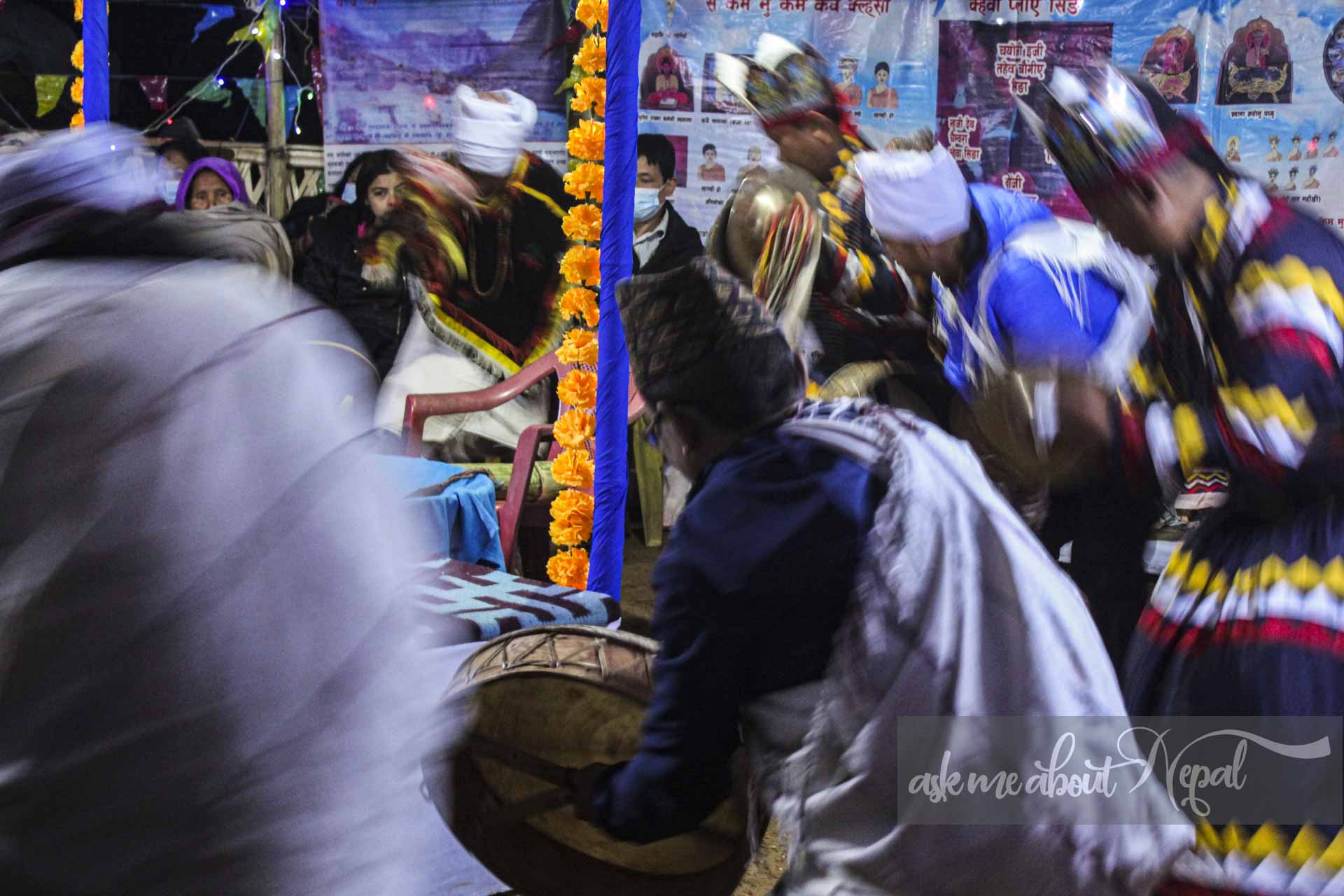
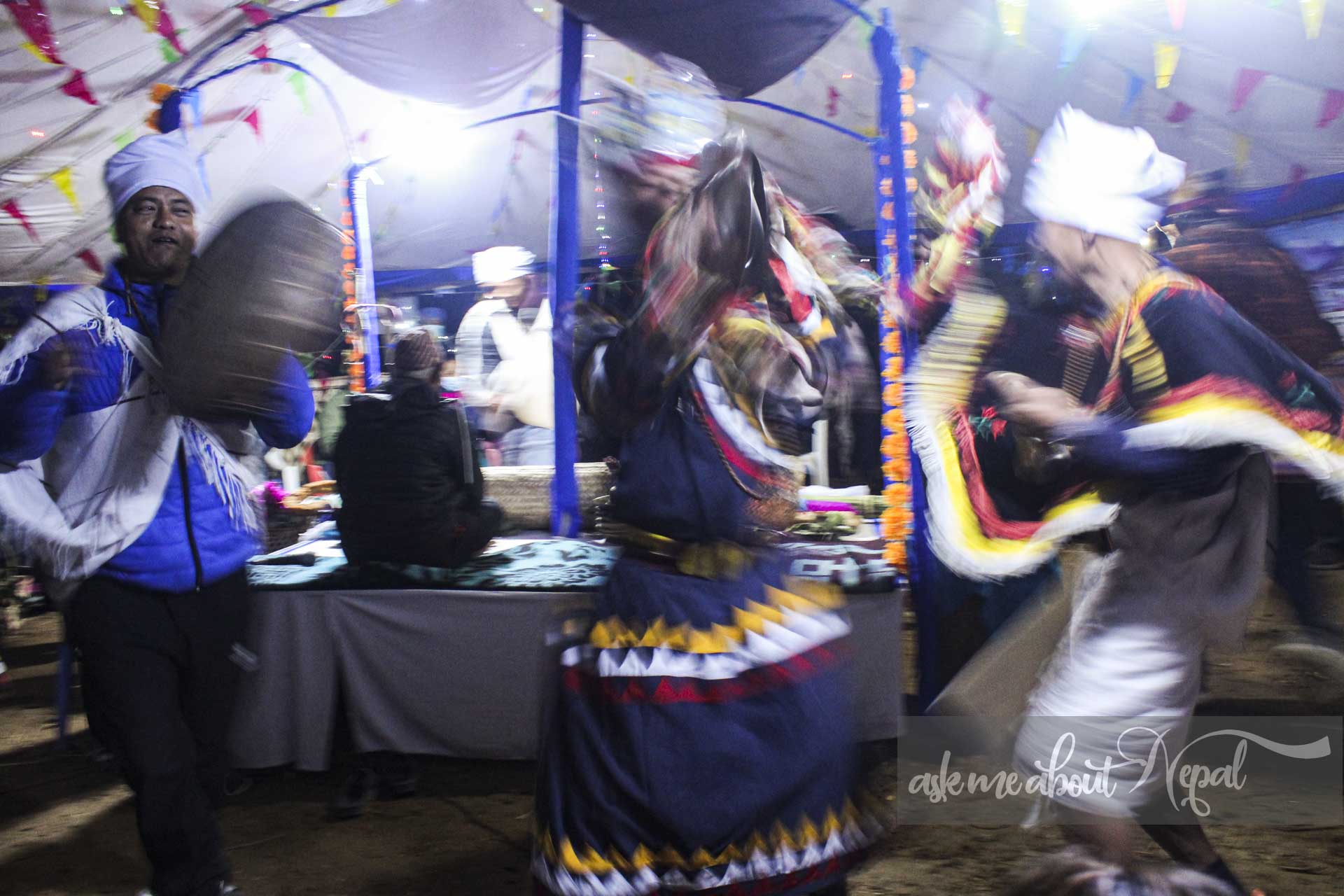
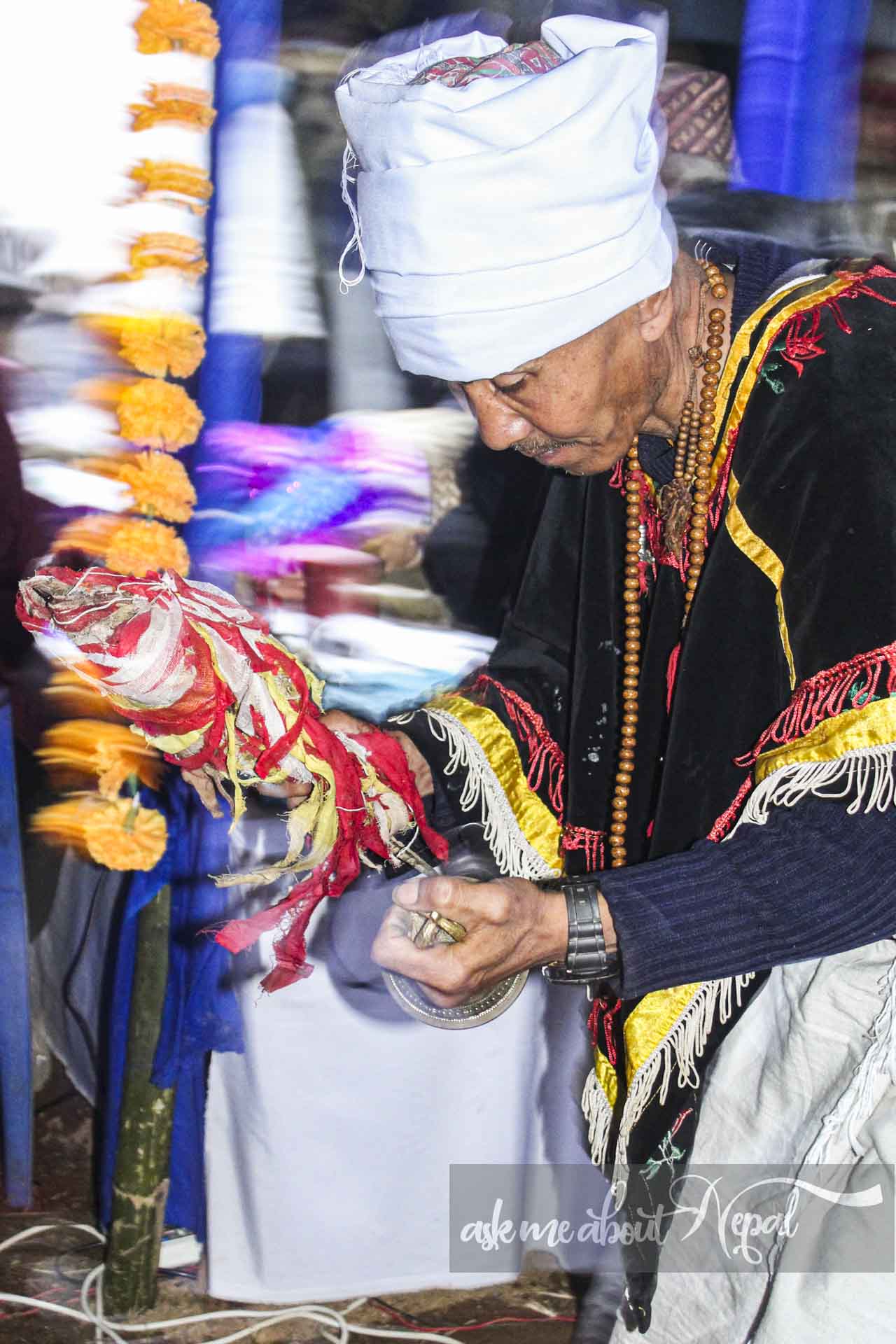
At “Plati”, the “Ala” is decorated, and it undergoes an elaborate puja by all the mourners and family members. Patchyu and Klepri perform a ritual dance around it before installing the bamboo in the “Alati”, the house of Ala.
Patchyus perform elaborate puja while chanting holy verses to request all the 12 “Chihyu” to come and dwell in Ala.
Third Day of Arghum
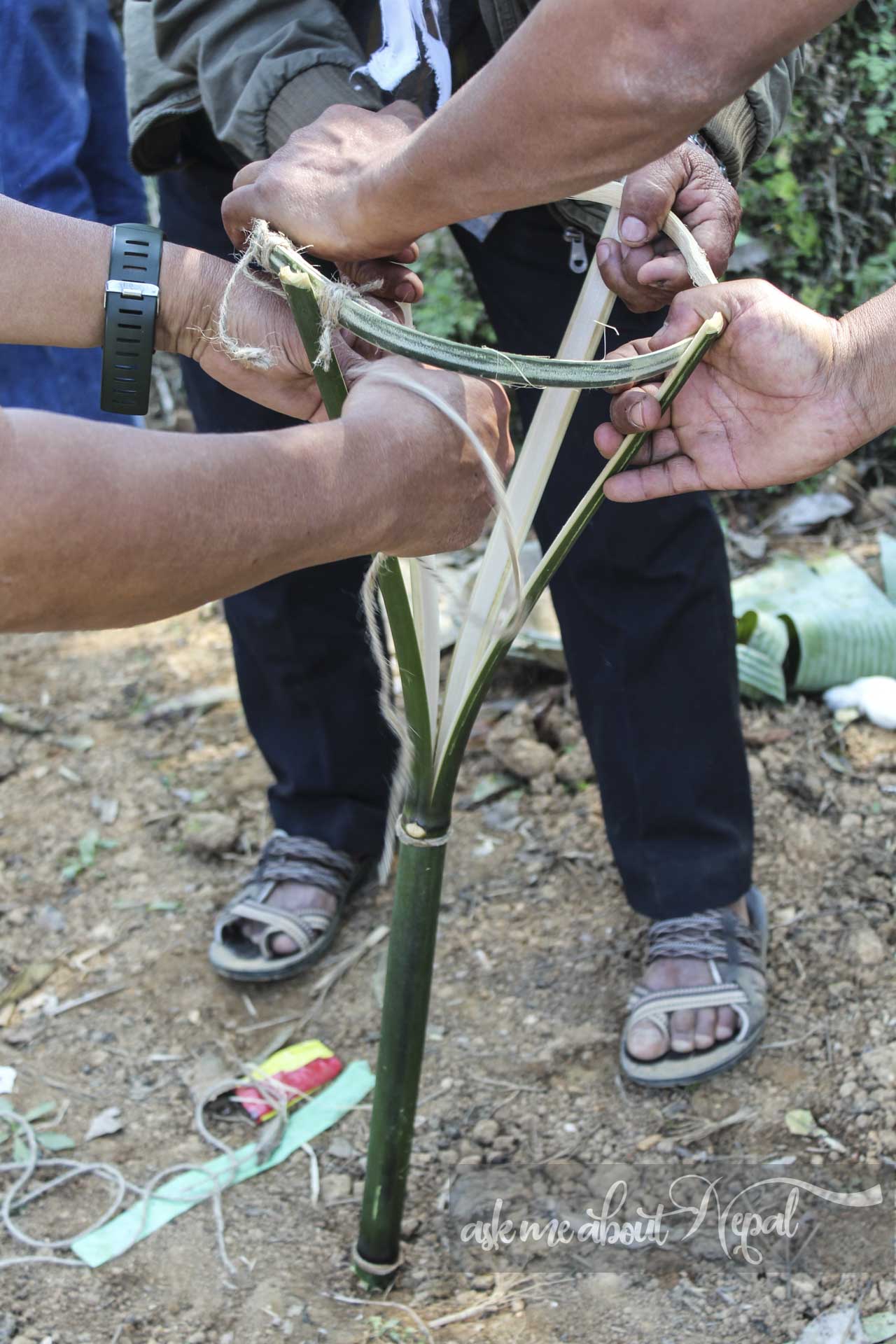
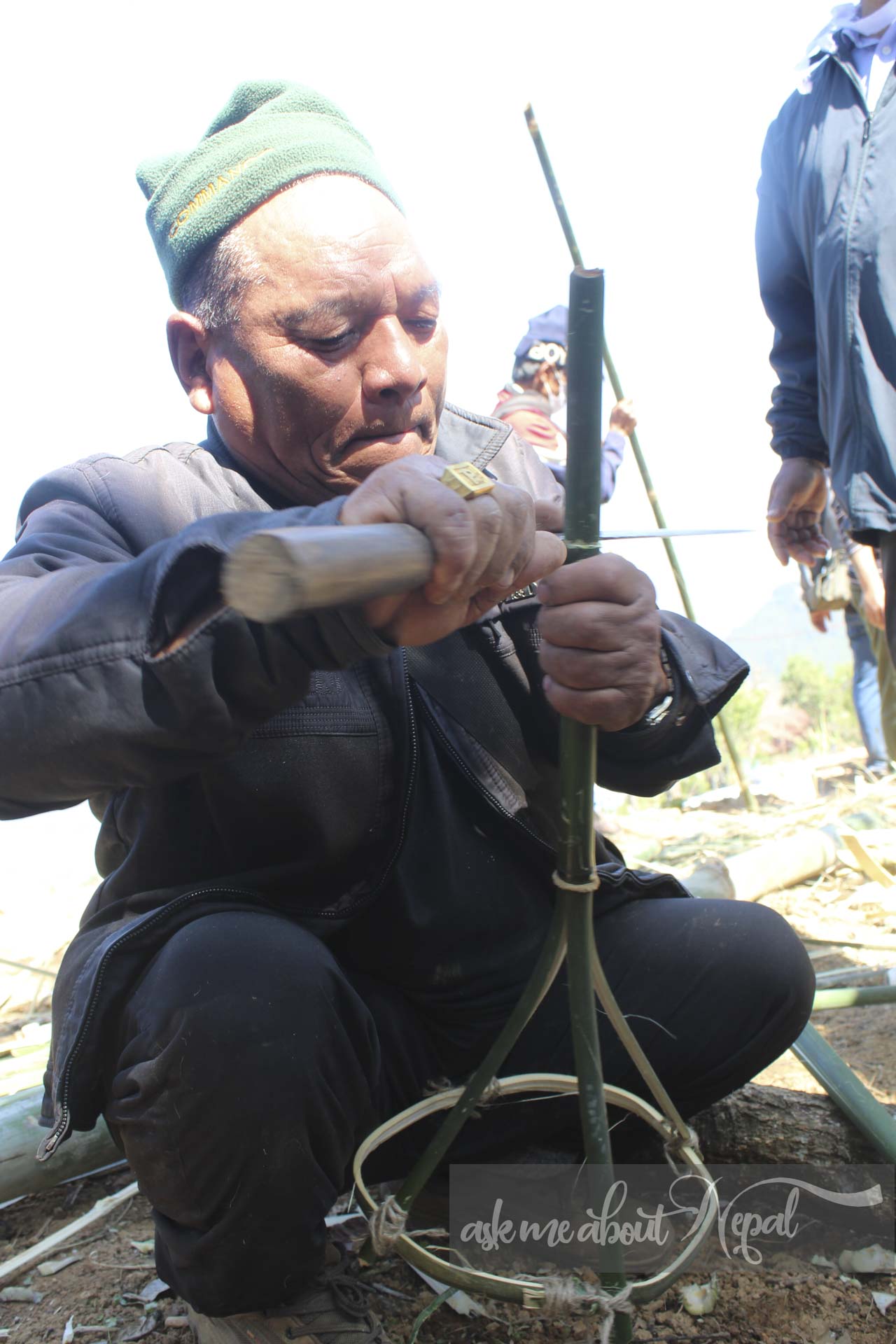
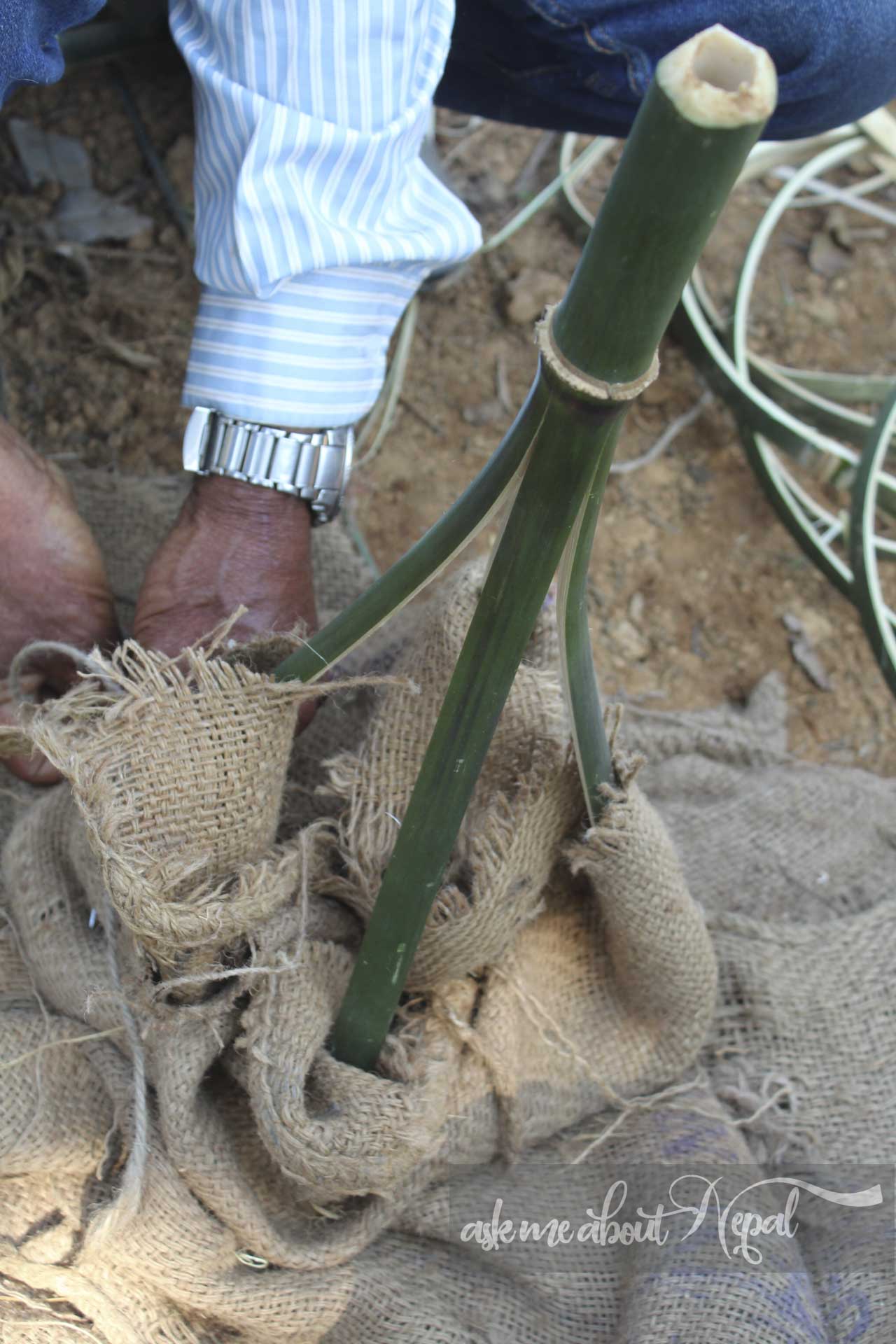
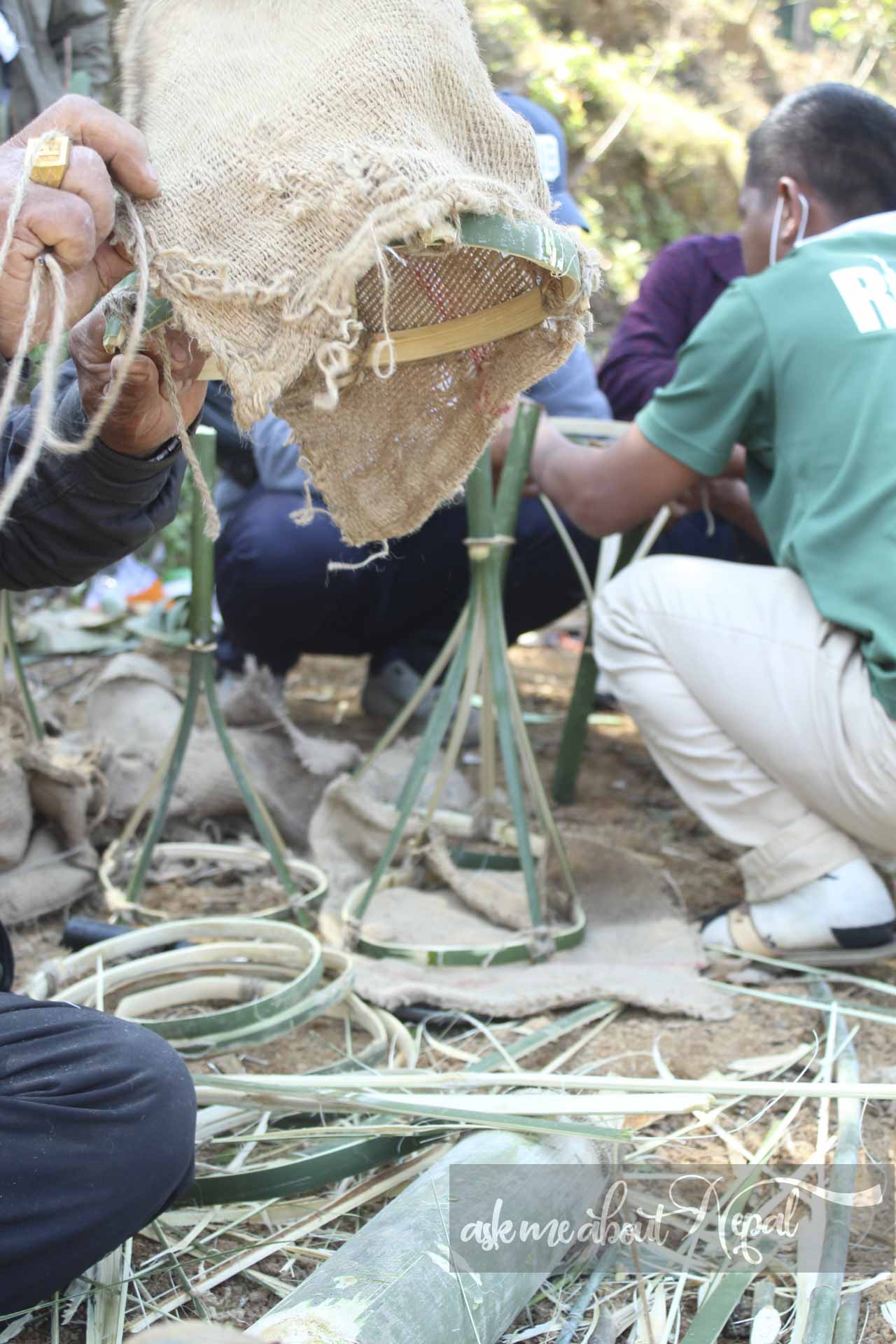
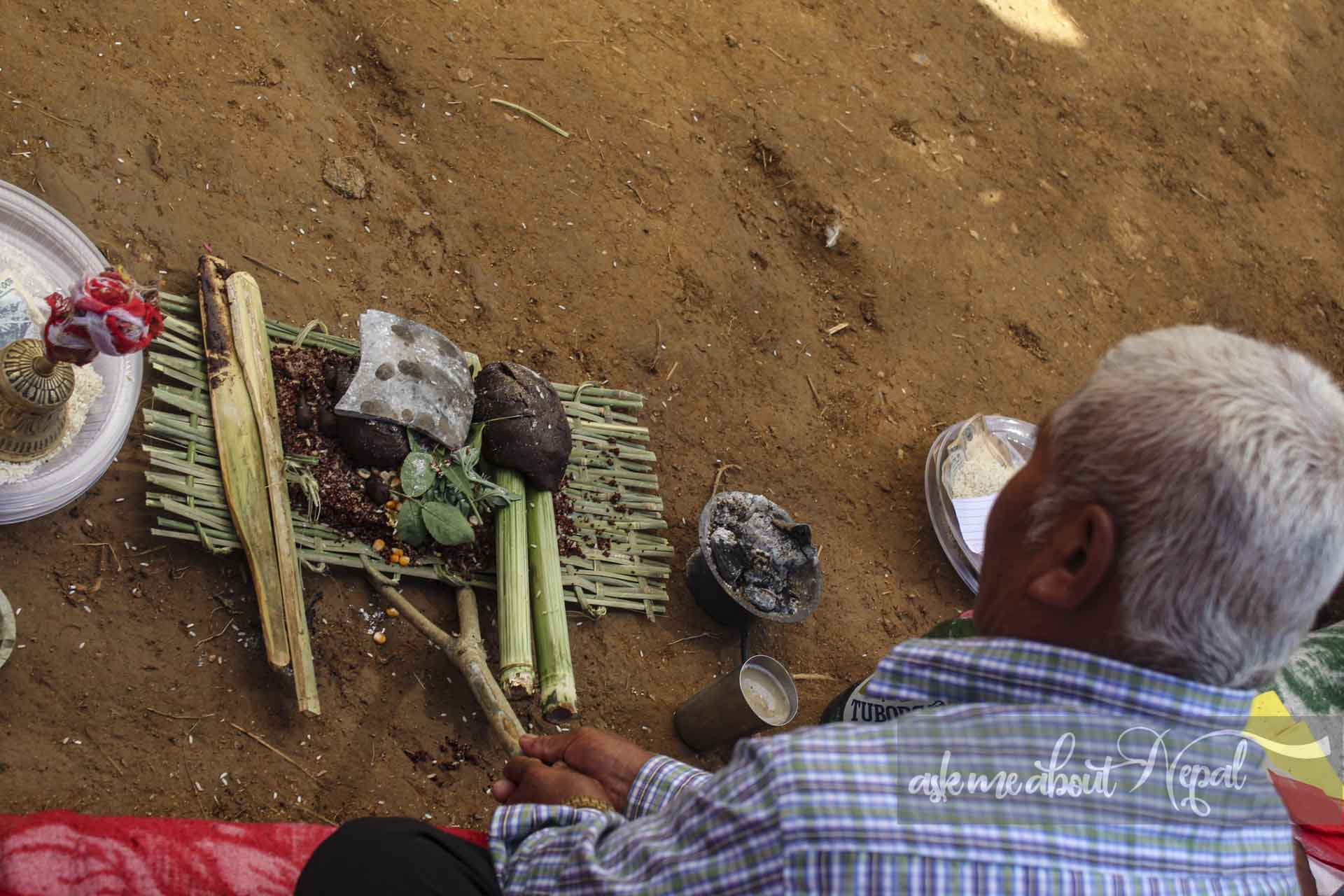
The “Mho” affines (jwai, or son-in-law in Gurung language) collect certain types of plants’ woods, leaves, and seeds that symbolize bones, hair, heart, blood, eyes, nose, and various other body parts from the nearby forest to assemble the “Pla”. A cowry shell is used as a symbolic “astu “, ash from the funeral pyre, and placed inside “Rhi” (bone), a piece of bamboo. Final “Pla” if of a man is wrapped in a white fabric, and if a woman, wrapped in a dotted fabric, the “chit ko kapada”.
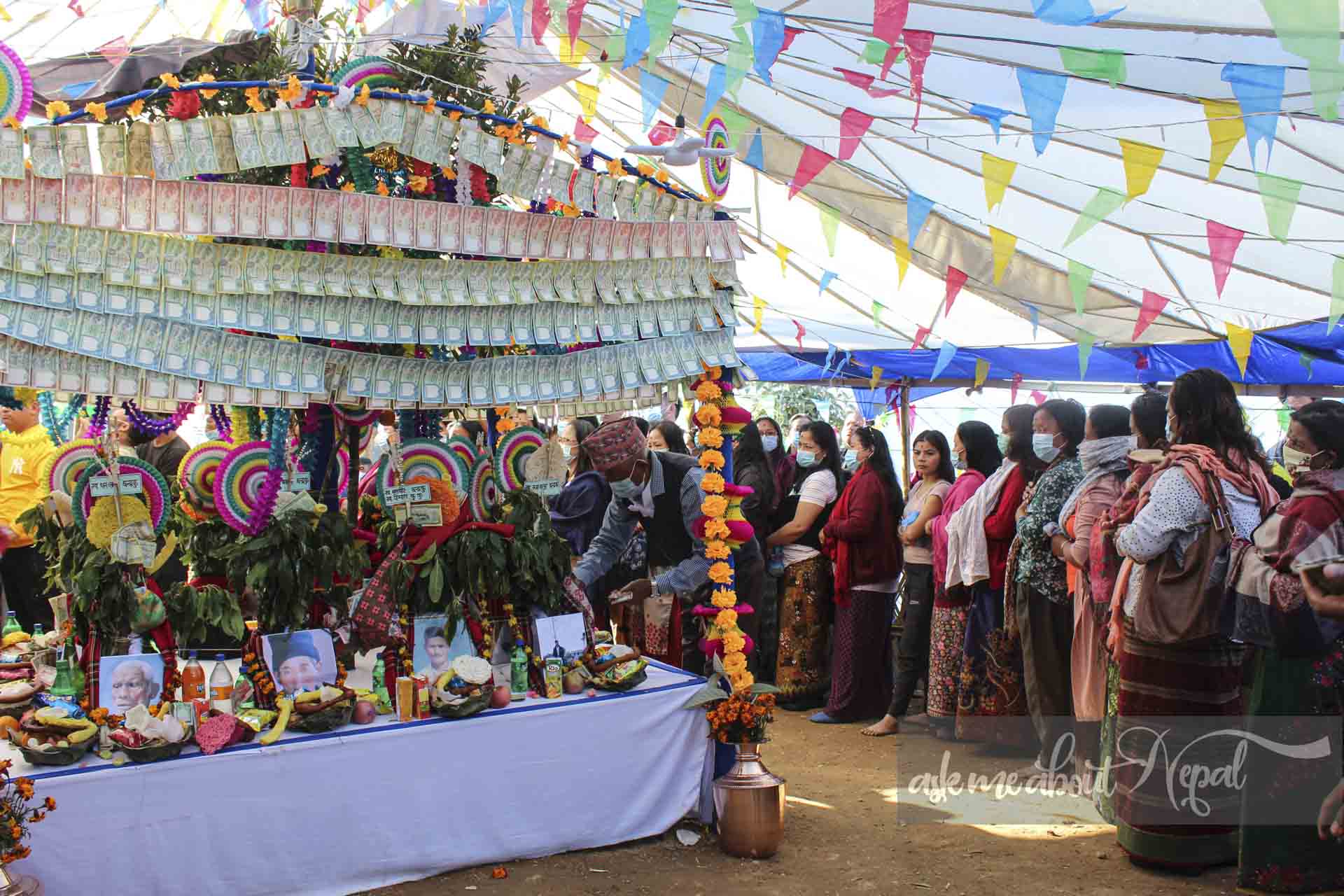
All the “Pla” are decorated, they now have names and photos of the deceased, and are meticulously installed at an altar in “Plati”. The souls “Chihyu” are now transferred to their respective “Pla” at the request of Patchyus and Klepris. Mourners and family members circumambulate the altar. Patchyus and Klepris also circumambulate it, reciting mantras, clashing cymbals, and beating ritual drums.
“Rhitiba”, the dual dance between “Mho” and Patchyus and Klepris takes place at a crossroad or open space, where “Mho” act and are costumed as ghosts and demons who have stolen “Rhi”, the bone. The Patchyus and Kelpris perform choreography to the sound of cymbals and drums, advance slowly towards “Mho” to capture the “Rhi”. After capturing the stealer of genuine “Rhi”, another elaborate Puja is performed, and “Rhi” are then placed inside the “Pla” so that the deceased person can live again for one last time.
Fourth Day of Arghum
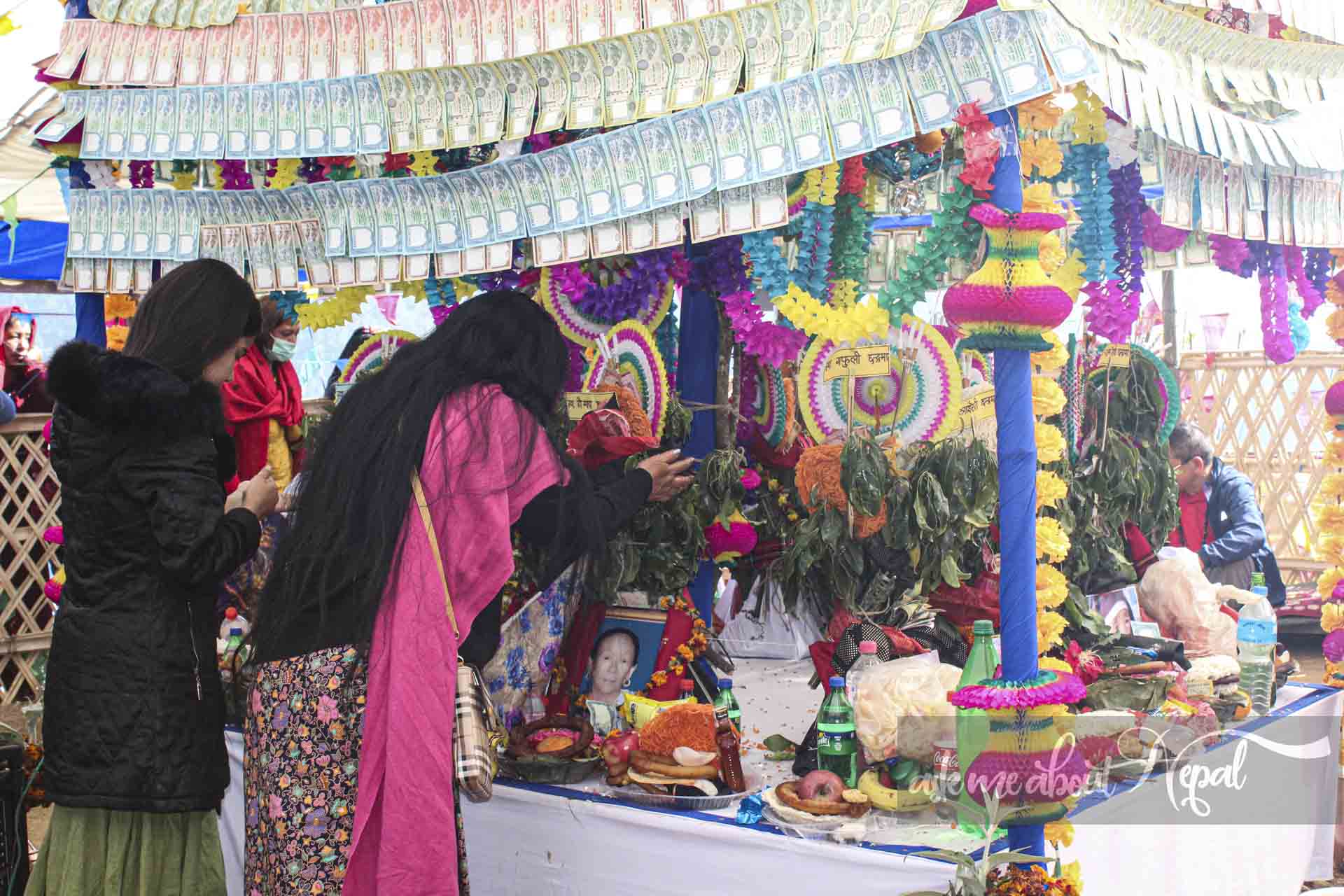
All mourners worship “Pla” with “Rhi” inside, take turns to apply oil, make money and food offerings for the one last time to the “Pla”. Many cries were heard remembering their family during this solemn occasion.
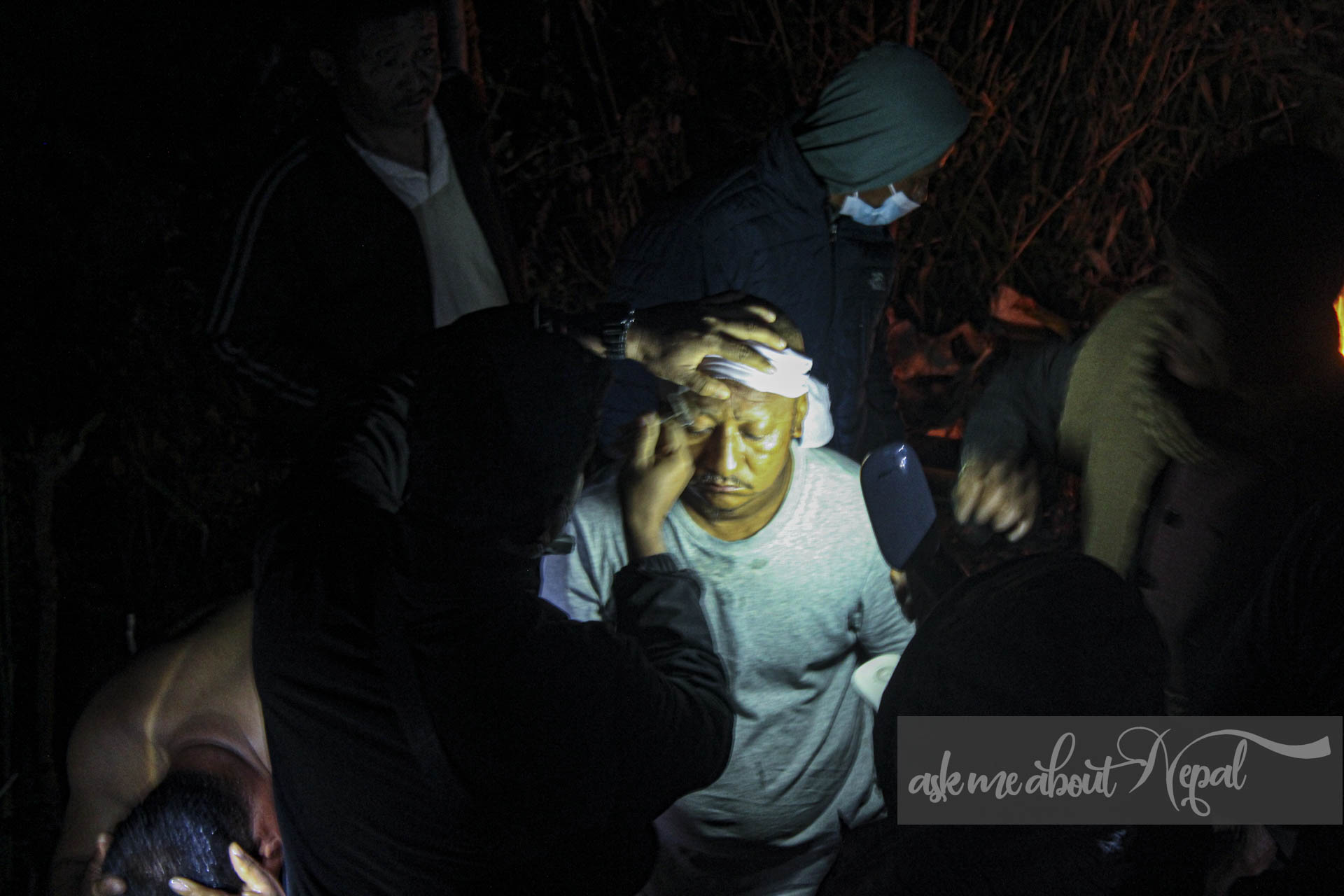
In the late evening, after offering 108 oil wick lamps in the name of “Chihyu”, son-in-laws carry “Pla” tied to their bhangra (a cross body scarf), altar at “Palti” is dismantled, “Ala” is taken down, and everybody marches to the cremation ground where men in the patrilineage shave heads and facial ornaments including eyebrow. “Pla” and “Ala” are burnt in a funeral pyre by Patchyus and Klepris as the last rite and telling the deceased that they are now indeed dead and must never return to earth. None of the family members or onlookers should face the cremation ground while the ritual is conducted, but return back to their tents.
Fifth Day of Arghum
Morning starts with “Jokhana”, the fortune reading. Elderly Patchyu tells each one whether their “Pitris” (deceased ancestors) are happy and if not, what families should do to appease them and bring prosperity in the future.
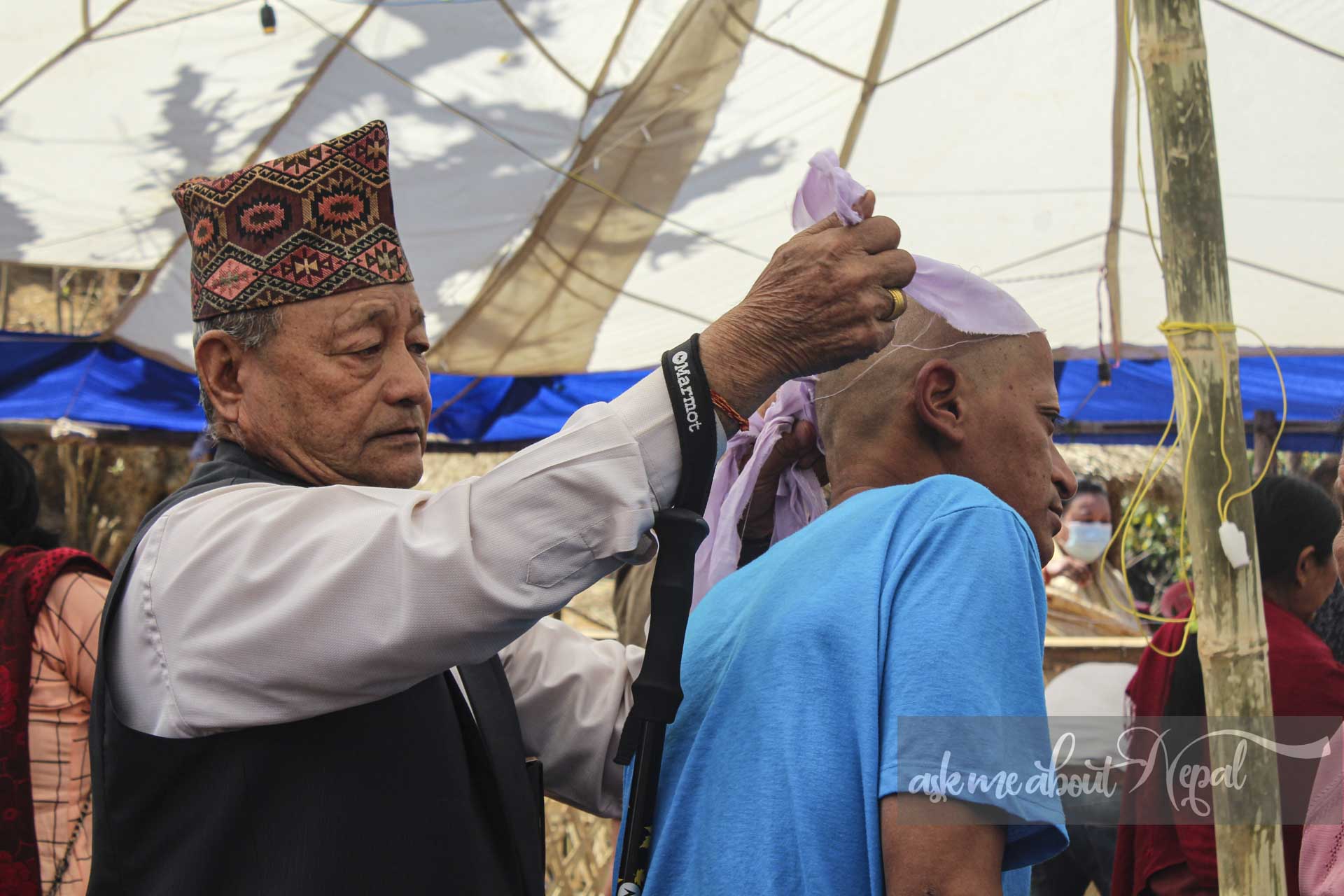
“Asyo” the mamas, or affines on the mother's side, bring food, drink, and cloth gifts to their respective mourners. They apply oil to their kin’s head, comb hair, give topi to men, and Lachha dori, a hair accessory and stoles to women, and hence setting them free from death pollutes and ritual is called “Shyai Shyai Garne”. It is believed that without essential gifts given by “Asyo”, the Arghum is ineffectual.
After the 5-day ritual or Arghum, the deceased then safely reaches the land of ancestors.
Photo story of Arghum of Bhuchha Gurung Family, Bachha Village, Parbat District
Baccha Village with Annapurna range on the backdrop. Parbat District.Palti tent at Arghum ritual of Bhuchha Gurung in Baccha Village, Parbat District.Klepri Toran Gurung addressing the first day of the Arghum ritual of Bhuchha Gurung in Baccha Village, Parbat District.Patchyus making ritual to ward off evil spirits during Arghum ritual of Bhuchha Gurung in Baccha Village, Parbat District.Sacrificing chicken to feed evil spirits and drive them away from the path of deceased family souls "Chihyu". "Mho" help to carry out the ritual during the Arghum ritual of Bhuchha Gurung in Baccha Village, Parbat District.Invoking bamboo for "Ala"during Arghum ritual of Bhuchha Gurung in Baccha Village, Parbat District.Mul Chora cutting invoked bamboo for "Ala"during Arghum ritual of Bhuchha Gurung in Baccha Village, Parbat District.Bringing "Ala" to "Plati", the bamboo must not touch the ground during the journey. Arghum ritual of Bhuchha Gurung in Baccha Village, Parbat District.Decorating and invoking "Ala" during the Arghum ritual of Bhuchha Gurung in Baccha Village, Parbat District.Mourners take turn to make offerings to "Ala"during the Arghum ritual of Bhuchha Gurung in Baccha Village, Parbat District.Patchyu (in white turbans) and Klepris (in colourful robe) make ritual dance before installing "Ala" at "Alati"during the Arghum ritual of Bhuchha Gurung in Baccha Village, Parbat District.Patchyu (in white turbans) and Klepris (in colourful robe) make ritual dance before installing "Ala" at "Alati" during the Arghum ritual of Bhuchha Gurung in Baccha Village, Parbat District.
Head Patchyu makes ritual dance before installing "Ala" at "Alati"during the Arghum ritual of Bhuchha Gurung in Baccha Village, Parbat District.
Head Patchyu makes ritual dance before installing "Ala" at "Alati"during the Arghum ritual of Bhuchha Gurung in Baccha Village, Parbat District.
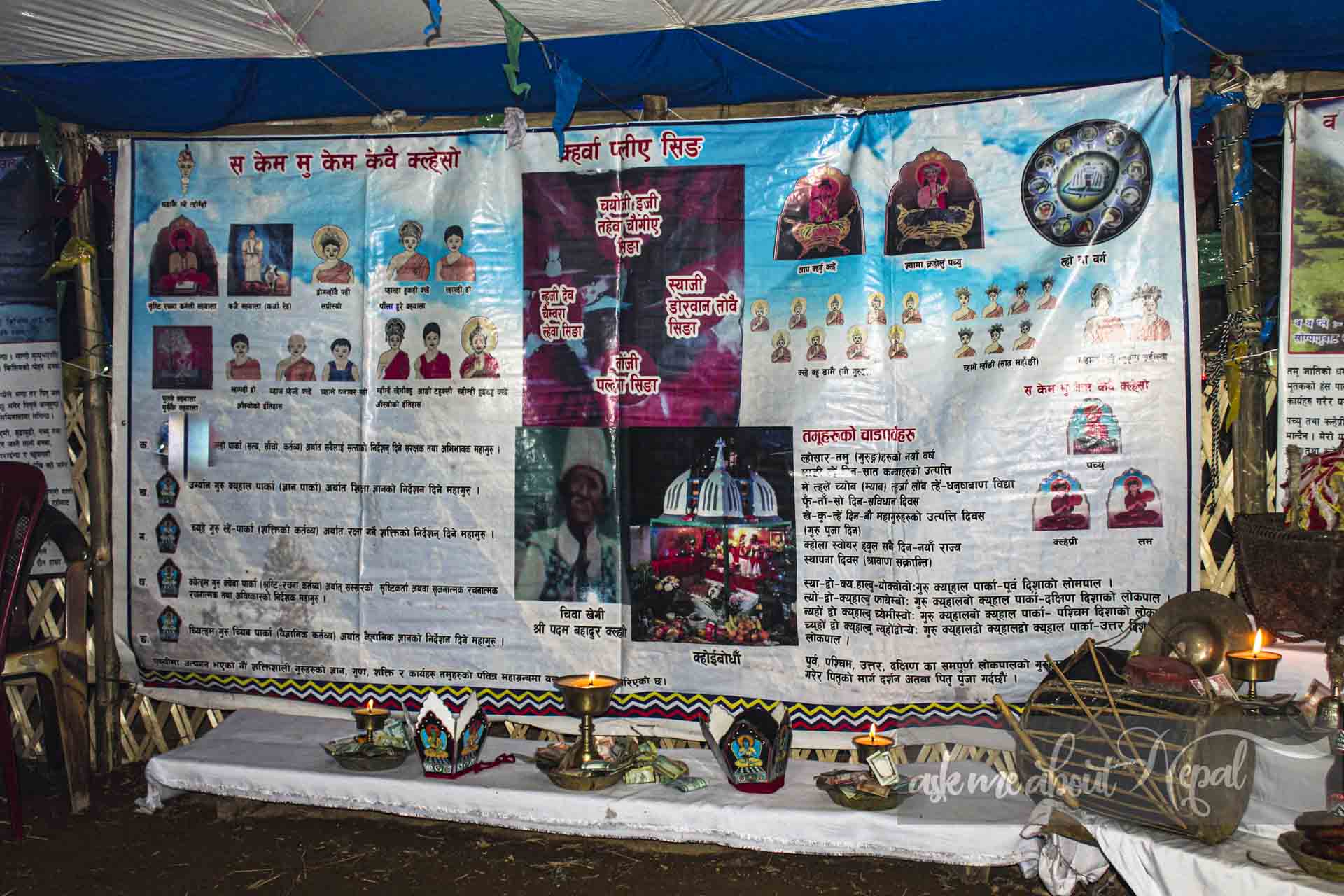
Banners about Gurung traditional priests and their practices with various ritual items at altar inside "Plati". Banners about Gurung traditional priests and their practices with various ritual items at altar inside "Plati".Installing "Ala" at "Alati". Ala is pulled all the way up and inserted through the roof-hole such that top part of Ala with offerings hanging is exposed above roof.Patchyus make rituals to summon the souls of deceased to dwell in "Ala"during Arghum ritual of Bhuchha Gurung in Baccha Village, Parbat District."Ala" with Annapurna range. during Arghum ritual of Bhuchha Gurung in Baccha Village, Parbat District.All the women along with "Mul Chori"come to the nearest motorable road to receive "Mho" who have come back from forest fetching the Pla-essentials. "Mho" circle â"Plati" carrying Pla-essentials prior constructing "Ala".
"Mho" constructing a bamboo frame for "Pla".
"Mho" constructing a bamboo frame for "Pla".
"Mho" constructing a bamboo frame for "Pla".
"Mho" constructing a bamboo frame for "Pla".
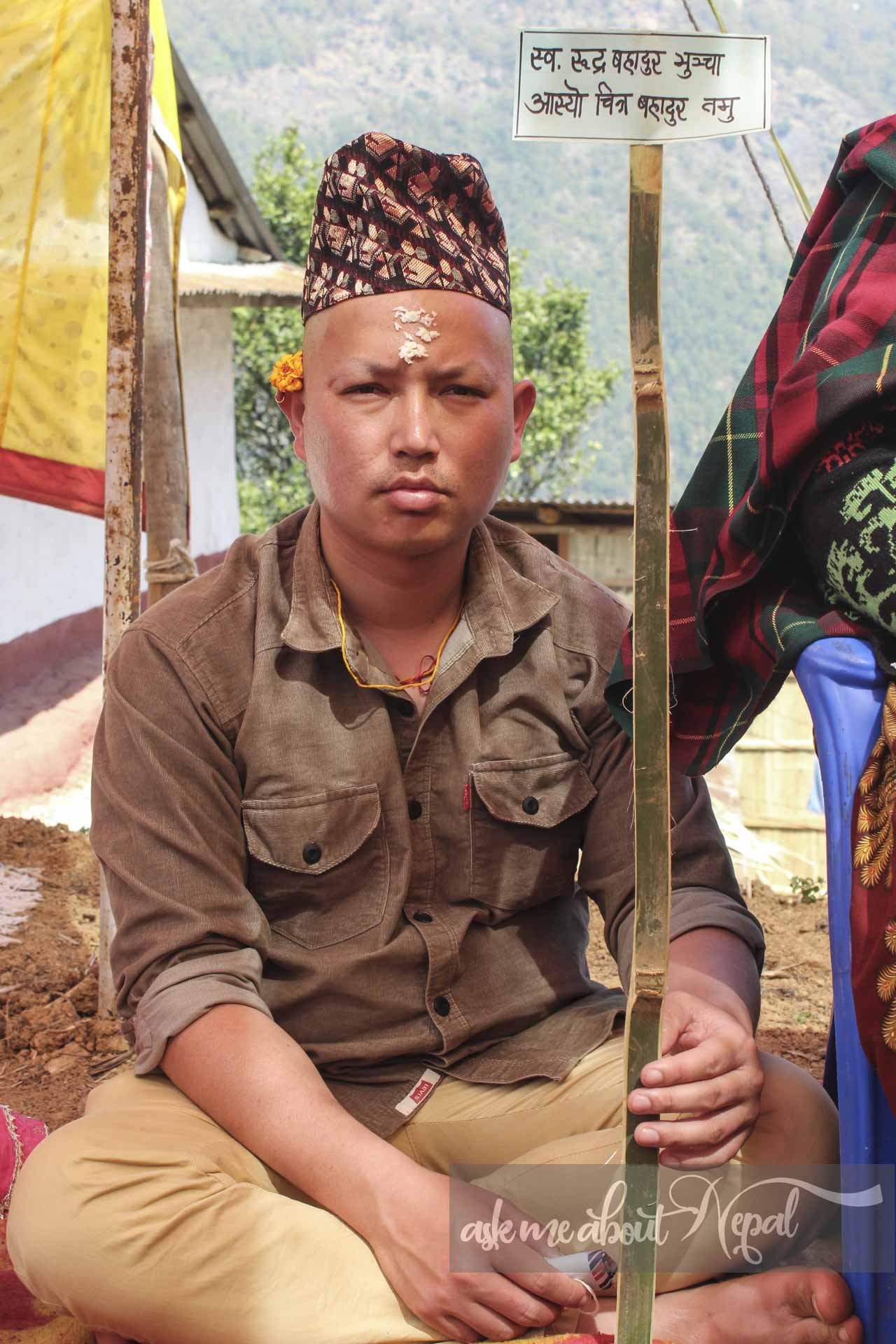
"Pla", the white ones are males and the ones wearing "Chit ko Kapada" are females. Mourners circles the altar and make offerings to each "Pla". The altar decorations exude wealth and prosperity of Bhuchha Gurungs. All the money hung as a part of decoration and offerings made by mourners are collected and divided amongst "Mho" for their services during Arghum. Deceased family memebers "Pla"with their photos at the altar. Klepris moving slowing before attacking "Mho" in pursue of "Rhi" during the "Rhitiba ritual". "Rhitiba ritual": "Mho" dressed like transvestites, wear fake phalluses and fake pair of testicles and mimic penetration of the priest, cause the public to laugh at their behavior.When Klepri Toran Gurung gets hold of the "Mho" hiding the geninue "Rhi", the "Rhitiba Ritual" concludes. Puja post Rhitiba ritual. Many more offerings of food, liquor, lamps and incense while Klepri reads out the deceased names. The mythical wooden bird called "Chyaruru" is Klepri's guru and believed to have psychopomp functions. Mourners offering 108 oil wicks during Arghum ritual of Bhuchha Gurung in Baccha Village, Parbat District."Mho" circle Pla-altar, they hover rooster, loom handle, nanglo etc also sprinkle sacred water as offering gesture. Arghum ritual of Bhuchha Gurung in Baccha Village, Parbat District.Mourners circles the altar and make offerings including applying oil to each "Pla". The altar decorations exude wealth and prosperity of Bhuchha Gurungs. All the money hung as a part of decoration and offerings made by mourners are collected and divided amongst "Mho" for their services during Arghum. The possessed Patchyus and Klepris make a final ritual to sending off the souls of deceased from "Pla". It is believed that "Pla"quivers as the souls depart, as soon as these priests get the slightest hint of them leaving, they upturn the table scattering "Pla" and run towards the cremation ground. That is when the "Mho" (seen sitting on the right) hurry and each one pick "Pla", tuck it in their bhangra for the procession to the cremation ground. The "Mul chora" hits pole at a symbolic threshold and shoots arrows at all the directions to symbolically kill the evil spirits (wooden and bow-arrow are the traditional weapon of the Gurungs).The procession is led by men carrying the white banner (that symbolizes path finder and leader). At the cremation ground for the first time since its installation, "Ala" is fallen down to burn the first thing in pyre. "Asyo" shave their kin's heads and eyebrows, tie the white ribbons around kin's head torn out of white banner. "Asyo" take white ribbons off their kin's head and hair of women that they had tied the previous night to set them free from death pollutes. The "Jokhana" ritual on the last day of Arghum ritual of Bhuchha Gurung in Baccha Village, Parbat District.Every Bhuccha family donates a prescribed amount to conduct this 5-day long Arghum and many donate extra to cover the cost of erecting makeshit tents, feeding more than 300 attendees 3 meals a day for a week, the helping hands at kitchen, the transportation, Klepris and Patchyuâs fees in terms of money and animals etc. Therefore to restore the fortune of the givers, Klepris and Patchyus toss consecrated grains and selroti crumbs which everyone try to catch on their scarves or cupped hands. These grains when placed at a food storage room back home supposedly usher in prosperity in family.Mourners sit on row for the "Syai Syai Ritual on the last of the Arghum ritual. "Asyo" the mamas or affines on the mother's side, bring food, drink, and cloth gifts to their respective mourners. They apply oil to their kin's head, comb hair, give topi (cap) to men, and Lachha dori, a hair accessory and stoles to women, and hence setting them free from death pollutes and ritual is called "Shyai Shyai Garne". It is believed that without essential gifts given by "Asyo".Mourners sit on row for the "Syai Syai Ritual on the last of the Arghum ritual. "Asyo" the mamas or affines on the mother's side, bring food, drink, and cloth gifts to their respective mourners. They apply oil to their kin's head, comb hair, give topi (cap) to men, and Lachha dori, a hair accessory and stoles to women, and hence setting them free from death pollutes and ritual is called "Shyai Shyai Garne". It is believed that without essential gifts given by "Asyo".The mourner at "Shyai Shyai Garne" ritual holding placard that reads his late father's name on the last day of Arghum ritual at Baccha Village, Parbat District.
A ritual of shaving head, reciting mantras, showering flower and lava, putting tika, dhup batti. Time came for boys to get rid of their clothes and put on pitambar langots.
Ask Me About Nepal (AMAN) is your go-to digital platform for authentic, well-researched insights into Nepal’s people, places, culture, and hidden gems. From adventure to history, food to folklore—explore Nepal like never before!