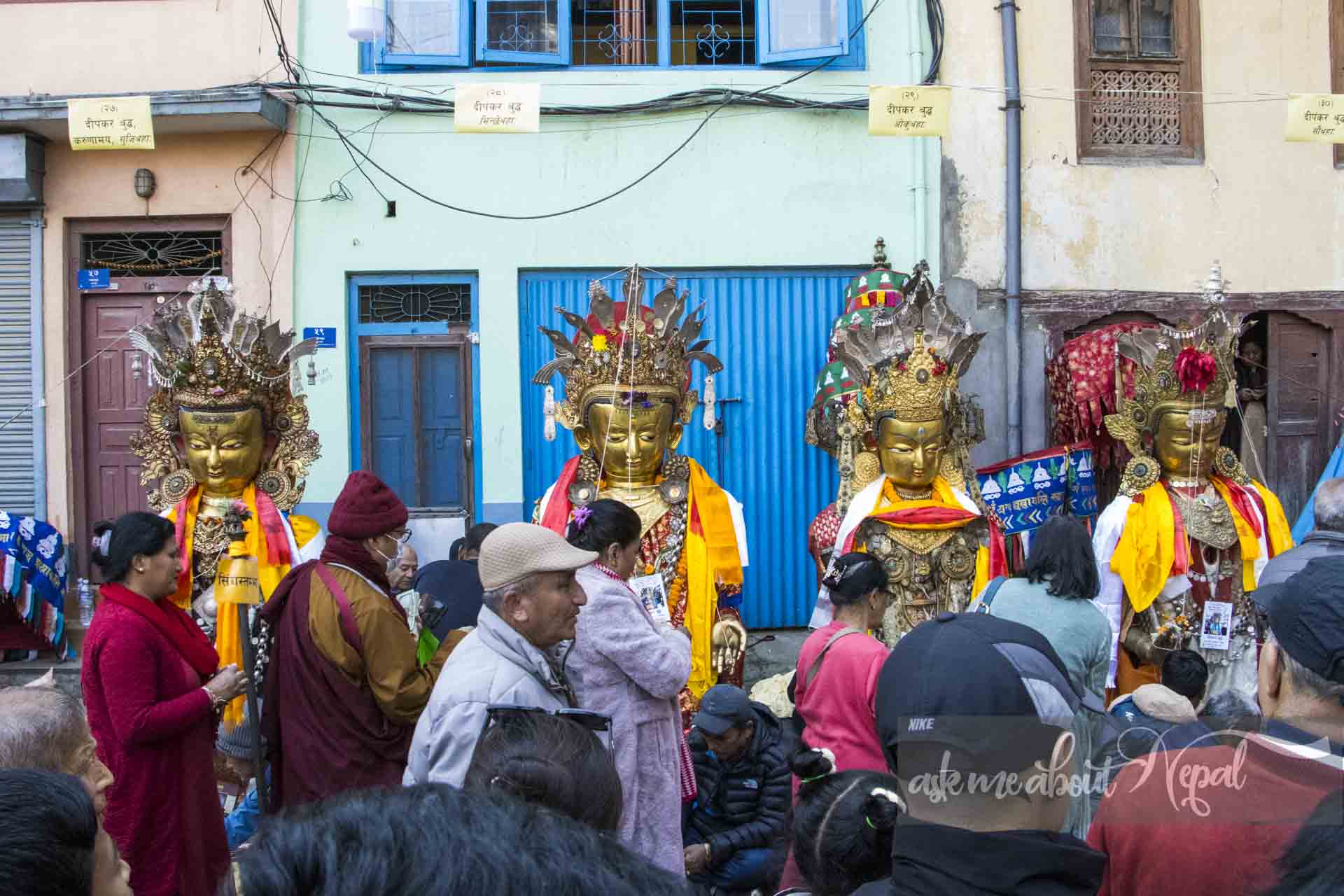
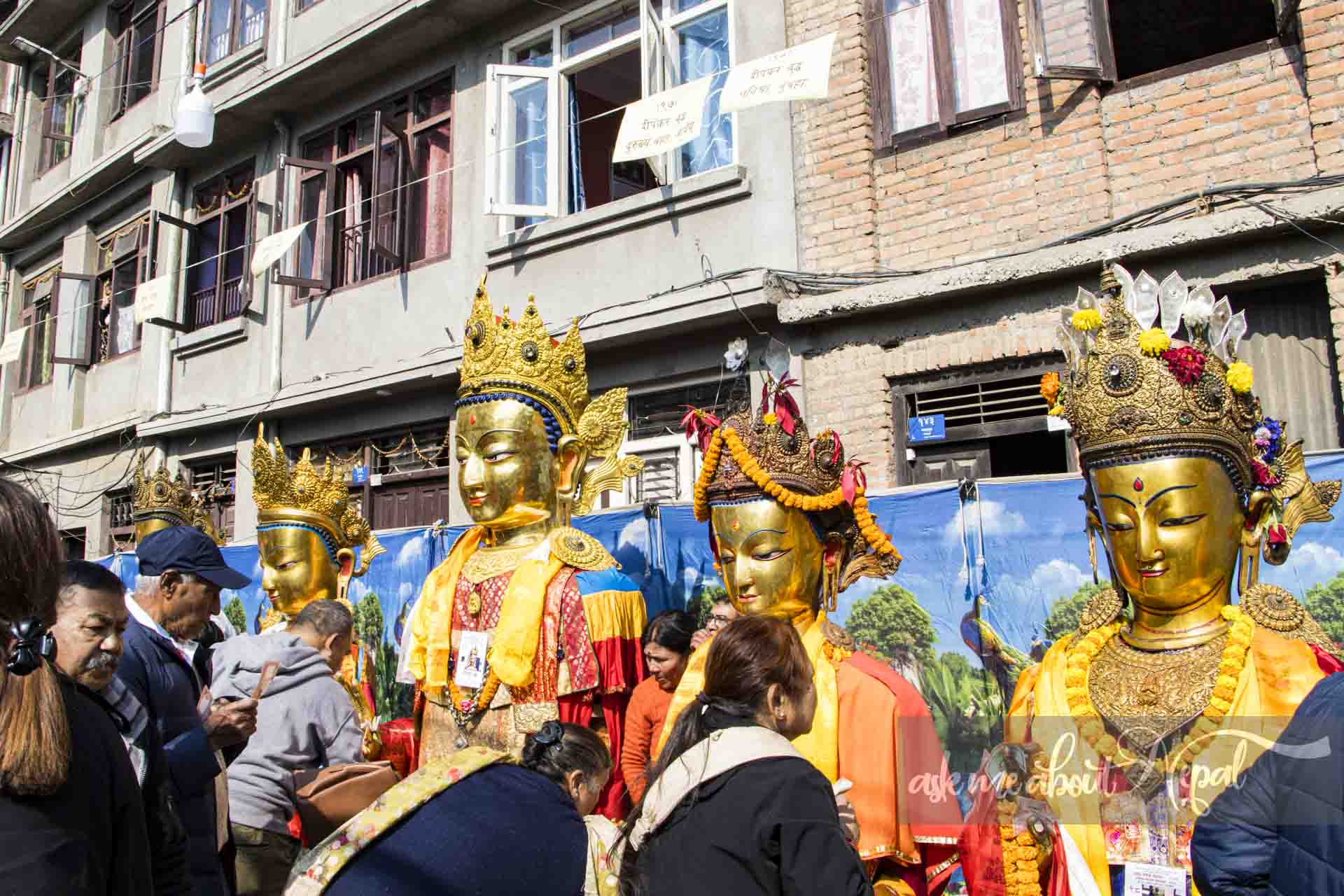
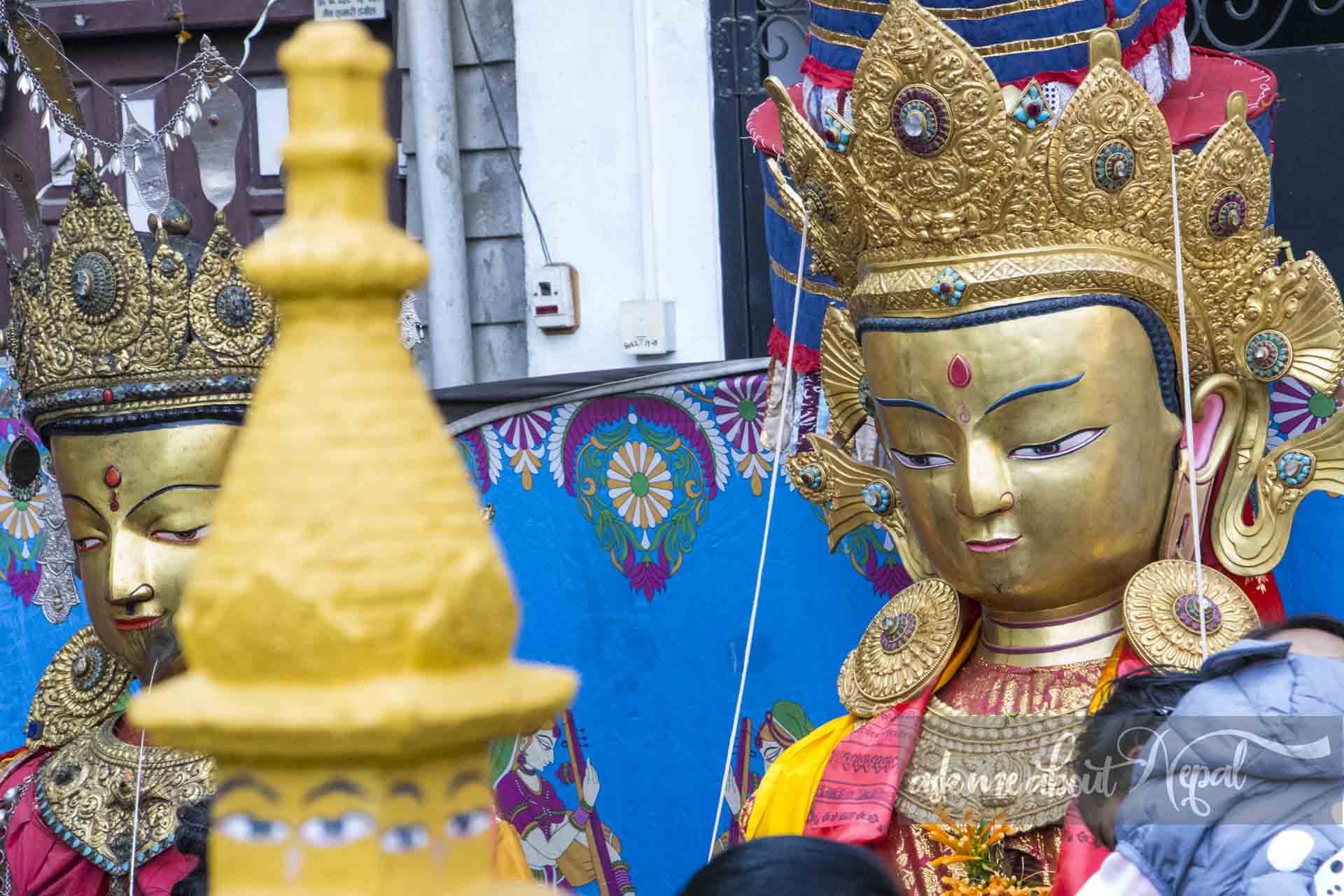
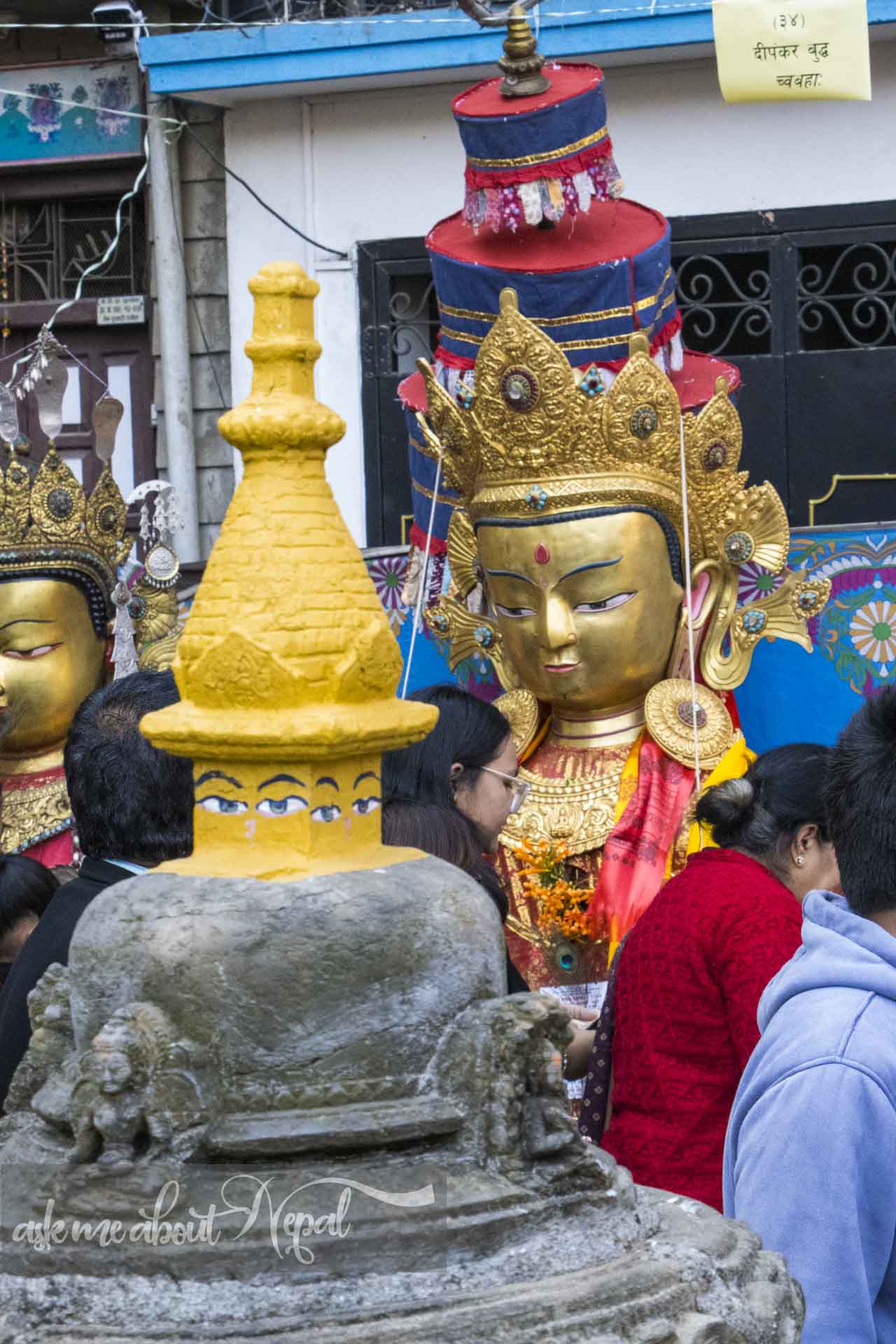
Marking a profound centennial, the Lasata Samyak Mahadana was observed in Nyakhachok, Lalitpur, on Poush 30 and Magh 1. This lineage-based ceremony, initiated a century ago by venerable forebears, represents a living covenant within Newa Buddhist heritage, underscoring its enduring cultural and spiritual vitality.
The Festival's Philosophical Core
More than a ritual, this Dipankara Buddha festival embodies foundational Newa Buddhist tenets. It operationalizes the Mahayana virtue of danā (selfless giving), aiming to alleviate universal suffering. The event bridges past, present, and future, transforming the ancient ideal of moral duty into contemporary communal practice.
Dipankara Buddha: The Luminous Forebear
In Buddhist tradition, Dipankara is a primordial Buddha, symbolizing wisdom (prajna) and ethical conduct (shila), who guides beings toward liberation. A pivotal narrative involves his encounter with the ascetic Sumedha. In an act of ultimate devotion, Sumedha offered his own body so Dipankara could cross the muddy terrain. Recognizing this profound compassion, Dipankara prophesied that Sumedha would attain enlightenment as Gautama Buddha. This moment is revered as the genesis of the Bodhisattva ideal—the vow to attain enlightenment for the benefit of all beings.
Dipankara Aju: A Venerated Ancestor
Newa Buddhists honor Dipankara as "Aju," an intimate term denoting a revered ancestral teacher. His icons throughout the Kathmandu Valley's bahas and bahis are focal points for devotion, especially during the holy month of Gunla. He personifies spiritual continuity and communal identity.
The Essence of Samyak Mahadaan
Samyak Mahadana is a grand almsgiving ceremony centered on dana. It involves ritual offerings to Dipankara Buddha representations, deities, and the monastic community. The gathering of Buddha images from across the city symbolizes sangha unity and the collective aspiration for the liberation of all sentient beings, reinforcing communal bonds through shared merit-making.
Ceremonial Cycles Across the Valley
The festival's rhythm varies:
Lalitpur: Observed quinquennially.
Kathmandu: Held every twelve years.
Bhaktapur: An annual observance. The recent Lasata event is distinguished by its centenary, breaking the regular five-year cycle to honor a unique legacy.
A Century-Long Legacy
The tradition was founded in Nepal Sambat 1047 by the devout Bagh Narsigh Shakya (Lama Aju), establishing a lineage-bound practice of generosity and ancestral devotion. Successive generations have faithfully upheld this original sankalpa (sacred vow). The centennial celebration thus stands as a historic testament to unwavering faith, familial duty, and the resilient spirit of Newa Buddhist culture.
The spiritually profound Lasata Samyak Mahadan, a centennial Newa Buddhist almsgiving tradition, was held in Nyakhachok, Lalitpur, on Poush 30 and Magh 1. This elaborate festival, dedicated to Dipankara Buddha and rooted in ancient lineage and community practice, last occurred a hundred years ago.
While a Samyak Mahadan is celebrated quinquennially in Patan, this specific observance marks a rare century cycle.The spiritually profound Lasata Samyak Mahadan, a centennial Newa Buddhist almsgiving tradition, was held in Nyakhachok, Lalitpur, on Poush 30 and Magh 1. This elaborate festival, dedicated to Dipankara Buddha and rooted in ancient lineage and community practice, last occurred a hundred years ago.
While a Samyak Mahadan is celebrated quinquennially in Patan, this specific observance marks a rare century cycle.
The spiritually profound Lasata Samyak Mahadan, a centennial Newa Buddhist almsgiving tradition, was held in Nyakhachok, Lalitpur, on Poush 30 and Magh 1. This elaborate festival, dedicated to Dipankara Buddha and rooted in ancient lineage and community practice, last occurred a hundred years ago.
While a Samyak Mahadan is celebrated quinquennially in Patan, this specific observance marks a rare century cycle.
The spiritually profound Lasata Samyak Mahadan, a centennial Newa Buddhist almsgiving tradition, was held in Nyakhachok, Lalitpur, on Poush 30 and Magh 1. This elaborate festival, dedicated to Dipankara Buddha and rooted in ancient lineage and community practice, last occurred a hundred years ago.
While a Samyak Mahadan is celebrated quinquennially in Patan, this specific observance marks a rare century cycle.
The spiritually profound Lasata Samyak Mahadan, a centennial Newa Buddhist almsgiving tradition, was held in Nyakhachok, Lalitpur, on Poush 30 and Magh 1. This elaborate festival, dedicated to Dipankara Buddha and rooted in ancient lineage and community practice, last occurred a hundred years ago.
While a Samyak Mahadan is celebrated quinquennially in Patan, this specific observance marks a rare century cycle.
The spiritually profound Lasata Samyak Mahadan, a centennial Newa Buddhist almsgiving tradition, was held in Nyakhachok, Lalitpur, on Poush 30 and Magh 1. This elaborate festival, dedicated to Dipankara Buddha and rooted in ancient lineage and community practice, last occurred a hundred years ago.
While a Samyak Mahadan is celebrated quinquennially in Patan, this specific observance marks a rare century cycle.
The spiritually profound Lasata Samyak Mahadan, a centennial Newa Buddhist almsgiving tradition, was held in Nyakhachok, Lalitpur, on Poush 30 and Magh 1. This elaborate festival, dedicated to Dipankara Buddha and rooted in ancient lineage and community practice, last occurred a hundred years ago.
While a Samyak Mahadan is celebrated quinquennially in Patan, this specific observance marks a rare century cycle.
Ask Me About Nepal is a blog dedicated to exploring the beauty, depth, and diversity of Nepal. It offers readers authentic stories and insights about Nepali culture, history, traditions, people, and nature. From the snow-capped Himalayas to the vibrant streets of Kathmandu, and from ancient heritage to modern lifestyles, Ask Me About Nepal captures the essence of the country in words and visuals — inspiring readers to discover, appreciate, and connect with Nepal’s rich identity.
A ritual of shaving head, reciting mantras, showering flower and lava, putting tika, dhup batti. Time came for boys to get rid of their clothes and put on pitambar langots.
The majority of the wildfires in Nepal are caused by humans, and still, we are unable to minimize them. The situation highlights the need for an effective awareness drive.
Seto Macchendranath makes a procession through old Kathmandu town to visit the ailing who are unable to move could be blessed with long life happiness.
Ask Me About Nepal (AMAN) is your go-to digital platform for authentic, well-researched insights into Nepal’s people, places, culture, and hidden gems. From adventure to history, food to folklore—explore Nepal like never before!