Kathmandu, Nepal—September 2025. The streets of Nepal’s capital were no longer just roads; they became battlegrounds for a generation’s dreams. Young people, some barely old enough to vote poured out of schools, homes, and universities, armed with nothing but courage and handmade signs. They were fighting for a future free from corruption, a Nepal where their voices mattered. But on September 8, the cost of their defiance became unbearable: children fell, blood stained the pavement, and families were left shattered.
This is the story of Nepal’s Gen-Z uprising: a movement sparked by a rage against corruption but fueled by years of frustration. It’s the story of kids who became heroes, of parents who lost everything, and of a government forced to confront its own failures.
A spark in the dark
It started with a blackout. On September 5, 2025, Nepal’s government pulled the plug on over 20 social media platforms which were, Facebook, X, YouTube, and more. The official excuse? These global tech giants hadn’t registered under new “digital services” rules. But for Nepal’s youth, the ban was a slap in the face. Social media wasn’t just for memes or selfies; it was their megaphone. For weeks, they’d been exposing “nepo-kids”, the privileged offspring of politicians and elites flaunting wealth while most Nepalis struggled to find jobs.
“They took our voice,” says 19-year-old Anisha, a university student who was ready to go on a protest. “We were calling out corruption online, and they tried to silence us. But we weren’t going to stay quiet.”
By September 6, apps like Discord buzzed with plans. Young people passed handwritten notes in classrooms and whispered in tea shops: “Meet at Maitighar. Bring your friends. Bring your heart.”
September 7: The streets come alive
On September 7, Kathmandu’s streets pulsed with energy. Few young people gathered at Maitighar Mandala, New Baneshwor, and near Singha Durbar, the government’s nerve center. Young people with the hope for change gathered with, their signs bold and colorful: “End Corruption, Save Our Future!” and “Nepal Is Ours”, Some wore T-shirts with “Where is out tax utilized?” and sent it on the social media platforms using VPNs despite the social media ban to symbolize the youth movement.
September 8: When hope turned to horror
The morning of September 8 was bright, the kind of crisp Kathmandu day that makes the mountains feel close. By noon, the crowds had doubled. The city’s central streets , New Baneshwar, Maitighar Mandala, were filled with students, teenagers, and young adults, many barely out of high school. They came armed not with weapons but with placards, banners, and hope: hope that their voices could confront corruption, demand fairness, and challenge a system that had long ignored them.
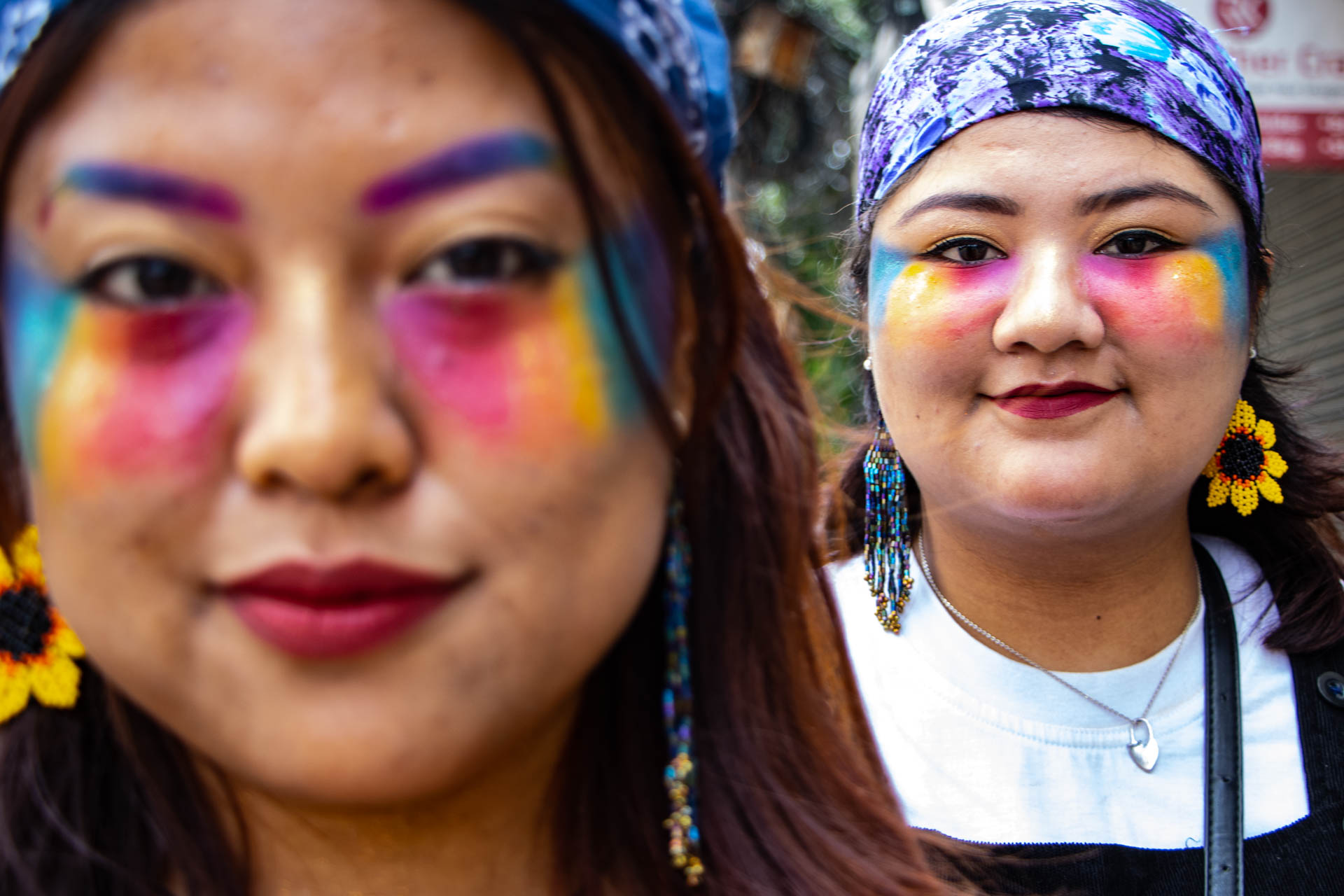
By mid-morning, the crowd had swelled to tens of thousands. Young faces were painted with slogans, backpacks slung over shoulders, and hands clasped together in solidarity. Some carried notebooks filled with poems, some smartphones ready to broadcast their protest to the world. Many were children in the literal sense 15, 16, 17 years old , students who had skipped classes to participate in what they believed was a historic moment for their country.
The standoff began quietly, but tension was palpable. Police lines formed at choke points, shields raised, water cannons and tear gas at the ready. At first, the young protesters sang, chanted, and linked arms, their energy defiant but non-violent.
Then came the first volley of water from the cannons, spraying the front ranks like a winter storm. The protesters stumbled, coughing and wiping eyes burning from tear gas. They tried to regroup, shouting slogans louder, attempting to shield one another with backpacks and makeshift banners.
The moment that changed everything: the sound of gunfire. Real bullets had already been fired, but soon live rounds cracked through the air. Panic erupted. Teenagers fell, screaming, while their friends desperately dragged them to the sides of the road. Ambulances arrived, sirens wailing, but they could not keep up with the flood of wounded.
Hospital records from that day recount a chilling reality: among the dead were children still in school uniforms. A 16-year-old boy, full of ambition and dreams, was shot in the chest while trying to help a friend who had been hit. A 17-year-old girl, remembered as bright and articulate by classmates, was killed instantly by a bullet to the head. Groups of friends, some not yet 18, were gunned down while holding hands, trying to retreat from the front line.
Doctors and emergency responders later said the scale of youth casualties was unprecedented in Nepal’s recent history. Families, rushing from one hospital to another, encountered chaos: rooms overflowing with bloodied teenagers, some conscious and screaming, some already dead. Mothers clutched photographs of missing children, fathers cried openly outside wards, and siblings pleaded with doctors for news that never came.
Eyewitnesses reported police brutality beyond the shootings: protesters who had fallen to the ground were beaten, struck with batons, or dragged by their hair. Several were arrested, and rumors circulated of young victims being denied urgent medical care amid the chaos. For many, September 8 became not just a protest but a battlefield where children , literally students, were cut down in their pursuit of a voice.
By nightfall, at least 19 students and young protesters were confirmed dead, and dozens more were in critical condition. Streets that had earlier rung with chants for justice were now littered with blood-stained banners, shattered glass, and discarded backpacks. The images of teenagers lying motionless under the harsh glare of streetlights would haunt the city for weeks.
September 9, 2025: Arson, Including Singha Durbar and Further Infiltrator Sabotage
By 6:00 a.m., protesters defied curfews, setting fires to tires and barricades in New Baneshwor, Thapathali, and Ratna Park. Vast crowds stormed and set ablaze key symbols of power, including the Federal Parliament building, Nepali Congress headquarters, several politicians’ residences, and the sprawling Singha Durbar complex, Nepal’s administrative hub housing government ministries and offices, with smoke and flames engulfing parts of the palace-like structure as protesters celebrated atop the burning buildings, waving flags and spray-painting anti-corruption messages. Damages were estimated at $21 billion. The fires targeted symbols of corruption but were overshadowed by infiltrators who escalated destruction. These operatives, disguised in hoodies, vandalized shops, torched civilian vehicles, and incited looting, aiming to discredit the movement. State media labeled the protests “anarchic” by noon. Youth attempted to expose infiltrators via live streams, shouting “Infiltrators out!” but the narrative damage was done. By 11:00 AM, Prime Minister KP Sharma Oli resigned at the noon, citing “uncontrollable unrest,” leaving Nepal without a leader. The government lifted the social media ban later that evening.
September 10–11, 2025: Power Vacuum and Youth-Led Shortlisting
From September 10 to 11, Nepal had no prime minister. Parliament was suspended, and political coalitions collapsed. Youth organized via Discord, coordinating curfews and volunteer patrols to maintain order amid the debris. The army secured critical zones, detaining 27 individuals for looting and arson, some suspected to be infiltrators. In response to the leadership vacuum, the youth escalated their Sushila Karki, a 73-year-old former Supreme Court judge with an anti-corruption record was nominated by the youths. Youth representatives met with military officials at 2:00 PM. on September 11, proposing Karki. She accepted, at 5:00 PM, “The youth requested me.” The period demonstrated youth resilience in the absence of leadership.
September 12, 2025: Sushila Karki Appointed Interim Prime Minister
At 9:15 PM, Sushila Karki was sworn in as Nepal’s first female interim prime minister. She pledged to prioritize “experts over cronies.” The appointment followed youth-driven voices and marked a victory for the movement. However, economic fallout was severe: 10,000 tourism jobs were lost, and industries faced disruptions. The death toll reached 71 by day's end. Youth demands included an independent anti-corruption commission, university admission reforms, and accessible employment.
September 13, 2025: Protests Subside, Cleanup Begins
By September 13, protests largely ceased after five days of unrest. The army urged calm at 8:00 AM, and youth shifted to cleanup efforts, clearing rubble and establishing temporary offices in tents. Karki appointed ministers to stabilize governance.
September 14–17, 2025: National Mourning and Compensation
Funerals for the deceased gained significant online attention starting September 14, with youth creating digital memorials to honor their sacrifice. September 17 was declared a national mourning day at 9:00 AM. The interim government announced compensation of up to 10 lakhs Nepali rupees per family of the deceased by 2:00 PM, but the youth demanded systemic reforms, including youth centers and anti-corruption measures, over mere financial payouts. The army provided honor guards for the memorial rites on September 16.
September 18–22, 2025: Investigations Launched, Global Resonance
On September 18, exposés of corruption, including misappropriated vaccine funds and earthquake relief, intensified under UN scrutiny. At 10:00 AM on September 21, a three-member probe panel, led by a former Supreme Court justice, was formed to investigate the September 8 killings, sniper activity, and infiltrator involvement, with a report due by December 21. Businesses pledged recovery efforts by September 22. Now the major concern in the global platform in is that “Nepal’s youth uprising – what's next?”