November 11, 2025

In centuries past, tradition states that authority of the ruler of the tantric ‘Nepal Mandala’, covering an area broadly that of the Kathmandu Valley and its immediate surroundings, did not depend on military and political power alone, but also on an important spiritual element, represented by the Kumari, who was both the Goddess Taleju incarnate in a pure Newari girl and a manifestation of Shakti, or divine female energy.
Legends tell that whenever the original intention of the Nepal Mandala—protection, harmony and order—was abused for personal power, Taleju/Shakti, as personified in the Kumari, withdrew her support and re-invested it in a collective or popularist force. Even more intriguing is the tradition of the Kumari’s curse: Nepal’s rulers will never be wise or just, and the country and its citizens will never know true happiness and stability.
To this day, a lot of mystique surrounds Kathmandu’s Royal Kumari, whose demeanour alone is said to hold a world of meaning. Her most publicized appearance is at Indra Jatra, Kathmandu’s foremost festival, celebrated this year on Saturday, 6 September. It was noted by many that the Kumari appeared rather distraught and ill-at-ease.

Throughout 2025, there had been an increasing number of social media posts made by young, politically aware Nepalis, critical of the ramapant nepotism and the luxurious and privileged lifestyle enjoyed by the children and relatives of powerful political leaders. The use of the term ‘Nepo Kids’ to describe such individuals had first emerged in Hollywood; later spread to its Indian counterpart, Bollywood; and then across the influential political dynasties of South Asia, before finally becoming established in Nepal, with hashtags such as #PoliticiansNepoBabyNepal, #NepoKids, and #NepoBaby trending on social media platforms such as TikTok and Reddit. One viral video showed glamorous Nepali Nepo Kids partying, juxtaposed with images of their fellow countrymen suffering from landslides, earthquakes, and extreme poverty.
One particular Nepo Baby targeted by the campaign was Saugat Thapa, the elder son of Nepali politician Bindu Kumar Thapa and himself the MD of the Ansuvara Group. A picture of him, standing in front of a Christmas tree made from boxes of luxury labels, such as Louis Vuitton, Cartier and Gucci, went viral. In August 2025, Saugat proudly opened the Pokhara Lakeside luxury wellness resort, Bagaincha, ‘Where peace whispers through calm mornings,’ to the public.

The enabling force behind all the luxury and glamour was, of course, corruption. In the most recent Corruption Perception Index (CPI) released by Transparency International (TI), Nepal ranked 107th out of 180 countries, with a score of 35: any score below 50 is indicative of abnormal/unacceptable levels of corruption.
The long-rumoured social media ban of over twenty platforms, including Facebook and WhatsApp, confirmed on 4 September but taking several days to fully implement, was ostensibly over the companies’—including Meta’s—failure to register with the Nepal Ministry of Communication and Information Technology. However, many believe that it was an attempt, ill-advised from the outset, to halt the spread of the campaign against nepotism and corruption, which had continued to gather steam during the previous month.
Among the apps that fell foul of the ban was Discord, a United States-based social platform mainly used by online gamers that allows communication through voice and video calls, text messaging, and media. Communication can either be private or take place in virtual communities referred to as ‘servers’. Discord was to play an important role in the events that were to unfold.
The day started ordinarily enough, although there was overall awareness that a major demonstration by the Gen Z group, widely misrepresented as being over the social media ban, but in fact against the high levels of corruption and nepotism existing in the government, was scheduled to take place.
Reportedly, the organisation behind the Gen Z protest was the NGO Hami Nepal, founded and led by Sudan Gurung. A former DJ and nightclub owner in his mid-thirties, his life was changed by the 2015 Great Gorkha Earthquake in Nepal, which claimed nearly 9000 lives, including that of his own son. In the aftermath of the quake, he used the power of social media to mobilise nearly 200 volunteers for relief work. Mentored by the renowned ophthalmologist and philanthropist, Dr. Sanduk Ruit, Gurung founded Hami Nepal, with a core mission of assisting individuals and communities in need, particularly during emergencies and crises. Its focus was on directly connecting donors with recipients, and delivering aid efficiently and transparently. Subsequently active during the COVID outbreaks, Hami Nepal is guided by its motto, ‘For the People, By the People’.
Hami Nepal used social media, primarily Instagram and Discord—its ‘Youth Against Corruption’ Discord platform had around 160,000 members by this time—to disseminate information about the protest routes and safety advice, as well as specifically requesting participants to wear their school or college uniforms and carry books in order to symbolise that this was a peaceful act of resistance by students and youths.
One of Hami Nepal’s volunteers was quoted as saying on the morning of 8 September, ‘The voices of young people matter. We can’t keep being ruled by the same old men. Our generation is the future and if there are older leaders in government, they need to be competent and accountable. We are ready to lead this country forward.’
Although gatherings took place all over Nepal, the focus of attention was the main one centred on the Maitighar Mandala, a traditional site for protest, and the nearby Federal Parliament building in New Baneshwor. Tens of thousands of people gathered there but tragically the peaceful rally turned violent: there are many theories as to how and why this happened, including its being hijacked by, in the words of a Hami Nepal spokesperson, ‘external forces and political party cadres’. Whatever the case, the police response was to use tear gas, baton charges, water cannons, rubber bullets, and, inexplicably, live ammunition. It emerged much later that 2642 rounds of live ammunition were used over the course of that and the following day.
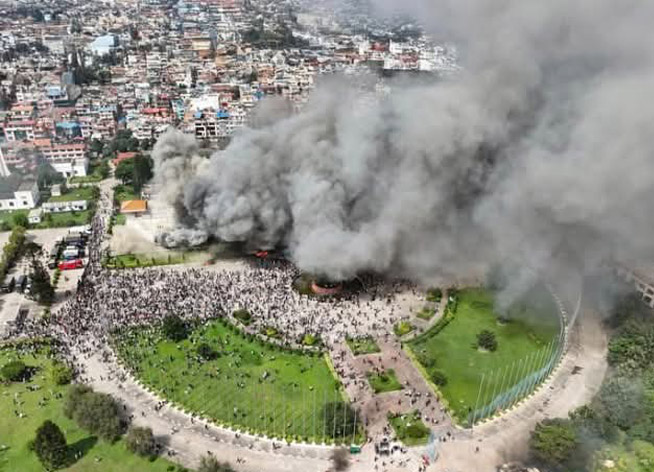
On the evening of 8 September, in response to the chaos that had ensued, the Kathmandu District Administration Office imposed a curfew in parts of the capital near government buildings: movement was also restricted in serval other major cities, including Birgunj, Pokhara and Butwal. The social media platform ban was lifted, but if this was intended to defuse the situation, it was too little and too late. Nineteen innocent people had been killed—‘massacred’ was the emotive term used—and at least four hundred injured.
It wasn’t until several days later that that the true horror of the extent of victim’s injuries became known. Doctors and nurses at the National Trauma Centre (NTC), situated near New Road Gate in central Kathmandu, had been expecting patients from the Gen Z demonstration to be admitted with baton-charge injuries, not to have both rubber and live bullets lodged in their heads, chests, abdomens and elsewhere, not all of which could be extracted. Once the extent of the injuries was ascertained, in terms of both sheer numbers and severity, putting three operating theatres in use simultaneously, the NTC immediately halted all scheduled non-emergency surgery and started operating on the critically wounded protesters.
‘We responded to the 2015 mega earthquake, we handled the Covid pandemic, but we had never seen such a huge number of patients arriving at once, as we did last week. We have a blood bank in our hospital, but it was not enough to manage patients in such overwhelming numbers.’ - Dr Dipendra Pandey, Senior Orthopaedic Surgeon, NTC
Of the 163 injured patients taken to the NTC for treatment on that day, eight succumbed to their injuries in the following week.
The following day, it soon became abundantly clear that, in response to the use of force the preceding day and the deaths and injuries that had resulted, retribution was in the air. Whether or not some mastermind was behind it all, and whether or not that person was none other than Pushpa Kamal Dahal, also known as Prachanda, the former Maoist leader turned prime minister, as many tended to believe, flames and smoke gradually filled the skies over the Kathmandu Valley and elsewhere in Nepal.

It was apparent that most of the targets were not random and there was a pattern of looting followed by arson. Just some of the prime targets that day are as follows:
The Bhat-Bhateni nationwide retail giant had originated in 1984 as a small grocery store established by Min Bahadur Gurung and his wife. Just a few months previously, Gurung had been quoted as saying, ‘I am ready to give 50% of my property to the nation. If it makes the country rich, I am even ready to take off and give away this coat. I have walked this path with such sacrifice and devotion. Even though we have so much potential, our country is still poor.’
But in spite of this rags-to-riches story and self-effacing comment, the chain was clearly a target of the mob. Gurung was not as clean as he would like to seem. During the Maoist times, he had been connected with Prachanda, helping him to launder money which he had stolen from various banks; had served two years imprisonment for his involvement in a land grab scam and been fined over 8 million NPR; and, more recently, he and his wife had donated a vast area of land in Kirtipur to Oli for the construction of UML party headquarters, an act which the Supreme Court had flagged as prima facie illegal under the Political Party Act. It was this failure to rise above political entanglements and focus on transparent, fair growth that was Bhat-Bhatani’s downfall, with twelve branches completely gutted by fire; nine branches looted and their inventories wiped out; thousands of jobs lost, ironically mainly from among the Gen-Z group (Gurung later stated that none of the staff would become jobless: they would continue to receive their salaries and be deployed in other branches if necessary); and estimated losses in billions of rupees.

Built with the intention of lifting Nepal’s hospitality industry to international standards, after delays caused by the COVID pandemic, Kathmandu’s Hilton was finally opened in July 2024 as one of the tallest buildings in Nepal.
In May 2025, less than a year after its opening, there were false and misleading reports, including a controversial YouTube video, that Jaiveer Singh Deuba, son of former prime minister Sher Bahadur Deuba, had purchased the hotel. The Hilton’s owner, Shankar Group, and its operator, Jagdamba Hospitality Group, firmly denied the reports, which they termed ‘baseless and politically motivated’. However, the rumour, apparently, had had enough force for the mob to make it one of their most infamous targets.
Hotels and restaurants elsewhere in the country also became targets of the mob due to their political affiliations/investments. In Pokhara, for example, Mantra Thakali, Hotel Sarowar, Hotel Pokhara Goodwill, and the recently opened Bagaincha Resort of the Nepo Baby, Saugat Thapa, were all looted and burnt.
The schools were most probably targeted both because the Ullens School Management Board was chaired by Arju Rana Deuba, the then current Minister of Foreign Affairs and wife of former PM, Sher Bahadur Deuba, and also because of its privileged image. Deuba duly resigned from her post in the political aftermath.
The private residences of several political leaders were looted and set ablaze, subsequently attracting people who, braving the stench of charred wood and metal, came to sift through the rubble for possible finds in the ensuing days. Among these were Oli’s residence in Balkot and the homes of both Deuba and the Minister of Energy, Water Resources and Irrigation, Deepak Kharka, situated within a very short distance from each other in Budhanilkantha. A former Minister of Energy, Sharat Singh Bhandari, fled the country, apparently abandoning his handicapped wife, Chetana Regmi, in their smoldering residence. She was subsequently rescued and admitted to hospital by protestors, eventually having to have an arm amputated.

The heart of Nepal’s private telecommunications industry and the home of 400 employees, Ncell Tower was another target, presumably due to long-standing rumours that the company did not pay tax. The irony of the situation was all too apparent: a company that had connected millions of young people and fueled the social media surge for Gen-Z had itself become the target of violence in the name of that very generation.
Among other targets that were torched and/or vandalized, were police stations, both large and small, whether situated in city centre hubs, like Durbar Marg and New Road, or in the suburbs.
Prime Minister KP Oli had, of course, no option but to resign. After initial reports indicating that he was about to flee the country and go to Dubai, it seemed that he, like other ministers and politicians targeted by the mob, had been taken for their own safety to various army barracks on the outskirts of Kathmandu, including Shivapuri.
The fires burned throughout the day, until the army eventually took control, imposing a curfew in the most sensitive areas and allotting ‘restricted area’ status to others. While the anarchy was gradually controlled, others of a more thoughtful, peace-loving frame of mind posted appeals on their social media walls:
‘The way the state killed unarmed young people who took to the streets on Monday to protect the honour of the country, soil, and flag—no matter how harshly we condemn it in words, it will never be enough. Yesterday's incident has made me extremely sad. I cannot express this pain in words. I express my heartfelt condolences to all the parents who lost their patriotic sons inspired by progressive thinking. Every person's home is made by family. Those same persons and families together form the state. What kind of state will be formed by the current government's behaviour of destroying people's families?…..There is no doubt that this protest and movement initiated by the Gen Z, worried about their future, will have far-reaching significance. Opposing a ruling power that is moving forward by crushing dreams of a golden future is not a crime. But killing innocent children who voice their feelings on the streets is an unforgivable crime. No one should think that governance can be run with such a criminal mentality. All Nepalis want liberation from the current political situation…..Let us together protect the country, let us all unite to build the country.’ - Dr Sanduk Ruit
The United Nations, Nepal, also lost no time in issuing a statement, tiptoeing diplomatically among the key issues involved, especially human rights.
The United Nations in Nepal is deeply pained by the tragic loss of lives, the rising tensions and the escalating violence across the country. We extend our heartfelt condolences to the families of those who have lost loved ones and wish a full and speedy recovery to the injured.
Freedom of expression, access to information and peaceful assembly are fundamental rights protected under Nepali and international law. We call on all protestors to exercise these fundamental freedoms peacefully and refrain from violence. At the same time, we urge the authorities to ensure that all law enforcement responses remain proportionate and in line with international human rights standards. All allegations of excessive use of force should be investigated promptly in an independent, transparent and impartial manner.
Dialogue remains the best means of addressing the concerns of citizens, including the country's young people.
The voices of young Nepalis have been heard loud and clear, and Nepal will benefit from taking concrete steps to address the root causes of the issues raised and ensuring a prosperous future for young Nepalis. The United Nations stands ready to support dialogue and trust-building measures that can help de-escalate tensions and contribute to a peaceful resolution for prosperous Nepal.
International media coverage of the events in Nepal was immediate and global. However, mainstream overseas journalists often wrongly linked the protest to the social media ban that had been imposed, rather than the much more serious issue of abuse of power, prompting a press release to be issued in an attempt to correct this.

Heavy overnight rain did much to quench the fires, although some of the more powerful and intense conflagrations continued smoking for much of the day. It was time to assess the damage and move forwards.
Singha Durbar was the most emotive loss, the sight of the buildings on fire shocking the national conscience. Architecturally a blend of neoclassical, Palladian, and Baroque styles, it had been built in1908 by Rana Prime Minister, Chandra Shumsher Jang Bahadur Rana, and became one of Asia’s largest and most luxurious palaces. With more than 1700 rooms and seven courtyards, over the following decades, Singha Durbar became a symbol Nepal’s political journey, from Rana autocracy, to monarchy, and later to democracy and republic.
Sheetal Niwas, the official residence of Nepal’s president, again a fusion of Malla-style architecture with European Palladian influences and acknowledged as a masterpiece of the Rana era, was severely damaged.
Although Nepal’s other precious tangible and intangible cultural assets remained largely untouched, there were some exceptions. The wheels of the chariot used in the Rato Machindranath Jatra, Patan’s historic and arguably most important annual event, lovingly crafted by local artisans, were burnt to ashes at their special storage site in Jawalakhel. There were also reports of damage at a site near Bhaktapur’s Durbar Square.
On a sociopolitical level, Deepak Kharel, the Editor-in-Chief of Epardafas, the Nepal online portal covering crime, security, corruption, justice and diplomacy, succinctly summed up the situation.
A chapter of the Generation Z protest has come to an end. Despite the heavy cost paid and the harsh criticism leveled against the youth, the reality is that their struggle has brought the nation to a decisive turning point. Today, Nepal stands at zero. The army is on the streets, silence has been imposed, mobility restricted, and protests suppressed. Yet, this enforced calm is nothing more than the stillness of a graveyard. The country is at a standstill.
In Nepal’s modern history, barring the movement that ended the Rana regime, every uprising has carried the shadow of vested interests, whether internal or foreign. But unlike the past, the recent Generation Z protest appears organic born of frustration, sacrifice, and a genuine demand for change. However, time is not on their side. If leadership is not chosen quickly, if direction is not provided within the next 72 hours, the entrenched old guard will reassert itself, and the young faces of this movement may soon face repression. That is why Gen Z must urgently converge on a conclusion…..
If confusion persists, this hard-won movement will sink into the swamp of history. That is why Gen Z must quickly forge a conclusion and seize the moment. The priority is not just reconstruction but maximizing the use of existing institutions and resources to steer the nation forward.
Fully aware of how misinformation, fake news, and rumours could hijack their movement, the Gen Z leaders launched a sub-room called ‘fact checks’ on their Discord discussion page.
Having been suddenly thrust into the spotlight, inevitably, Sudan Gurung was the target of much of the rumourmongering. It was claimed that he was not even a Nepali citizen, but came from Darjeeling, a hill town across Nepal’s far eastern border in West Bengal, India. To quell this, a copy of his Nepali citizenship card was made available on social media, including the Gen Z’s Discord discussion room.

Likewise, a photo, claimed to have been taken only the previous week, showing him with Arju Rana Deuba, the ousted foreign minister, started to circulate. In fact, it dated from six months earlier, when Gurung had met her to demand justice for a Nepali student who committed suicide after he being allegedly harassed at an Indian engineering college.
There was also a pro-monarchy faction within the Discord group - 'infiltrators' as they were referred to by centrists - and claims that a meeting had taken place with former King Gyanendra had to be debunked.
Other types of rumours also circulated later, like Dr. Sanduk Ruit’s having been offered the position of Minister of Health. Always modest and dedicated to his profession, Dr. Ruit issued the following statement in response: ‘After every political upheaval, I get a request to assume some position and lead. However, I am clear: my karma is to devote my skills, knowledge and time to serving patients around the world. My heart is clean, and I'm happy with it….It won't take long to change the situation of this country if we all honestly engage in our profession, work and business. I will always contribute to the benefit of Nepal and Nepalese through my profession and work. Now is the time to unite and build the country.’
It was not only humans who were struggling in the aftermath of the demonstrations and mobs: animals, especially community dogs and cats, faced their own problems. The Kathmandu Animal Treatment (KAT) Centre made a heartfelt appeal:
If you see a dog or a cat that is injured or in urgent need of help, please call us directly at 9801912476. Despite the restrictions, we will do our very best to reach and help them. We also kindly request everyone to offer shelter and care to the community dogs around you. Even a safe corner, a little food, or a warm place can mean the world to them right now. Together, let’s make sure no life is left behind in this time of hardship.
Lost and Found Dogs (Nepal) posted on Facebook in a similar vein:
Please do check around all the burnt places, especially all the burnt police stations, for the dogs/cats that used to be fed by the residents/human families. Some may be have been sickened of excessive, smoke while some may be injured/burned too. All of them will be very afraid and traumatized. Please be extra kind and patient with them.
Late in the evening, after hours of negotiation, an interim PM was selected and sworn in by President Ramchandra Paudel: Sushila Karki, 73-year-old former Chief Justice of the Supreme Court. She had been chosen through a democratic process that surely no one, other than Gen Z, could have envisaged.
The social media ban having already been lifted, Gen Z members, on the same Discord platform that had been used to mobilise them on 8 September, debated a wide range of issues, including jobs, police and university reforms, and the state of government healthcare. However, the moderators urged the participants to focus on the main issue before them: the next leader. The debate brought together more than 10,000 people, including many from the Nepali diaspora. As more people tried to log in and failed, a mirrored livestream was held on YouTube to allow an additional 6000 people to follow the debate.

Virtual polls on mobile screens allowed participants to nominate their interim leader in real time, marking a radical experiment in digital democracy. Five names were shortlisted for the final voting: Harka Sampang, a social activist and mayor of the eastern city of Dharan; Mahabir Pun, a popular social activist running the National Innovation Centre; Sagar Dhakal, an independent politician who ran against the powerful Nepali Congress leader, Deuba, in 2022; advocate Rastra Bimochan Timalsina, also known as ‘Random Nepali’ on his YouTube channel, who had been advising the Gen Z protesters; and Sushila Karki. It was a lesson in democracy and politics for the Discord participants, many of whom, politically inexperienced and naïve, were encountering for the first time concepts like ‘dissolution of parliament’ and ‘an interim government’.
One candidate was notable by their absence from the list: Balen Shah, the popularist Kathmandu Mayor and former rapper. He had been regarded as a front-runner for the post but attempts to reach out to him had failed. Perhaps, it was rumoured, he wanted to hold back and then run for PM in a future general election.
The election of Sushila Karki was a political landmark in so many ways. She was Nepal’s first-ever woman prime minister; for the first time in almost ten years, Nepal had a prime minister other than one of the ‘trio of uncles’—Oli, Deuba and Prachanda; and it broke the cycle of just three political parties having taken in it turn to form a total of fourteen governments since 2008, the year in which Nepal had adopted a new constitution after abolishing the monarchy.

On assuming office, Karki pledged, ‘We will not stay here more than six months in any situation. We will complete our responsibilities and pledge to hand over to the next parliament and ministers.’
Her first act after being sworn in as interim PM was to dissolve parliament and set the date for the general elections, 5 March 2026.
Inevitably, in a knee-jerk reaction, eight political parties issued a joint press statement condemning what had happened and demanding that the Lower House should immediately reconvene:
‘The government formed from the streets in an undemocratic and unconstitutional manner bypassing Parliament is contrary to the spirit of the movement that has demanded good governance in accordance with Nepal’s Constitution prevailing laws…. We strongly demand the immediate convening of Parliament to create an environment where the demands of the people and agitating groups can be addressed through an elected institution.’
They were not alone in their condemnation: the Nepal Bar Council also called the dissolution of Parliament unconstitutional. ‘Nepal’s Constitution is the result of a broad national consensus and reflects the aspirations of its citizens. Such acts erode public trust in democratic institutions and threaten the very foundation of our constitutional system,’ it maintained. And the Federation of Nepalese Journalists referred to the appointment of Karki and the dissolution of the House of Representatives as exhibiting ‘ill will towards democracy.’
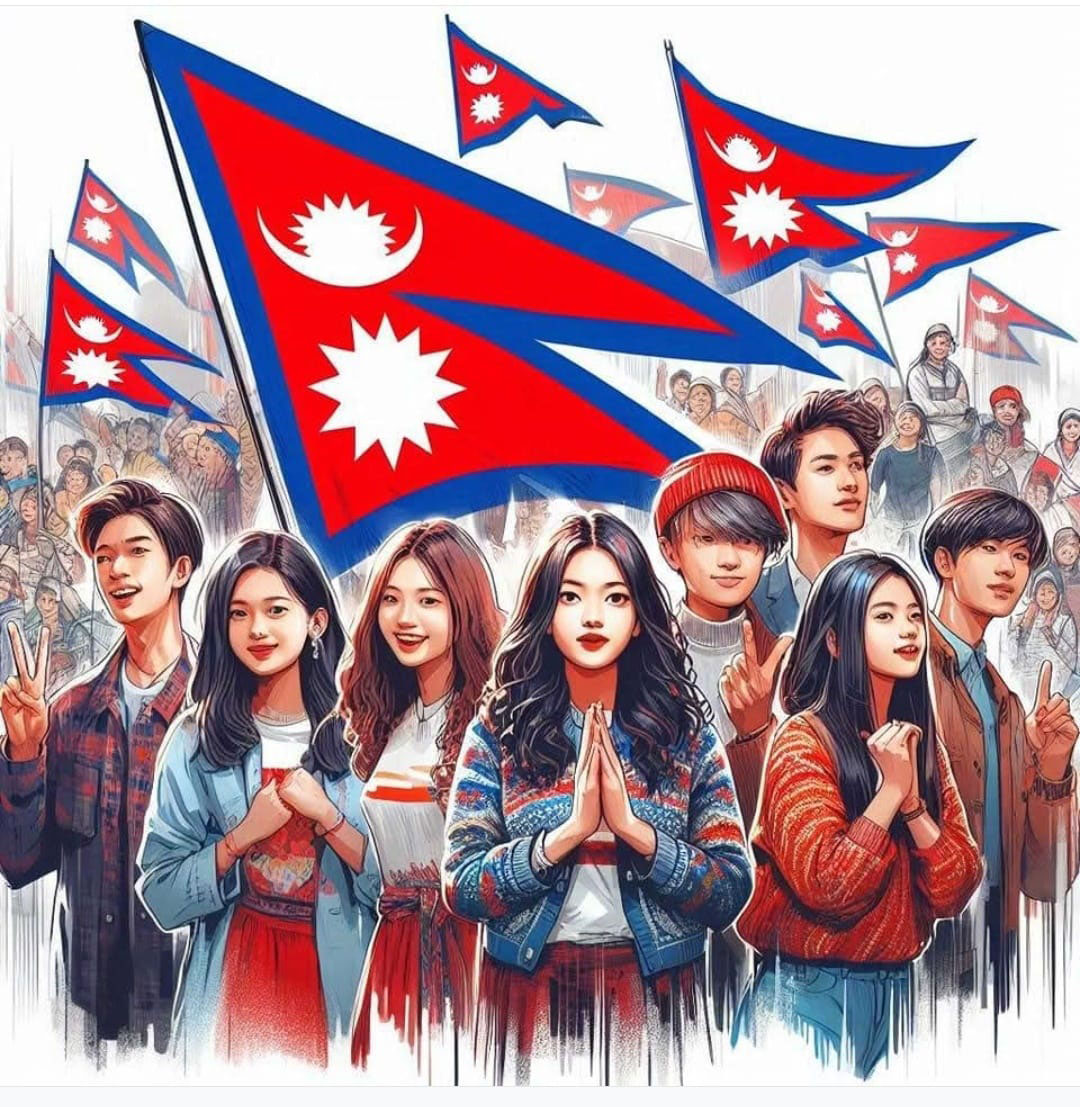
Gen Z, of course, welcomed the dissolution of Parliament, and continued to demand, in particular, a thorough investigation of the shooting of demonstrators.
‘We call for an open, sustained, and participatory national dialogue with the Interim Government and all political actors, one that ensures the meaningful presence of indigenous youth and structurally marginalised communities whose voices are not only heard, respected, and embedded but are also actively consulted in the shaping of the policies, institutions, and decisions that will define Nepal’s democratic future envisioned by us.’
Subin Mulmi, human rights lawyer and Executive Director of Nationality for All (NFA), which advocates for the right to nationality across the Asia Pacific, also supported the unconventional moves that had taken place:
Constitutional rigidity cannot mean national paralysis.
It’s true that Nepal’s constitution bars retired judges from taking executive office. But that restriction was written for ordinary times, not for the kind of deadlock we face today. When Parliament is dysfunctional, the executive discredited, and the nation on the brink, we must remember that a Constitution exists to serve the people, not to trap them in collapse…..
[A]ppointing Sushila Karki as head of an interim authority is not unconstitutional sabotage. It is a temporary safeguard, legitimized by necessity, and accountable to the Supreme Court. She would not be a partisan Prime Minister, but a neutral caretaker figure, someone with credibility, independence, and public trust, until the people can elect their representatives again.
The alternative is dangerous. Either we allow the political parties who wrecked the system to reassert control, or we descend into chaos without any anchor (as we risk further protests and potential violence). Both roads lead away from the spirit of the Constitution.
The doctrine of necessity is not about bending the Constitution for a personality. It is about preserving the Constitution for the nation.
The choice before us is not between the Constitution and Sushila Karki. The choice is between collapse and continuity. And continuity demands a trusted leader who can hold the space until elections.
Reactions from the international community to Karki’s appointment were swift and positive. The British Embassy, Kathmandu, stated, ‘Rt. Hon. Sushila Karki's appointment as interim Prime Minister today is an important step after the events of this week. As Nepal's oldest friend, we recognise the challenges ahead and affirm our commitment to supporting Nepali aspirations for accountability and inclusive governance.’
US Ambassador to Nepal, Dean R Thompson, commented, ‘We welcome the restoration of calm and a peaceful resolution following last week's tragic events,’ and reaffirmed Washington's commitment to working closely with the new leadership.
Even HH 14th Dalai Lama messaged Karki, given that ‘the Nepalese and Tibetan peoples have historically enjoyed a close relationship.’ His Holiness ended his message by saying, ‘I wish you every success in fulfilling the hopes and aspirations of the people of Nepal in these challenging times. With my prayers and good wishes.’
At least 75 people, including demonstrators, police and inmates, were killed nationwide and over 1700 were injured in the Gen Z protest and the subsequent mobs. Government offices, private residences, hotels and commercial properties were looted, damaged, and, in some cases, completely gutted by fire, causing damage amounting to astronomical sums.
One of the immediate outcomes was to declare 17 September a day of mourning and a public holiday in honour of those who were martyred; the payment of compensation to the families of the martyrs; free hospital treatment for the injured; and the coverage of all costs involved for funeral and cremation rites. It was also decided to create a Gen Z Memorial Park at an unspecified location to honour and remember the martyrs.
Tourists, doubting the political stability of the country and in line with many countries’ official travel advice to go to Nepal only in case of need, started to cancel their planned visits right on the cusp of the usually lucrative Autumn season: the figure of 40% was quoted in some places. The reaction was understandable on many levels. Not only were the violent images that had been shown around the world shocking in the extreme, but other factors, like there being several thousand prisoners on the loose after mass breakouts, did not instill confidence. ‘The tourism industry has been through a lot in recent years, such as conflict, pandemic and earthquake. We have always managed to recover, and have learned a lot about how to bounce back,’ Deepak Raj Joshi, CEO of the Nepal Tourism Board, was quoted as saying. ‘However, having such situations again and again really hurts our credibility as a destination.’
The unrest had occurred just ahead of Nepal’s biggest and longest festival, Dashain, stretching this year from 22 September to early October. It is traditionally a time of big spending on which many traders rely for a boost in business and profits, involving massive investment and preparation, shoes, clothes and mobile phones being among the most popular items. However, the political unrest and curfews disrupted the supply chain from both outside and within Nepal while the national psyche reeled from the shock, dashing traders’ hopes.
But what about the key issues which had brought Gen Z to the streets on that fateful day? Who was accountable for the massacre? And what about Oli et al? There were voices of dissent when it was known that Deuba and his wife had been granted new passports, complete with visas for Thailand; that Oli had been allowed to discretely leave army protection and take up residence in rented accommodation in Suryabinayak, Bhaktapur. The voices became even louder when it was apparent that Oli was not inclined to apologise for what had happened, let alone assume responsibility for it.
All too soon, there were signs of cracks within Gen Z itself, claims and counter-claims, disagreement and dissatisfaction, objections to the formation of the cabinet and arbitrary appointments. All this was inevitable, of course, given the speed at which things had happened. Meanwhile there were also signs that those who had benefitted most from holding political office were rallying, unwilling to relinquish the power that had been theirs for so long.

It was Deepak Kharel who highlighted in no uncertain terms what needed to be done: to neglect to do so was to imperil all that had been gained at such a great cost.
On governance, the movement that succeeded with the slogan of ending corruption must follow through by retiring senior officials at the edge of service and auditing the wealth of both old and new elites through the Commission for the Investigation of Abuse of Authority (CIAA). Files long shelved within the CIAA must finally see action, and Nepal must appeal to the international community for support, declaring that this movement was fought to uproot corruption once and for all…..
* * * * *
The final chariot procession of Indra Jatra, scheduled for Thursday, 11 September, was postponed, and, in the context of the national state of emergency, the festival was formally ended in a curtailed and unobtrusive manner. And before the month was out, a new Living Goddess, Arya Tara Shakya, had been selected and installed.
A native of Manchester, UK, and a holder of a Master’s degree in English Literature from the city’s university, Louisa Kamal has spent over half of her life living and working in Asia—Thailand, Japan and now Nepal. Often referred to by friends as the builder of ‘cultural bridges’, Louisa is passionate about both preserving and promoting understanding of traditions and rituals, especially those associated with the Himalayan swathe. A winner of various awards for haiku and short stories, ‘A Rainbow of Chaos’, launched in March 2023, was her first full-length book, followed by the sequel, ‘Rainbows in the Eyes’, in April the following year. A photographer as well as a writer, she illustrates her own articles, particularly on Nepal’s festivals and rich traditions. Louisa currently lives in Budhanilkantha, Kathmandu with her partner and their dog, Maya, enjoying trekking, jatra and photography in her free time
K.P Oli i is the 41st Prime Minister of Nepal. He is elected as Prime Minister of Nepal for the second time on 15 February 2018.
Sun Aug 09 2026
Ishwar Pokhrel is Deputy Prime Minister, Minister of Defence under Prime Minister Khadga Prasad Oli appointed on 16-February 2018.
Sun Aug 09 2026
Although it's fundamentally based on myths and tradition of the art of divination, Shamanism is an integral part of Tharu religious life.
Sun Aug 09 2026
In the previous monsoon (2021), a massive natural disaster struck Nepal, leaving a trail of destruction in its wake.
Sun Aug 09 2026
Oct 13, 2022
Jul 18, 2023
Sep 20, 2023
Jun 2, 2022


Ask Me About Nepal (AMAN) is your go-to digital platform for authentic, well-researched insights into Nepal’s people, places, culture, and hidden gems. From adventure to history, food to folklore—explore Nepal like never before!


Help us document the beauty and stories of Nepal. Your donation powers AMAN's journey.

Get captivating travel stories, hidden gems, and cultural insights from Nepal delivered to your inbox every month!
Want to Become a Contributor? Click Here
© 2025 Ask Me About Nepal. All Rights Reserved.