August 9, 2026

The 10 victims of the Broad Peak avalanche, 30 July 2026
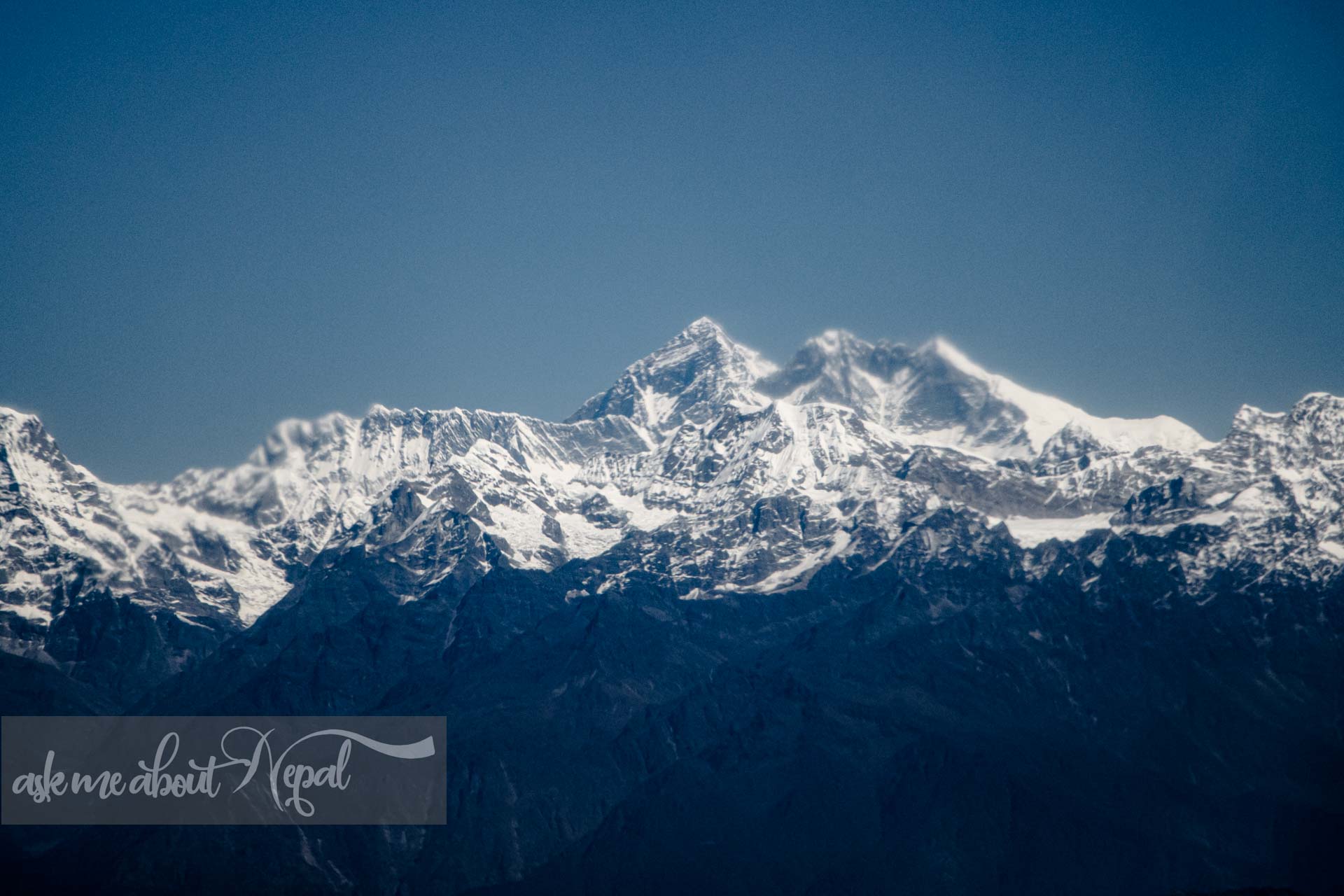
On the morning of Friday, 31 July 2026, news broke of a massive avalanche which had ravaged Broad Peak in the Karakoram range, Pakistan, the previous day. At 8051m, Broad Peak ranks as the twelfth highest of the world’s so-called 8000-ers, or mountains over 8000m in elevation. That incident, by itself, would not have been particularly newsworthy, but the fact that celebrated mountaineer Nims-dai—Nirmal Purja—was among the ten climbers listed as missing as a result of the avalanche ensured that, within the course of the next few hours, it spread at high speed throughout Nepal and the international mountaineering community as a whole.
Over the following days, as stakeholders and fans of multiple nationalities waited with bated breath to see if anyone had survived the catastrophe, putting together the pieces of the jigsaw that gradually emerged as to the identities of the ten people and the story behind Nims-dai’s presence there became an essential, if also complicated, process.
First, the situation should be put in context: whereas the climbing season for Everest and other Himalayan mountains in Nepal runs from March to May, with the main summiting window generally being in the second half of May—Hillary and Tenzin Norgay’s first-ever summit of Everest came on 29 May 1953—the Karakoram season starts where the Himalaya season ends, with July and early August being the summiting window.

From a post made on the Nimsdai Foundation’s Facebook page on 27 July, it appeared that Purja’s main mission in Gilgit-Baltistan was to summit another of the 8000-ers, Gasherbrum II, with his company’s—Elite Exped—clients, and in that he had been successful. The expedition team had, apparently, entered Skardu District on 29 June 2026 with the cooperation and assistance of three local operators: Karakoram Expeditions, Imagine Climb Pakistan, and Blue Sky Trek & Tours.
Huge congratulations to our founder, Nimsdai Purja, and the entire Elite Exped team on their successful summit of Gasherbrum II (8035m) on 21 July.
Despite challenging conditions throughout the expedition, the team showed remarkable resilience, determination and teamwork to stand together on the summit before safely returning to Base Camp.
For Nimsdai Purja, this summit is about so much more than reaching another mountain top. It marks another major milestone in his extraordinary Hat Trick Project, an ambitious challenge to become the first person to climb all 14 of the world’s 8000-metre peaks three times and complete the Seven Summits three times, all while raising vital funds to support the work of the Nimsdai Foundation.
With just Cho Oyu remaining, he’s now only one summit away from completing this historic challenge.
We’re incredibly proud of everything Nimsdai Purja and the team have achieved and so grateful that this remarkable journey is helping create opportunities and change lives through the Foundation’s work.
Congratulations to everyone involved, and wishing the team a safe and successful remainder of the climbing season.
However, there are two inaccuracies in the above statement. The first is that Purja was, at that point, aiming to summit all of the 8000-ers without oxygen twice, not three times, and he was only on the point of achieving a hat trick of the Seven Summits, not all the 8000-ers. The second inaccuracy, of which Nims-dai himself was apparently very much aware, was that Cho-Oyu (8188m), situated, like Everest, on the Tibet-Nepali border and the sixth highest mountain in the world, was not the only peak remaining to be climbed for him to complete a second set of 8000-er summits: in fact, Broad Peak also had to be summited again. Nims made a Facebook post on his page, headed, 'The Mission Shifts. The Compass Holds', on the very same day, 27 July, pointing out this fact and how this realisation had made him change his plans. Its style is typical of the man: assertive, defensive at times, and verging on the egotistical.
This was never the plan. Initially, the plan was to climb just G2 [Gasherbrum II]. But just before setting off for Pakistan, I ran the numbers on my 8000m summits. That’s when it hit me: if I tick off Broad Peak whilst I’m here, only one remains, Cho Oyu. Then I become the FIRST person in history to climb all 14 eight-thousanders twice. Without oxygen.
This wasn’t planned. The Hattrick project was the focus because it carried a bigger mission. But opportunities don’t scream: they whisper to those already working in silence.
Here’s the secret I’ve carried through every expedition: I never competed with anyone else. My only battle was against the man I was yesterday. Every single day, pushing my own limits. Because the moment you look sideways: at what others are doing, saying, achieving: you drift off your compass. Your heading is YOURS. Guard it fiercely.
They criticized me when I climbed the 14 [8000-ers] without O’s [oxygen] during Project Possible. If you haven’t seen what that took, watch 14 Peaks on Netflix. That film is the unfiltered truth. I was there doing multiple rescues of climbers left behind by other expeditions, raising the funds myself, leading from the front, fixing our own lines, dealing with the Shishapangma permit with China, being at hospitals for my mum’s operation and so much more. And now? Now I’m heading for the double without oxygen: triple in total. The noise hasn’t stopped. I just stopped listening.
To those who still doubt: I already climbed all five of Pakistan’s 8000ers in just 26 days. Leading. Guiding. Without oxygen. Breaking the records of those who broke mine with oxygen. The receipts are there.
Broad Peak, I ask for nothing but safe passage up and back down. I take zero mountains for granted. Not one. The moment my foot leaves basecamp, it’s 100%. Always has been. Always will be.
This one is dedicated to everyone who carried me here. Supporters. Critics. All of you. Without both sides, there is no fire. So, thank you genuinely.
My purpose has never been about me. It’s about what I represent. It’s about showing YOU that your own mountains—whatever they are—are climbable.
With hindsight, his prayer for ‘safe passage up and back down’ is both haunting and ironic.

Details of the other nine lost climbers gradually began to emerge: five well-known and skilled Nepali high-altitude climbers—Pur Bahadur Gurung (‘Yukta’), Nawang Thindhu Sherpa, Gyalu Sherpa, Nima Sherpa, and Kili Pemba Sherpa (‘Kilu’); one greatly respected Pakistani high-altitude climber, Sohail Sakhi, the founder of Moving Mountains, dedicated to creating opportunities for local people in the mountaineering sector; and three international climbers—Sarah Mallory Geis, an American novice attempting her first 8000-er with limited previous experience, notably the Nepali so-called ‘trekking peaks’ of Mera and Lobuche East; Nadhira Ahmed Abdullah Al Harthy, the first Omani woman to summit Everest; and Wang Zhong (China), who had already summited ten (twelve, according to other sources) 8000-ers, including Dhaulagiri (8167m) just a few months previously. It remains unclear with which expedition companies the three of them were climbing. Pur Bahadur Gurung and Nima Sherpa were affiliated with Elite Exped, while Imagine Nepal (Kili Pemba Sherpa) and Seven Summit Treks (Gyalu Sherpa and Nawang Thindu Sherpa) also had a presence there. It appears that Moving Mountains was acting as the local logistics and coordination manager.
Then came reports of the conditions on the mountain, the timing of the avalanche and the delay in action being taken. Heavy snowfall in the region had begun on around 22 July, the day after Purja’s Gasherbrum II summit, and, by 25 July, most other expeditions had left Broad Peak base camp due to the increasing risk of avalanches. These included the veteran Hungarian climber, David Klein, and the American Ian Overton. Before the weather conditions had deteriorated, Klein had already followed a Pakistani rope-fixing team up the west side of Broad Peak, turning back down some 50 to 70 vertical meters below the summit, while Overton had returned to base camp somewhat earlier, suffering from AMS. The onset of heavy snowfall caused them to abandon their attempt.
However, after Nirmal Purja arrived at Broad Peak base camp fresh from Gasherbrum II, he seems to have assumed the role of the de facto leader of a ten-member team which started their ascent, spending the night of 29 July at Camp 2. At 05:33 local time on the morning of 30 July, Garmin tracking data placed Nims-dai at 6166m, and 500m higher by 09:00. Soon afterwards, between 09:20 and 09:30, a prominent serac collapsed and the avalanche hit, sweeping all ten climbers down hundreds of vertical meters. However, unbelievably, it was not until around 20:00 that evening that, according to the Gilgit-Baltistan government, the avalanche was ‘reported’, while the Alpine Club of Pakistan, the national governing body for mountaineering and climbing, stated that it was not informed until a full two hours later.
A formal rescue request from the expedition operators finally led to the official rescue mission being launched at 08:30 on 31 July, 23 hours after the avalanche had occurred. That delay meant that the first full daylight period after the avalanche, when aerial reconnaissance could have been attempted, passed without a rescue operation. Army helicopters—unlike Nepal, private search and rescue helicopter outfits do not exist in Pakistan—deployed a three-member civilian rescue team led by Sirbaz Khan. The bodies of Al Harthy, Gurung, and Geis were recovered and flown to Skardu before operations were halted due to bad weather. Search efforts resumed on 1 August with military support. Drones also located the bodies of other group members scattered across different areas of the avalanche.
Confusion dominated the scene, with Mingma David Sherpa, the Elite Exped co-founder and politician who arrived in Gilgit-Baltistan to supervise the rescue operations, even quoted as confidently declaring that Nims-dai was conscious and waiting to be rescued after his tracking device seemed to indicate movement.
Inevitably, perhaps, in a world which is increasingly dominated—and fooled—by AI, the internet became flooded with fake news, fake images and fake footage of the disaster, some of it simply misleading, and a lot extremely disrespectful and inappropriate, such as images which purported to show the body of Nims-dai, his face coated in ice and frost. Some footage from other incidents on other mountains was wrongly attributed to Broad Peak to cash in on the ratings, as it suddenly became the most infamous mountain in the world. Other actual footage, like the bodies and belongings of the team scattered across the avalanche and corpses being lifted, was needlessly distressing to family and friends.
Also, more controversial stories and rumours from Nims-dai’s past inevitably began to circulate again: his use of ‘heli-doping’ to facilitate swift transfers from one mountain to another in his record-breaking efforts; accusations of sexual assault by female climbers; the fire and explosions at Elite Exped’s office in September 2022 which killed three staff members.
Accepting what has happened is an integral element of any tragedy and initiates the process of closure, however painful that may be. After the struggle to locate, shift, and finally retrieve five more bodies almost a full week after the avalanche, the remains of Nawang Thindu Sherpa, located in an extremely hazardous zone, still have not been retrieved, while the whereabouts of the body of Sohail Sakhi is still unknown. A native of Hunza, Sohail Sakhi was one of Pakistan's most respected high-altitude climbers and guides, famed for his courage, humility, and passion for the Karakoram mountains. A photographer committed to mountain safety, Sohail inspired a generation of Balti climbers. His family took the heartbreaking decision to perform his funeral rites in the absence of his body, on the assumption that it may never be found. Meanwhile, the news that the body of Nirmal Purja was to be taken to the UK for funeral rites, rather than brought back to Nepal, was a source of controversy for many who regard him as the quintessential Nepali hero who proved beyond a doubt that nothing was impossible. In doing so, they forget not only that he had had a military career there spanning sixteen years, first as a Gurkha in the British Army then in an elite unit of the Royal Navy; that he had taken British nationality; and that his family, including his wife and daughter, are based there.
As the rescue operation moved to a close, with the successful and difficult retrieval of more bodies due to the bravery and determination of all those involved, Mingma David Sherpa issued an official statement on 5 August.
Today, with heavy hearts, we confirm that our founder, Nirmal ‘Nims’ Purja, together with Zhong Wang, Nima Sherpa, and Kilu Sherpa, has been successfully recovered from Broad Peak and brought safely to Base Camp following an exceptionally challenging recovery operation.
This recovery would not have been possible without the extraordinary courage, professionalism, and selfless commitment of the ground recovery team, led by Mingma G and supported by Sirbaz Khan, together with the team on the ground.
We are deeply grateful to every member of the team for carrying out this mission under extremely difficult and dangerous conditions.
We also extend our heartfelt appreciation to the Pakistan Army, the Government of Pakistan, the Government of Gilgit-Baltistan, local authorities, the British High Commission, the Embassy of Nepal, the Alpine Club of Pakistan, and everyone whose support and cooperation made this operation possible
Bringing Nims home was never just about recovering a climber. It was about bringing home a husband, a father, a son, a brother, a friend, and the heart of Elite Exped, Nimsdai Foundation, Nimsdai Store, Skydive Nimsdai. While no words can lessen this loss, we are deeply grateful that he, together with Zhong, Nima, and Kilu, can now begin their final journey home to their loved ones.
Our thoughts also remain with the families of the three [sic] climbers who are still missing. We remain committed to supporting every possible effort to bring them home when conditions safely allow.
Thank you to everyone around the world who has stood beside us with your prayers, kindness, and unwavering support during these difficult days.
Rest in peace, Nims, Zhong, Nima, and Kilu. Your legacy will live on in the mountains you loved and in all those whose lives you touched.
Questions, of course, remain. Why did Nims persist in his Broad Peak summit attempt, given the adverse weather conditions, and the fact that other experienced climbers had already given up and left base camp? Why did the other nine people who lost their lives in the avalanche decide to accompany him instead of also erring on the side of caution and giving up? ‘Giving up is not in the blood’ became one of Purja’s catch phrases, but are there not times when giving up is the right thing to do?
Why was no alert issued from the base camp team after the avalanche? No documented response exists after the climbing team's last contact at 09:00 on 30 July, despite commercial expeditions in high-risk terrain normally conducting hourly, or two-hourly, check-ins. Who was responsible for the base camp monitoring that should have happened from the time of the avalanche until evening: Elite Exped, the other Nepali operators, or Moving Mountains? Why did it take a full day for the Gilgit-Baltistan Government and the Alpine Club of Pakistan to be informed, and why is there a two-hour discrepancy in the time that each organization reported receiving the news? Even allowing for the isolated location and possible communication difficulties, in this day and age of satellite phones and sophisticated technology, this is deeply disturbing, even though the size and extreme force of the avalanche would have almost inevitably meant that an earlier rescue attempt would have had the same results.
The Karakoram range, meanwhile, is left to brood in icy silence once more. All mountaineers on K2 abandoned their summit attempts in the wake of the Broad Peak avalanche, 2026, thus becoming the latest in a succession of Zero-Summit years, following on from the last one in 2020, when the COVID-19 pandemic travel restrictions were to blame.
In death, as in life, Nims-dai remains a larger-than-life figure, adulated by many, criticized by more than a few, and reviled by some. Perhaps the final words should belong to another legendary figure of mountaineering, Reinhold Messner:
‘Nims chose his own path with courage and passion. What remains is not only the sorrow of his passing, but the memory of a life truly lived. My thoughts are with his family, his friends, and everyone who had the privilege of knowing him.’

A native of Manchester, UK, and a holder of a Master’s degree in English Literature from the city’s university, Louisa Kamal has spent over half of her life living and working in Asia—Thailand, Japan and now Nepal. Often referred to by friends as the builder of ‘cultural bridges’, Louisa is passionate about both preserving and promoting understanding of traditions and rituals, especially those associated with the Himalayan swathe. A winner of various awards for haiku and short stories, ‘A Rainbow of Chaos’, launched in March 2023, was her first full-length book, followed by the sequel, ‘Rainbows in the Eyes’, in April the following year. A photographer as well as a writer, she illustrates her own articles, particularly on Nepal’s festivals and rich traditions. Louisa currently lives in Budhanilkantha, Kathmandu with her partner and their dog, Maya, enjoying trekking, jatra and photography in her free time
The pioneer of the Nepalese Dalit Right Movement, Sarbajit Biswokarma, devoted his entire life for the sake of his people - the Dalit People.
Sun Aug 09 2026
Gaurika Singh is a young Nepali Swimmer and a household name now who marked her exceptional presence at Tokyo Olympics 2021
Sun Aug 09 2026
Shey Monastery, known as the "Crystal Monastery," is tucked away in the rugged wilderness of Upper Dolpa, Nepal. This remote gem is perched at 4,200 meters.
Sun Aug 09 2026
The mask dance of Shikali Jatra draws a vast congregation of devotees from Khokana and spectators from nearby regions, making it a prominent festival in the area.
Sun Aug 09 2026
Oct 13, 2022
Jul 18, 2023
Sep 20, 2023
Jun 2, 2022


Ask Me About Nepal (AMAN) is your go-to digital platform for authentic, well-researched insights into Nepal’s people, places, culture, and hidden gems. From adventure to history, food to folklore—explore Nepal like never before!


Help us document the beauty and stories of Nepal. Your donation powers AMAN's journey.

Get captivating travel stories, hidden gems, and cultural insights from Nepal delivered to your inbox every month!
Want to Become a Contributor? Click Here
© 2025 Ask Me About Nepal. All Rights Reserved.