February 13, 2023

Nepal had to endure a devastating civil war that killed almost 13,000 and displaced 200,000 people between 1996 and 2006. The Communist Party of Nepal (Maoist), a small leftist party, by the end of the Nepalese civil war, came out as the hegemonic rival to the monarchy. Pushpa Kamal Dahal, known by his nom de guerre - Prachanda, took his party from nowhere, to the one balancing power dynamics. And ultimately overthrowing the 285-year-old monarchy and transforming Nepal into a secular state. How exactly did this happen? For all of this to be comprehensible, we must go back in time and see through the socio-political history of Nepal.
The roots of the Nepalese armed revolution date back to the mid-1900s. The feudalistic and imperialist Rana regime was gradually losing its grip. People were getting tired of their oppressions and were out on the streets. While the Nepali Congress was fighting the Ranas, fellow communists founded the Communist Party of Nepal in India in 1949. Among the founding members were Pushpa Lal Shrestha, Keshar Jung Rayamajhi, and Nar Bahadur Karmacharya. Niranjan Govinda Baidhya and Narayan Bilas Joshi also had contributed to establishing the party. The anti-Rana protests were getting brawny with support from both, the King and India. Finally, with the intervention of India and the commencement of armed resistance from the Nepali Congress, Ranas finally stepped down from their century-long power trip. India led the negotiations and helped form a transitional government. King Tribhuvan then announced elections for the constitutional assembly. The elections, however, did not happen. The still-young Communist Party of Nepal was already witnessing polarisation. Pushpa Lal's faction of the party wanted to continue an armed revolution until the constitutional assembly elections, while the Keshar Jung faction disagreed. The result was the splitting of the party into multiple wings. Within only a few years, over half a dozen political parties were abiding by communist doctrine.

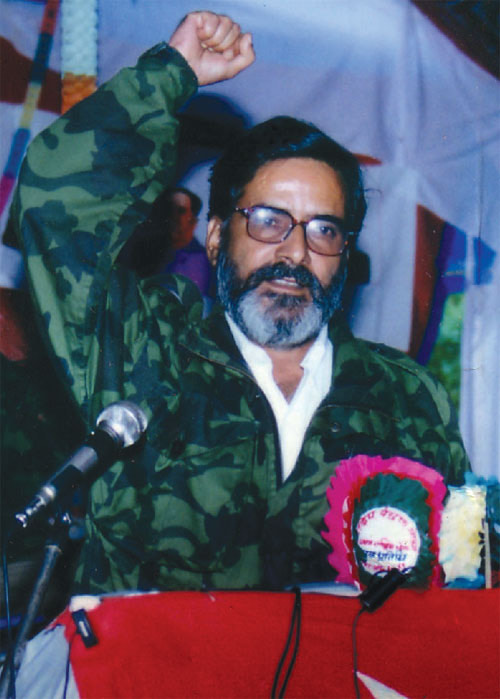
One of these parties was CPN (Unity Centre). Pushpa Kamal Dahal, and an architecture graduate from India - Baburam Bhattarai both came under the same political front. The nation had already witnessed a number of dissatisfying political actions, including a royal coup in 1960. The coup by king Mahendra introduced a party-less political system called Panchayat. Panchayat system was a four-tier party-less political governing system. The four tiers were village panchayat, district panchayat, zonal panchayat, and national panchayat. The members of these assemblies were those favored by the palace which ensured the king had an outright clutch over the entire nation. This led to almost three decades of absolute monarchy. In the 1990s, however, political parties launched a successful revolution for the restoration of democracy. Although most of the parties were okay settling for multiparty parliament under a constitutional monarchy, the Prachanda faction was clearly not. Communist parties, who believed the true intent of the revolution was still not met, came together to form the United People’s Front of Nepal. Dr. Baburam Bhattarai, the trump-card of the Nepalese civil war, became the chairman of the front. With economic crisis and chaos spiraling the nation, the People’s front too later split, an event now usual among communist parties of Nepal.
The Communist Party of Nepal (Maoist) was preceded by the United People’s Front of Nepal. Dr. Baburam Bhattarai and Pushpa Kamal Dahal finally came together in 1994. The supreme commander of the civil war, Prachanda, went completely underground soon after the declaration of the party. Dr. Bhattarai was quite literally the face and mind of the party.
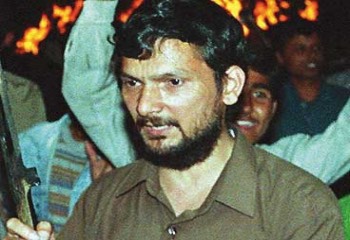
Dr. Baburam Bhattarai, who later became the 36th PM of Nepal. The party believed all the efforts now should be concentrated on the development of a people’s war that would usher in a new people’s democratic republic of Nepal. The party's frontline believed this would guarantee the true liberation of the people. The official plenum of the party also decided to give up any sort of participation in parliamentary elections. Prachanda urged everyone to behold themselves for the Historic Initiation of the People’s War.
In the following years, Maoists prepared themselves for a decade-long bloody civil war. In the next edition of Nepalese Civil War: Explained, we analyze the early days of the people’s armed revolution.
Chapter Two: Aurora of the War
Chapter Three: The Strategic Defense
K.P Oli i is the 41st Prime Minister of Nepal. He is elected as Prime Minister of Nepal for the second time on 15 February 2018.
Sun Aug 09 2026
Ishwar Pokhrel is Deputy Prime Minister, Minister of Defence under Prime Minister Khadga Prasad Oli appointed on 16-February 2018.
Sun Aug 09 2026
The tug-of-war between the hydropower company and the Bhote Singsa communities in the Lungbasamba landscape.
Sun Aug 09 2026
Ram Navami is the birth anniversary of Ram Chandra of Ayodhya who married a Nepali Princess Janaki aka Goddess Sita of Janakpur, Nepal.
Sun Aug 09 2026
Oct 13, 2022
Jul 18, 2023
Sep 20, 2023
Jun 2, 2022


Ask Me About Nepal (AMAN) is your go-to digital platform for authentic, well-researched insights into Nepal’s people, places, culture, and hidden gems. From adventure to history, food to folklore—explore Nepal like never before!


Help us document the beauty and stories of Nepal. Your donation powers AMAN's journey.

Get captivating travel stories, hidden gems, and cultural insights from Nepal delivered to your inbox every month!
Want to Become a Contributor? Click Here
© 2025 Ask Me About Nepal. All Rights Reserved.