February 8, 2026

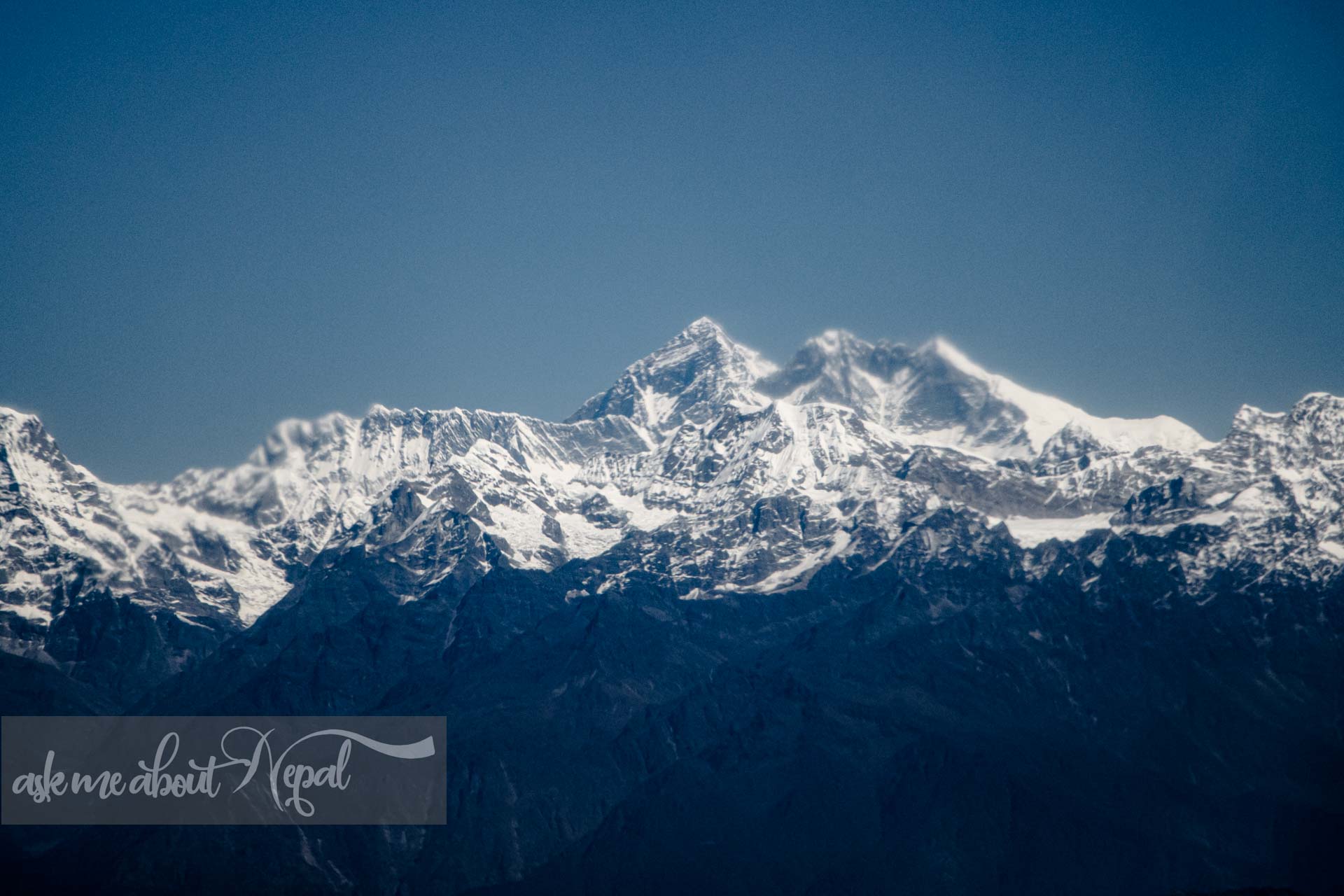
Chorten at the head of the Langtang Valley against the distinctive Gangchenpo (6378m).
In the eighth century, the tantric Buddhist Vajra master Padmasambhava, aka Guru Rinpoche, travelled extensively in the Himalayan swathe, spreading Vajrayana—a form of Mahayana Buddhism that had originated in northern India about three hundred years previously—and identifying places endowed with special spiritual qualities. By following his own religious practices at these sites, their inherent ‘unworldliness’ was further enhanced and intensified. Although Guru Rinpoche revealed the location and nature of many of these places in his own writings, the details of others were concealed as part of the body of hidden treasures or terma, to be revealed by tertön, or treasure seekers, many of whom were reincarnations of Guru Rinpoche’s own twenty-five ‘heart disciples’, who acted as so-called ‘mind-streams’ (citta-santana) for the tertön.

One specific type of termas was the dedicated safe havens for devout practitioners of Buddha Dharma in times of critical need. Known as beyul (Tib. hidden valleys), they were ‘hidden’ not only in terms of their secluded geophysical locations, but also through the guardianship of Guru Rinpoche, who preserved them from being tainted by disrespectful human encroachment until the time came for them to be revealed. Undoubtedly, the most famous beyul of all is the legendary Shambala, which became morphed into ‘Shangri-La’ in James Hilton’s 1933 novel, Lost Horizon.
For many, Pemako in southeastern Tibet is the ultimate beyul. In his introduction to The Heart of the World: A Journey to Tibet's Lost Paradise, in which explorer and author Ian Baker recounts the penetration, or ‘unlocking’, of the innermost gorge of the Tsangpo River, H.H. the 14th Dalai Lama emphasises the importance and significance of beyul: “From a Buddhist perspective, sacred environments such as Pemako are not places to escape the world, but to enter it more deeply. The qualities inherent in such places reveal the interconnectedness of all life and deepen awareness of hidden regions of the mind and spirit. Visiting such places with a good motivation and appropriate merit, the pilgrim can learn to see the world differently from the way it commonly appears, developing and enhancing the Buddhist virtues of wisdom and compassion.”

The exploration of Pemako in the late twentieth century was by no means an isolated recent attempt to unlock the secrets of a beyul: another, far more bizarre, venture occurred in 1962. A Tibetan lama, Tulshuk Lingpa, accompanied by more than 300 disciples from all over the Himalayan swathe who had renounced their worldly goods in anticipation of success, went to locate and ‘open’ beyul Demoshong. The fabled beyul was said to exist on the slopes of Kanchenjunga (8586m), the third-highest mountain in the world, which straddles the border of Nepal and Sikkim. The undertaking was an abysmal failure.
The identification and ‘opening’ of a beyul typically involved the tertön, guided throughout by Guru Rinpoche, physically going to the location on the identified auspicious day, performing specific rituals, then being fully enlightened by Guru Rinpoche as to the precise sacred nature and features of the beyul. Subsequently, those visiting the beyul, or performing rites at its most holy sites, are blessed by its supreme sacredness. Conversely, those disrespecting the beyul incur the wrath of its protector deities, who commonly assume the form of snowstorms, snow leopards and mists to confound unwanted intruders.
It must be remembered that, even today, beyul can be said to exist on both geophysical and spiritual planes. Where one person sees an ordinary boulder, another sees a holy throne, a sacred foot- or hand-print, a ritual implement. It is only when these two planes—the geophysical and the spiritual—converge to become the metaphysical that a beyul can be truly ‘open’, or, rather, the heart of the onlooker can fully comprehend and embrace the significance, and release the latent power present in every rock and stone.

Lists of beyul, both opened and still closed, have been compiled, but none are conclusive, either in terms of their total number—although the mystical figure of 108 is often mooted—or precise locations. Ancient Buddhist texts refer to there being seven important beyul (nghe-beyul khimpalung) in the Himalayan region, spiritual and exquisite places where aging is arrested and life will remain when a catastrophe of global proportions destroys the rest of the world. Those familiar with Lost Horizon will recall that these are exactly the same attributes of Shangri-La. In Chapter 8, the High Lama Perrault, himself nearly 250 years of age, relates to Conway, whose plane has been deliberately diverted to the Valley of Blue Moon, the apocryphal vision of his younger self. “He foresaw a time when men, exultant in the technique of homicide, would rage so hotly over the world that every precious thing would be in danger, every book and picture and harmony, every treasure garnered through two millenniums, the small, the delicate, the defenseless—all would be lost ....”
Like Hilton’s Shangri-La, beyul in Nepal, are, relatively speaking, isolated and difficult to access. The fact that they have been incorporated into national parks, conservation areas and/or restricted areas has resulted in relatively low levels of human disturbance and the preservation of their flora and fauna. The ban on hunting, rooted in Buddhist beliefs, or even on actual meat-eating, which exists in some beyul, has also done much to protect wildlife. Additionally, the topographic variations of beyul, which can have an altitude range of 2000m or even 3000m, from the low altitude ‘entrance’ to the high altitude ‘impasse’, has resulted in their great biodiversity of plants and animals, from subtropical to alpine.

Somewhat paradoxically, the higher up a beyul one ventures, the more open the valley becomes: Rolwaling after Beding, Tsum beyond Chhokang Paro and Langtang after Ghoda Tabela are typical examples. And along with this widening of the valley comes an increased preponderance of manmade symbols of Tibetan Buddhism: mani walls, prayer wheels, and chorten start to dominate the trail, while prayer flags, straining on their strings in the strong gusts of wind, flutter colourfully against the blue skies and snow-capped peaks.
The ‘impasse’ is the typical geographical ‘end game’ of a beyul, with the only option for trekkers, other than doing a U-turn and retracing their steps, being to tackle steep, high passes to forge an exit: Tashi Lapcha (5755m) out of Rolwaling; the Ganja-la Pass (5106m) that links Langtang with Helambu; and the choice of two passes leading to Tibet—and thus out of bounds to foreigners—at the head of Tsum Valley.
But, as elsewhere in Nepal, change is in the air: jeep roads, often connected to hydro power projects, are being remorselessly pushed through into many beyul. This is very much the case in Langtang, both on the lower path via Bamboo Cottage and the upper trail through Sherpagaon, while there are, apparently, plans for a small hydro power plant—and the associated jeep road—to be constructed above Thangthing Kharka in Rolwaling.

And so, one may well ask, do these hidden valleys and, in particular, their sacred status as beyul, have any meaning or purpose in modern society, other than for the devout monks and nuns, who retreat for months on end in the caves and small clay hermitages that cling, like swallows’ nests, to the unyielding cliff faces? Ian Baker would argue that they do: “Our minds have no real or absolute boundaries; on the contrary, we are part of an infinite field of intelligence that extends beyond space and time into realities we have yet to comprehend. The beyul and their dakini emissaries [female embodiments of wisdom, or ‘sky walkers’] are traces of the original world, inviting us to open to the abiding mystery at the heart of all experience, the inseparability that infuses every action, thought, and intention.”
Over the coming months, Ask Me About Nepal will feature articles on Nepal’s predominant beyul including:
Kyimolung, more commonly referred to as Tsum Valley, located in Gorkha, with its extensive border with Tibet
Namgo Dagam, better known as the Langtang Valley region of Rasuwa
Khumbu, perhaps the best known of all Nepal’s beyul, leading to the holy peak of Chomolangma, or Mount Everest
Rolwaling in Dolakha, which includes the double-peaked Gauri Shankar (7181m)

All Photos are by Author Louisa Kamal
A native of Manchester, UK, and a holder of a Master’s degree in English Literature from the city’s university, Louisa Kamal has spent over half of her life living and working in Asia—Thailand, Japan and now Nepal. Often referred to by friends as the builder of ‘cultural bridges’, Louisa is passionate about both preserving and promoting understanding of traditions and rituals, especially those associated with the Himalayan swathe. A winner of various awards for haiku and short stories, ‘A Rainbow of Chaos’, launched in March 2023, was her first full-length book, followed by the sequel, ‘Rainbows in the Eyes’, in April the following year. A photographer as well as a writer, she illustrates her own articles, particularly on Nepal’s festivals and rich traditions. Louisa currently lives in Budhanilkantha, Kathmandu with her partner and their dog, Maya, enjoying trekking, jatra and photography in her free time
Once you reach the highland of Tanchowk, you will breathe one of the most soothing airs in the world, with different plantations around you.
Sun Aug 09 2026
It was the prettiest house in Gorkha that was perched on a hill and served the most magnificent views of all the soaring peaks of Annapurna, Manaslu and Ganesh Himal.
Sun Aug 09 2026
Sun Aug 09 2026
Nepali conservationists say they believe there’s a possible link between the Buddha’s legacy and the conservation of sarus cranes in Lumbini
Sun Aug 09 2026
Oct 13, 2022
Jul 18, 2023
Sep 20, 2023
Jun 2, 2022


Ask Me About Nepal (AMAN) is your go-to digital platform for authentic, well-researched insights into Nepal’s people, places, culture, and hidden gems. From adventure to history, food to folklore—explore Nepal like never before!


Help us document the beauty and stories of Nepal. Your donation powers AMAN's journey.

Get captivating travel stories, hidden gems, and cultural insights from Nepal delivered to your inbox every month!
Want to Become a Contributor? Click Here
© 2025 Ask Me About Nepal. All Rights Reserved.