June 18, 2023

Looking down at Siddha Lakhan Thapa cave, where he disappeared into. Photo by Nikki Thapa
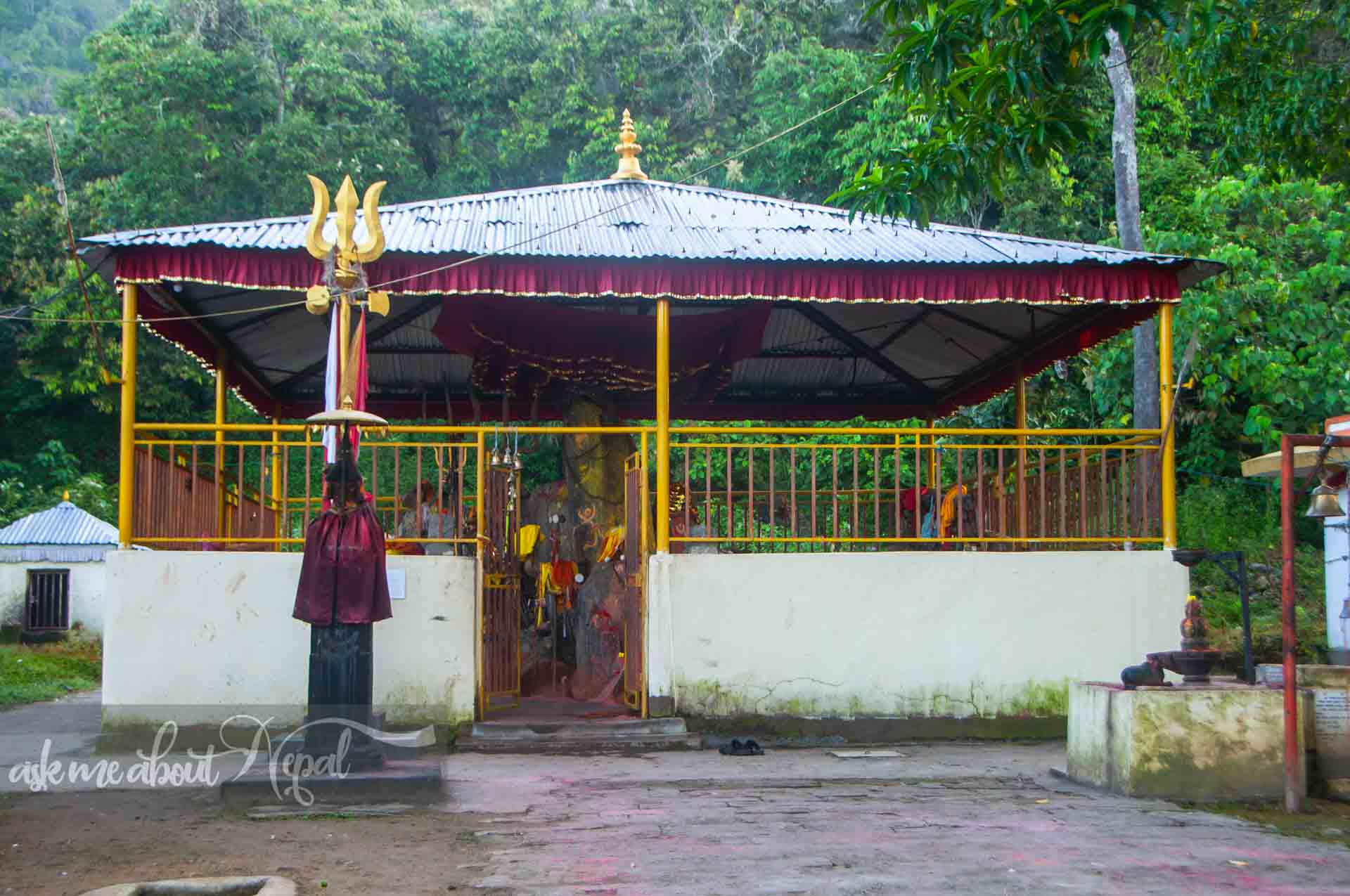
Centuries ago, in the kingdom of Gorkha, a remarkable tale unfolded within the mystical realm of Manakamana, a temple of a wish-fulfilling goddess sitting atop 1302 meters. It was during the reign of King Ram Shah, legend has it that the king beheld a divine spectacle, witnessing his beloved Queen embodying the incarnation of Goddess Durga herself. Beside her, stood a devotee Siddha Lakhan Thapa, transformed into the fierce lion, the Goddess's chosen mount. Unfortunately, the King met an unfortunate death upon this sighting. The bereaved Queen offered herself into the funeral pyre with King Ram Shah following Sati Pratha, a Hindu custom of self-immolation. Six months after the event, when a humble farmer set forth to till his field, in the process his plow stroke a stone, and to his horror that stone bled. Siddha Lakhan Thapa (Siddha meaning one who is accomplished in Sanskrit) upon discovering the situation performed his intricate Tantric rituals, consecrated the stone at the site, and established what would come to be known as the Manakamana Temple. Before the self-immolation, Queen had promised her devotee that she would reincarnate and she reincarnated thusly, keeping her promise. Hence the temple was named Manakamana (Mana: Heart, Kamana: Desire), because she fulfilled her devotee’s desire of meeting Her again. It is believed that any prayers made at this temple are answered by the Goddess. According to tradition, the priest at the temple must be a descendant of Siddha Lakhan Thapa. Since then, the devout pilgrims throughout the nation, far and near flock to this hallowed sanctuary, seeking solace and blessings from the benevolent goddess. However, the intriguing tale of the Siddha did not end there.  A temple housed over the Siddha Lakhan Thapa Cave, Kaphek Danda, Gorkha. Photo by Nikki Thapa
  An altar for the Siddha Lakhan Thapa Cave, Kaphek Danda, Gorkha. Photo by Nikki Thapa After fulfilling his sacred duty, the devoted soul, Siddha Lakhan Thapa vanished from the mortal realm, disappearing into the mists of time. Days turned into years and it was only upon his eventual return that Lakhan Thapa realized the heart-wrenching truth. In his absence, his family, believing him to be forever lost, had performed the solemn last rites, Shraddha, bidding him farewell in a ceremony of finality. Understanding that his resurrection would bring unwarranted distress and ill fortune upon his kin, he made a solemn decision. Siddha made up his mind and retreated to the solitude of a cave nestled high above Kaphek Danda/hill where he found solace in seclusion. Embracing a life of contemplation and introspection, he dedicated his existence to silent meditation and the pursuit of inner enlightenment. The secrets of his whereabouts and the mysteries concealed within the depths of the cave became the subject of beguiling folklore amongst the locals of the hills.
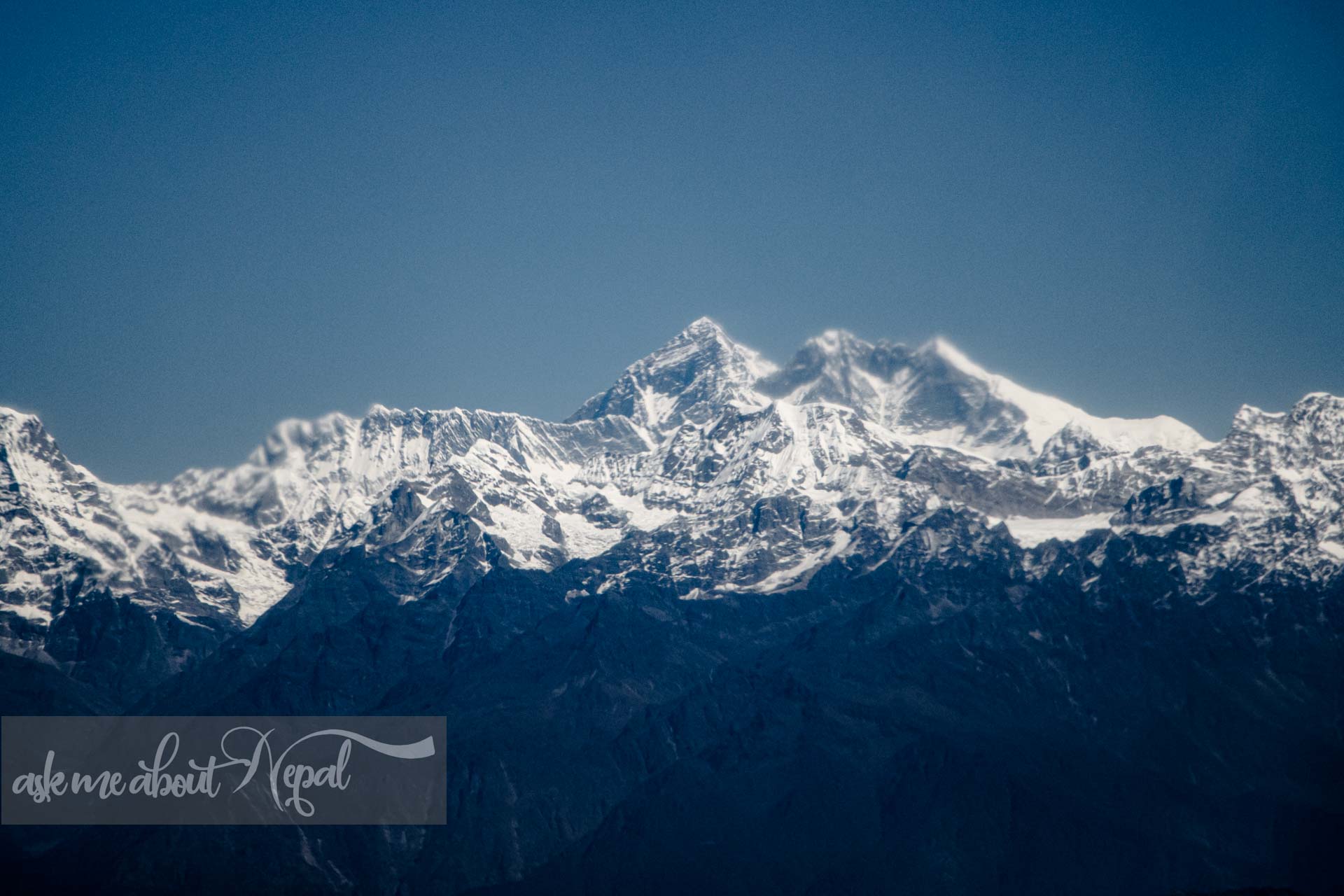
  Author at the Kaphek Danda enjoying the captivating view of Manasri Range rising above clouds. Photo by Nikki Thapa
  A view of Manaslu Himal rising above the blanket of clouds seen from Kaphek Danda, Gorkha. Photo by Nikki Thapa It is said that the towering "Bhimsen Pati" trees (Asian butterfly bush) that majestically grew outside the entrance of the cave were, in fact, remnants of the devoted Siddha's walking stick. The legend held that Siddha Lakhan Thapa, upon his departure, left behind a piece of his essence, forever intertwined with the earth and sky. These magnificent trees stood as silent sentinels, bearing witness to the mystical energy that permeated the sacred realm of Manakamana. And so, the story of Siddha Lakhan Thapa, the Lion Devotee, continued to fascinate and his tale served as a reminder of devotion's transformative power and enduring legacy. The Siddha Lakhan Thapa cave on Kaphek Danda is about an hour-long hike from the Manakamana Temple along the old walking trail from more than 100 years ago that connected districts Gorkha and Kathmandu with a stoppage in Dhading district.
The Manakamana Mandir lies approximately 140km from Kathmandu and sits 12km south of Gorkha town, at an elevation of 1302m above sea level. To the north of the temple, one can behold the magnificent Manaslu-Himachali and Annapurna mountain ranges. On the southern side, the river valleys of Trisuli flow, while the Marsyangdi river valley stretches to the west.  The Manakamana Mandir lies approximately 140km from Kathmandu and sits 12km south of Gorkha town, at an elevation of 1302m above sea level. Photo by Nikki Thapa Over the years, the Manakamana Temple has undergone several renovations, especially after the massive 2015 earthquake. It features a four-tiered pagoda-style roof, with its entrance facing southwest. Behind closed doors, the priest conducts daily prayers and rituals before opening the temple to the public. Devotees believe that Manakamana Devi blesses them, granting their heartfelt wishes. Reaching the Manakamana Temple offers two options: by cable car or on foot. The cable car is approximately a 10-minute ride from the Kurintar base and covers a distance of 2.8 kilometers. Operating from 9 AM to 5 PM, the Austrian-built Manakamana Cable Car has been in service since November 1998. Before that, all pilgrims hiked for three to four hours depending upon individual speed, strength, and fellow company. With 34 cable cars, including 31 for passengers and 3 for cargo, each car can accommodate up to 6 people. The system can handle up to 600 persons per hour. The introduction of cable car technology has dramatically benefited visitors.
  Breaking coconut and offering it to God is a symbolic act of offering oneself to God. The act of breaking a coconut has been a part of Hindu tradition for ages now. Manakamana Temple, Gorkha. Photo by Nikki Thapa
  After breaking the coconut, the devotee cup hand to collect the water, sprinkle some of it on the head, and then sip the rest. Manakamana Temple, Gorkha. Photo by Nikki Thapa Every year, a large number of visitors flock to the temple. People come for various reasons, including married couples seeking blessings for their enduring bond, students praying for academic success, and businessmen seeking prosperity in their endeavors. Additionally, it has become a popular destination for trekking enthusiasts. Many visitors also come to experience the thrilling Cable Car ride, which offers breathtaking views. As a result, the Manakamana Temple has gained recognition as one of Nepal's top tourist spots. While the cable car provides convenient access, the hiking route to the Manakamana Temple offers its own allure. The approximately 4-hour hike showcases scenic orange fields, forests, local villages, and glimpses of the Trisuli River. The journey presents spellbinding views of lush green hills, valleys, and terraced fields, along with the awe-inspiring Manaslu-Himachali and Annapurna ranges.
  A souvenir shop vendor sells framed Manakamana Mandir photo. Photo by Nikki Thapa
  A framed photo of Manakamana Mandir, one of the most sought-after gifts from the temple for home. Gorkha. Photo by Nikki Thapa A visit to the Manakamana Temple is an opportunity to explore the religious significance of Nepal, attracting both domestic and international tourists. Surrounding the temple, numerous local restaurants offer authentic Nepali food, the famous Dal-Bhat-Tarkari, a combination of steamed rice, lentil soup, seasonal vegetables, and meat, that many Nepalis swear by. While eateries at the base of the cable car serve Western cuisines too. Visitors can also find a variety of gift shops, offering typical souvenirs. Indeed, a visit to the Manakamana Temple promises a remarkable and worthwhile experience, immersing visitors in the rich cultural heritage of Nepal.
Bottom Station Altitude at Kurintar: 258 M. Temple Station Altitude at Kurintar: 1302 M. No.of Carriers: 31 Passengers, 3-Freight NO. of Persons/Carrier: 6 Persons Max. Capacity: 600 Passengers/hour Length of Cable Car: 0-6 meter per second Avg. One-way trip: 10 minute No. of Towers: 20 Tallest tower: Tower no.11 (40 M.) Cable Car Technology: Doppelmayr, Austria  Devotees love 10 minutes long cable car ride from Kurintar to Manakamana Temple over Trishuli River. Gorkha. Photo by Nikki Thapa




Content Creator and founder or Ask Me About Nepal
Once you reach the highland of Tanchowk, you will breathe one of the most soothing airs in the world, with different plantations around you.
Sun Aug 09 2026
It was the prettiest house in Gorkha that was perched on a hill and served the most magnificent views of all the soaring peaks of Annapurna, Manaslu and Ganesh Himal.
Sun Aug 09 2026
Taal Barahi Temple that centerst Fewa Lake is a famous religious & touriste site in Pokhara. It is also called Lake Temple or Barahi temple.
Sun Aug 09 2026
The mask dance of Shikali Jatra draws a vast congregation of devotees from Khokana and spectators from nearby regions, making it a prominent festival in the area.
Sun Aug 09 2026
Oct 13, 2022
Jul 18, 2023
Sep 20, 2023
Jun 2, 2022


Ask Me About Nepal (AMAN) is your go-to digital platform for authentic, well-researched insights into Nepal’s people, places, culture, and hidden gems. From adventure to history, food to folklore—explore Nepal like never before!


Help us document the beauty and stories of Nepal. Your donation powers AMAN's journey.

Get captivating travel stories, hidden gems, and cultural insights from Nepal delivered to your inbox every month!
Want to Become a Contributor? Click Here
© 2025 Ask Me About Nepal. All Rights Reserved.