September 13, 2023

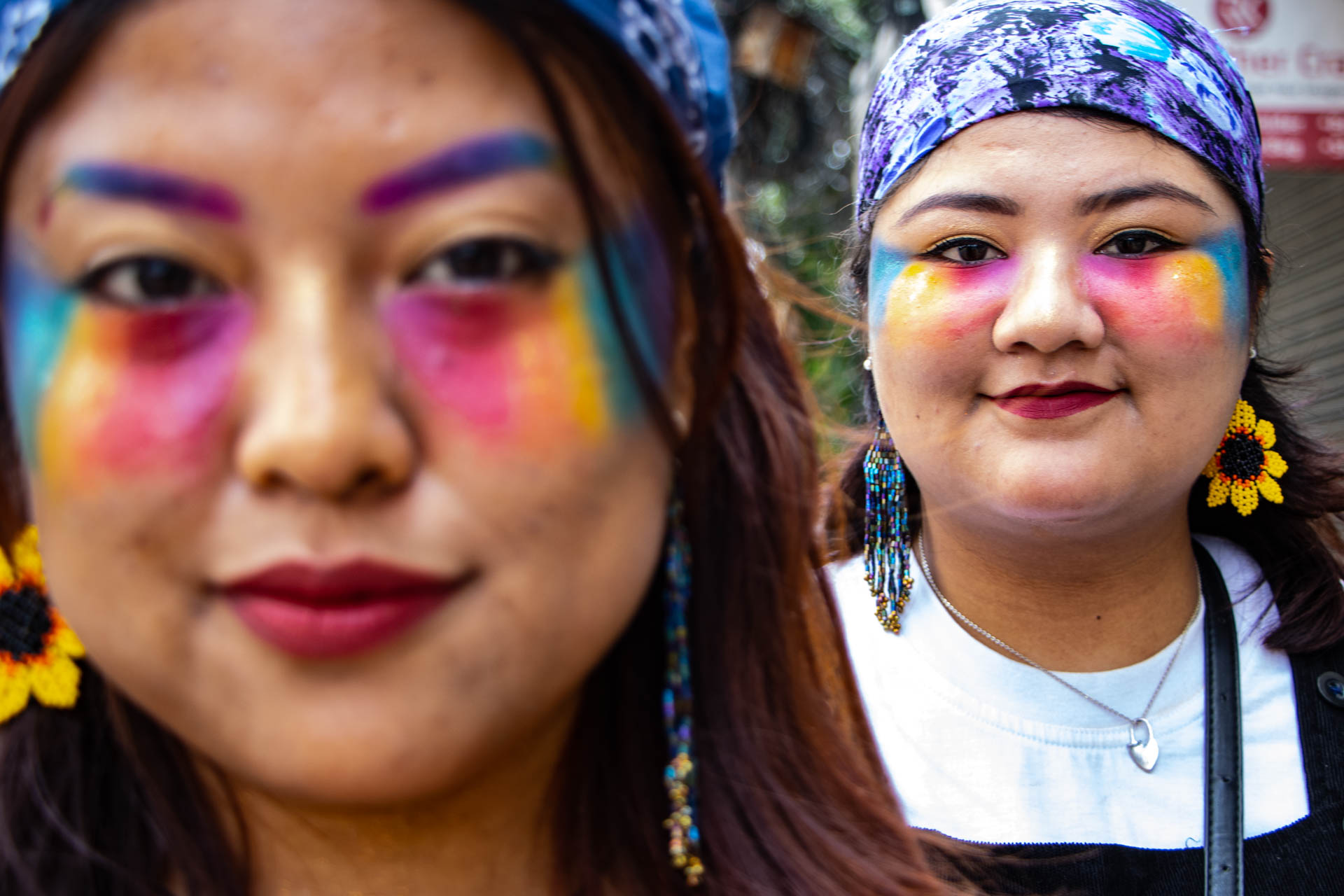
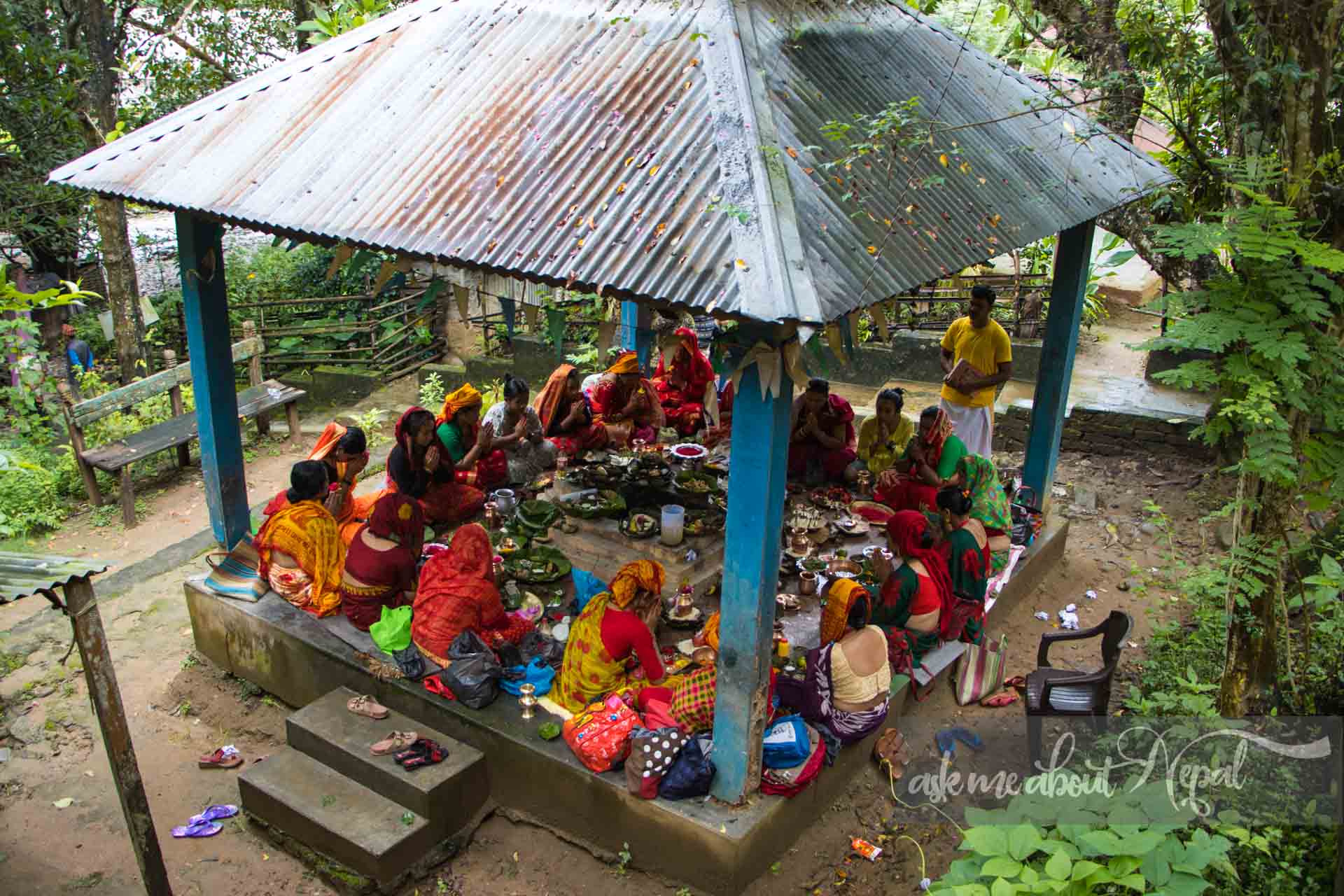
Hindu Women celebrating Teej at Sankha Park, Kathmandu. Photo by Priti Thapa
Haritalika Teej is annually celebrated on Bhadra Shukla Paksha Tritiya, the third day of the bright fortnight of the Month Bhadra (August/September) for three days. All Hindu women celebrate this joyful festival to commemorate Goddess Parbati’s union with Lord Shiva. They ask Shiva-Parvati for marital bliss and the well-being of spouses and children. And for those who are unmarried, fast on this day to get Shiva-like spouses. Women undergo penances and rigid fasting for “Haritalika Teej”, the severity of which is alleviated by lavish feasts, laughter, singing, and dancing with family and friends on the day before, and the function is called “Dar Khane Din”. Then comes “Rishi Panchami”, the 3rd day of the women’s festival. On this day, women and also girls who had their menses bathe in a river and pray to the Sapta Rishis and Arundhati, wife of Rishi Vashistha, for the welfare of society.

Dar: the feast eaten a day preceding fasting day, Khane: to eat, and Din: a day in Nepali. “Dar Khane Din” together means a day to have a lavish feast. The dar khane feast may include mutton, chicken, fish, and vegetables, pickles, eggs, fruits, and sweets, and indulgences which often put a hole in husbands’ purses. Tradition has it that the husband must meet this expense even if it means pawning valuables or taking loans. Married women are invited to their Maiti, natal home, on this day. They wear a red saree and doll themselves up to look like a bride. The feast could start early in the evening and go on until midnight, just before the Teej day starts. They eat, apply henna on hand and enjoy singing and dancing. Earlier, only women participated, but now, with the fast-paced life, Dar Khane Din has become a get-together for all, regardless of gender and age.
Also, it is believed that if brothers do not invite their sisters for Dar, sisters are not obliged to invite them for the Bhai Tika day of the Tihar Festival. People are seen preparing and making menus and gift lists a month in advance. Shopping centers display Teej Mela, the Teej Fair, offering massive discounts on clothes, jewelry, and makeup kits. Beauty parlors and salons are a step ahead in offering exclusive prices for services. Every shop in town is crowded. People are seen carrying baskets of edibles, bags full of customary gifts, and mothers must send invitation for this day to the homes of their married daughters. Along with food, mothers may also send sarees and Saubhgya samagree.
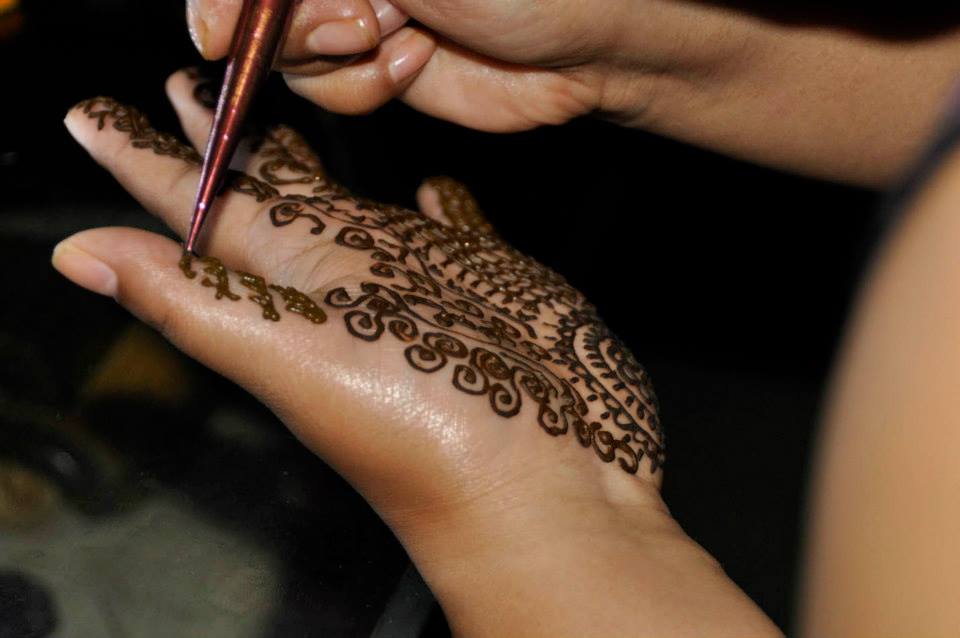
Saubhgya samagree, is a compilation of implements that bring good luck in matrimony, like Sindur (red dye traditionally worn on parted hair), Chura (red glass bangles), Lachhadori (a crimson cotton yarn for hair), and Tika (forehead marking). Feasting these days does not necessarily take place only on the previous day of Teej like earlier times, but women may hold their feasting party one month prior for friends and families.

Haritalika Teej, the second day, is the most important day of the festival. Goddess Parbati, daughter of the god Himalaya, fasted and prayed fervently for 108 years that Lord Shiva would become her spouse. Shiva, touched by her devotion, granted her wish and took her as his wife. In gratitude, Parbati asked her messengers to preach that she who observes this Teej fasting will get a favorite husband and beget beautiful children. The Teej fasting is super arduous. When the fasting is performed, not one morsel of food, not even a drop of water, may be taken for twenty-four hours. Extremely pious women will not swallow their own saliva; it is expectorated instead, to avoid a sin likened to drinking their own husband’s blood.
Women wake up before the sun, and after a ritual bath, they put on their finest. Some choose to wear the full attire and ornaments from their wedding day, while others wear a new set of clothes sent by their mothers. These gaily dressed-up women line up at Pashupatinath temple for just one glimpse of their favorite deity, Shiva. Those who cannot visit the Pashupatinath temple will go to any Shiva Temple nearby with equal enthusiasm. A gathering of this sort will easily help them to forget the idea of hunger. Though they may be weak from fasting and loss of sleep, the women take pride in concealing any ill effects, but despite the act, some are weakened from exhaustion, and the long day’s fasting faints too.
तीज को लहर आयो बरी लै….
Teeja ko lahar aayo bari lai…
Teej festival is here and brings a wave of merriness…
This song from the mega-hit movie “Kanyadaan” released in 1991 is still the most favorite Teej song of all time. Although every year singers, musicians, and films come up with yearly super hit Teej numbers, no Teej celebration is complete without तीज को लहर आयो बरी लै…. Teej songs are how women rebel at the local level. Lyrics speak out about social oppression by mothers and sister-in-law, gender inequality, child marriage, and other manifestations of patriarchy. These days, political oppression, women’s rights, and defiance songs are also sung at Teej.

Haritalika Teej fasting ends with worshipping of the husbands. 108 Grains of rice, 108 flower petals, and 108 bits of fruit are carefully counted out and first offered to Shiva and Parbati, beseeching their blessing upon her spouse. Then wives present a bit of food offered to the gods to their husbands. They then touch his bare toes with her forehead, wash his feet, and, according to tradition, drink consecrated liquid. Now the husbands feed their wives water and fruits to break their long day fast. Wives light an oil wick lamp that should remain alight through the night for husbands' long life, and it is a bad omen if the light dies. Traditionally, Teej fasting is obligatory for all Hindu married women and girls who have reached puberty. Seriously ill or physically infirm, pregnant women or new mothers would engage a Brahmin priest to undergo the day’s fast in her stead. But Teej fasting these days is a choice! Nepalese Hindu women, like any other in the world, desire for and pray for a good marriage, a healthy and long life for husbands, and ideal children. They pray for all these boons during the Teej festival.
Rishi Panchami is the last day of this three-day festival. But according to astrology, it doesn’t fall the very next day of Haritalika Teej unless the Chaturthi and Panchami, the fourth and fifth days of Bhadra Shukla Paksha, overlap. On Rishi Panchami, the fifth day of Bhadra Shukla Paksha, women and girls start their day with a long, holy bath following very strict rules. These bathing ceremonies are compulsory for all who have undergone the Teej fasting and girls who have had their menses. Bathing is followed by almost two hours long puja (worship) to Sapta Rishi and Arundhati. During partial fasting, they eat their only meal, Karkalo Bhat, the rice and taro root slash leaves curry after puja. Hundreds gather near rivers like Bagmati and Bishnumati in Kathmandu, the confluences, wells, and ponds for holy bathing. Those unable to travel to the holy waters could also bathe in their homes in accordance with the same ceremony.

The bathing process must be done 365 times for the 365 days in a year
This purifying bathing ritual is an atonement for the female sins committed during menstruation, like touching men and going to the kitchen or altar, etc. It is believed that undergoing this ritual will absolve women from all such sins.
Rishi Panchami is a day to pay tribute to the Sapta Rishi, the seven great sages, who devoted their lives to the betterment of humankind. The seven sages are Agastya, Atri, Bharadwaja, Gautam, Jamadagni, Vashishta, and Vishwamitra worshipped on this day along with Arundhati, Rishi Vashistha’s wife. So, after the bathing ritual, women gather at the Rishi Temple and perform the Sapta Rishi Puja.
The Risheshwar Temple in Teku, Kathmandu receives the biggest crowd. According to the Legend, there was a Brahmin called Uttank who lived with his wife Sushila and a widowed daughter. The couple, one day, finding their daughter’s body covered with ants, sought help from a learned sage. Sage reasoned the situation, saying that their daughter had entered the kitchen during her menstruation. He advised the daughter to take a purifying bath and worship the Sapta Rishi on the Rishi Panchami day to absolve from the sin. It is believed that the rite has been carried out by all Hindu females since then.
Content Creator and founder or Ask Me About Nepal
Gujeshwari mandir perched above the hill is hidden behind the wall or even houses. It is the most beautiful temple, one of the all-time masterpieces of Hindu Surrealism on top of that its one of 51 Shakti Pithas (holy place of cosmic power)
Sun Aug 09 2026
A polished black stone idol with 18 arms. Bedecked with silver ornaments. Drenched in vermillion. The Goddess Bhagwati holds Astra/Nastra (weaponry and symbols) Patra (vessel), Trishul (trident), Kulhadi (Axe), Damaru (two headed-drum), Chakra (disc), Gadha (mace), Khunda(scimitar), Matsya (Fish), and Ghanta (bell) on her hands.
Sun Aug 09 2026
A Fond Farewell to Nembang whose dedication to the party and the people remained unwavering until the end.
Sun Aug 09 2026
Bhat and Bhateni revered as guardian deities are depicted floating above the earth, as their sacred feet must never contact the mortal ground
Sun Aug 09 2026
Oct 13, 2022
Jul 18, 2023
Sep 20, 2023
Jun 2, 2022


Ask Me About Nepal (AMAN) is your go-to digital platform for authentic, well-researched insights into Nepal’s people, places, culture, and hidden gems. From adventure to history, food to folklore—explore Nepal like never before!


Help us document the beauty and stories of Nepal. Your donation powers AMAN's journey.

Get captivating travel stories, hidden gems, and cultural insights from Nepal delivered to your inbox every month!
Want to Become a Contributor? Click Here
© 2025 Ask Me About Nepal. All Rights Reserved.